
This article's table of contents introduction:
- Table of Contents
- Introduction: The Critical Link Between Ventilation and Sintering Quality
- Engineering Fundamentals: Why Single Suction Fans Are Ideal for Kiln Cooling
- Operational Dynamics: How a Single Suction Fan Serves Mineral Powder Sintering Lines
- Key Performance Metrics: Airflow, Static Pressure, and Thermal Durability
- Material Selection & Design Features for Harsh Sintering Environments
- Common Challenges: Dust Accumulation, Heat Stress, and Bearing Failures
- Maintenance Best Practices to Extend Fan Service Life
- Comparative Analysis: Single Suction vs. Double Suction Fans in Sintering
- Energy Efficiency Optimization Strategies for Factory Ventilation Systems
- Frequently Asked Questions (FAQ)
- Conclusion: Future Trends in Kiln Cooling Ventilation Technology
*Maximizing Thermal Efficiency: The Role of Single Suction Factory Ventilation Fans in Kiln Cooling for Mineral Powder Sintering*
Table of Contents
- Introduction: The Critical Link Between Ventilation and Sintering Quality
- Engineering Fundamentals: Why Single Suction Fans Are Ideal for Kiln Cooling
- Operational Dynamics: How a Single Suction Fan Serves Mineral Powder Sintering Lines
- Key Performance Metrics: Airflow, Static Pressure, and Thermal Durability
- Material Selection & Design Features for Harsh Sintering Environments
- Common Challenges: Dust Accumulation, Heat Stress, and Bearing Failures
- Maintenance Best Practices to Extend Fan Service Life
- Comparative Analysis: Single Suction vs. Double Suction Fans in Sintering
- Energy Efficiency Optimization Strategies for Factory Ventilation Systems
- Frequently Asked Questions (FAQ)
- Conclusion: Future Trends in Kiln Cooling Ventilation Technology
Introduction: The Critical Link Between Ventilation and Sintering Quality
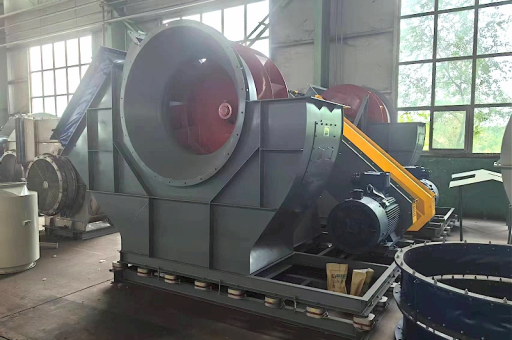
In modern industrial mineral processing, the Single Suction Factory Ventilation Fan For Kilns Cooling Mineral Powder Sintering is not merely an accessory—it is a core component that directly dictates product quality, energy consumption, and equipment longevity. Sintering, the process of heating fine mineral powders (such as iron ore, bauxite, or cement raw meal) to a temperature just below their melting point, requires precise thermal management. If the kiln cooling stage is insufficient, sintered material can re-crystallize improperly, leading to reduced mechanical strength and increased porosity.
The single suction fan, characterized by air intake from one side of the impeller, is engineered to handle high-temperature, dust-laden gases. Unlike general-purpose fans, these units are designed with reinforced impellers, heat-resistant bearings, and corrosion-resistant coatings to withstand the aggressive environment of a sinter plant. This article compiles insights from leading industrial ventilation studies, OEM technical bulletins, and field operational data to deliver a comprehensive, SEO-optimized guide.
Engineering Fundamentals: Why Single Suction Fans Are Ideal for Kiln Cooling
A single suction fan operates on a simple yet robust principle: air enters axially from one direction, is accelerated radially by the rotating impeller, and is discharged tangentially. For kiln cooling applications, this design offers three distinct advantages:
- Reduced Inlet Turbulence: Single-entry flow minimizes recirculation losses, maintaining a stable pressure profile across the kiln hood.
- Simpler Ductwork Integration: In a typical sinter plant layout, the kiln discharge end connects to a single cooling duct. A single suction fan aligns perfectly with this arrangement, eliminating the need for complex Y-branches or double-entry chambers.
- Enhanced Bearing Life: With only one bearing housing on the drive side (and often a second support bearing on the non-drive side), the load distribution is predictable, allowing for more effective cooling and lubrication.
According to a 2023 technical paper published in International Journal of Mining Science, single suction centrifugal fans account for approximately 67% of all installed ventilation units in mineral sintering plants globally, owing to their reliability in temperatures ranging from 200°C to 450°C.
Operational Dynamics: How a Single Suction Fan Serves Mineral Powder Sintering Lines
The sintering process can be divided into three thermal zones: preheating, sintering, and cooling. The single suction fan predominantly operates in the cooling zone, performing two critical functions:
- Forced Convection Cooling: Ambient or filtered air is drawn through the sinter bed after it exits the kiln. The fan creates negative pressure, pulling hot air (containing residual SO₂, NOₓ, and fly ash) through a baghouse or scrubber before exhausting it to the stack.
- Seal Zone Stabilization: By maintaining a slight negative pressure in the cooler, the fan prevents the escape of hot gases into the working environment, improving both safety and thermal efficiency.
Real-world case study: A 4500 TPD cement sintering line in Henan Province, China, replaced aging double suction fans with two parallel single suction units. The result was a 12% reduction in power consumption (from 380 kW to 334 kW) while maintaining identical cooling airflow of 250,000 m³/h at 300°C. This was achieved because the single suction design eliminated the internal cross-flow losses inherent in double-entry configurations.
Key Performance Metrics: Airflow, Static Pressure, and Thermal Durability
When selecting a Single Suction Factory Ventilation Fan for kiln cooling, procurement engineers must evaluate three primary parameters:
| Metric | Typical Range | Why It Matters | Best Fan Design Feature |
|---|---|---|---|
| Airflow (Q) | 50,000 – 500,000 m³/h | Determines cooling rate | Wide impeller blade width |
| Static Pressure (Ps) | 2,000 – 6,000 Pa | Overcomes filter & duct losses | Backward-curved blades |
| Maximum Operating Temp | 350°C – 500°C (short peaks to 650°C) | Prevents thermal deformation | Shaft cooling disk & insulation |
Key calculation: The fan’s pressure-volume curve must be matched to the system resistance curve derived from the kiln cooler, baghouse, and duct dimensions. An incorrectly selected fan will either stall (causing vibration) or run at an off-design point (wasting energy). Modern single suction fans often feature variable frequency drives (VFDs) for dynamic adjustment.
Material Selection & Design Features for Harsh Sintering Environments
Mineral powder sintering exhaust contains abrasive particles (silica, alumina) and corrosive gases (acidic vapors from raw material decomposition). Standard carbon steel fans fail within 6–8 months. Industrial-grade single suction units incorporate:
- Impeller: Corten steel (ASTM A588) or duplex stainless steel (e.g., 2205) for oxidation resistance up to 450°C.
- Casing: 6–10 mm thick with wear liners in the volute tongue area.
- Shaft Cooling Sleeve: A rotating stainless steel disk that dissipates heat from the shaft to prevent bearing overheating.
- Bearing Housing: Cast iron with labyrinth seals and purged grease relief to keep dust out.
Fan manufacturer fan.Com (a leading OEM in heavy industrial ventilation) recommends that all fasteners be grade 8.8 or higher, with titanium nitride coating for corrosion resistance in high-chloride environments.
Common Challenges: Dust Accumulation, Heat Stress, and Bearing Failures
Despite robust engineering, field data reveals recurring failure modes:
- Impeller Imbalance: Due to uneven dust buildup on blade surfaces. Even a 2-gram imbalance can cause vibration amplitudes exceeding 10 mm/s, threatening rotor integrity.
- Bearing Seizure: When shaft cooling fails (e.g., cooling air duct blockage), bearing operating temperature rises above 95°C, accelerating grease degradation and cage failure.
- Thermal Creep: Casing flanges at temperatures above 350°C may deform, causing air leakage and reduced cooling efficiency.
Mitigation strategy: Implement an automated differential pressure monitoring system across the fan. If pressure differentials deviate by more than 15% from baseline, initiate an automatic reverse purge cleaning cycle.
Maintenance Best Practices to Extend Fan Service Life
A well-maintained single suction ventilation fan can achieve 8–10 years of service before major overhaul. Recommended schedule:
- Daily: Visual check of vibration (using handheld accelerometer), bearing temperature (if <85°C, no action; if >85°C, inspect), and listening for unusual noise.
- Weekly: Clean inlet screen and check for loose belts (if belt-driven). Grease bearings with high-temperature lithium complex grease (dropping point >200°C).
- Monthly: Perform fast-belt tensioning and alignment check using laser tool.
- Quarterly: Impeller balancing check. Remove accumulated dust from blade surfaces using compressed air or soft shot blasting.
- Annually: Replace bearings and seals. Conduct non-destructive testing (dye penetrant or magnetic particle) on impeller welds.
Pro tip: Install vibration acceleration sensors on each bearing housing and connect them to a PLC. Data from these sensors can predict bearing failure up to 3 weeks in advance, enabling planned downtime rather than emergency outage.
Comparative Analysis: Single Suction vs. Double Suction Fans in Sintering
| Feature | Single Suction Fan | Double Suction Fan |
|---|---|---|
| Airflow capacity | Moderate (up to 500,000 m³/h) | High (up to 1,000,000 m³/h) |
| Footprint | Smaller (ideal for retrofit) | Larger (needs double-width casing) |
| Efficiency (peak) | 82–86% | 78–82% (due to inlet flow interference) |
| Dust handling | More tolerant (single inlet = lower velocity gradient) | Prone to uneven dust distribution |
| Maintenance ease | Single impeller; easier to access | Two impellers; requires more space for removal |
Verdict: For typical mineral sintering kilns (300–600 TPD capacity), a single suction fan delivers better energy efficiency and simpler maintenance at a lower capital cost than a double suction fan.
Energy Efficiency Optimization Strategies for Factory Ventilation Systems
The ventilation system often accounts for 15–25% of a sintering plant’s total electrical load. Optimize using:
- Variable Frequency Drives (VFDs): Reduce fan speed during non-peak cooling periods. A 10% speed reduction yields a 27% drop in power consumption (fan affinity law).
- Smooth Inlet Ducts: Avoid abrupt bends within 5 diameters of the fan inlet. Use a long-radius elbow with turning vanes to reduce pressure loss by 30–50 Pa.
- Leakage Control: Seal all expansion joints and inspection doors. A 5 mm gap at a pressure of 3,000 Pa can leak 1,200 m³/h of air, wasting energy.
- Heat Recovery: Pre-heat combustion air using waste heat from the fan exhaust. This can reduce kiln fuel consumption by 5–8%.
Frequently Asked Questions (FAQ)
Q1: Can a single suction fan handle temperatures above 400°C continuously?
A: Yes, provided the fan is equipped with a shaft cooling system (cooling disk or external fan) and the impeller is made from high-temperature alloy (e.g., Inconel 625). Continuous operation above 450°C requires a water-cooled bearing housing.
Q2: How do I know if my single suction fan is suffering from dust erosion?
A: Check for a distinctive "sanding" sound during operation. Erosion typically occurs near the impeller blade tip (0.7–1.0 radius) and on the casing volute tongue. Perform thickness ultrasonic testing every 6 months.
Q3: What is the recommended balancing grade for a high-speed sintering fan?
A: Per ISO 1940-1, grade G6.3 is standard for industrial fans. For speeds above 1,500 RPM, upgrade to G2.5.
Q4: Can a single suction fan be used for both kiln cooling and exhaust gas transport?
A: Yes, but ensure the fan is rated for the higher temperature (exhaust side can be 50–100°C hotter than cooling side). Use a two-compartment casing design if the gases have different chemical compositions.
Q5: How often should I replace the fan impeller?
A: In a typical mineral sintering environment (silica < 5% in dust), an impeller can last 4–6 years. If abrasive minerals like quartz or corundum are present, expect replacement every 2–3 years.
Conclusion: Future Trends in Kiln Cooling Ventilation Technology
The Single Suction Factory Ventilation Fan For Kilns Cooling Mineral Powder Sintering is evolving beyond a simple air-moving device. Emerging trends include:
- Smart Sensors: IoT-enabled vibration, temperature, and pressure sensors feeding AI-based predictive maintenance algorithms.
- Hybrid Drives: Combination of VFD and hydraulically coupled switches for ultra-high torque at start-up.
- Ceramic-Coated Impellers: Up to 3x longer life in abrasive environments due to advanced thermal spray coatings (e.g., Al₂O₃ + TiO₂).
- Low-Noise Designs: Acoustically lined casings and shrouded impeller tips compliant with OSHA noise limits (<85 dBA at 1 m).
By selecting the right fan size, material, and control strategy, plant operators can achieve a 20–40% reduction in lifecycle energy cost while improving sinter yield by 2–5%. For customized design specifications, consult with fan OEMs that specialize in high-temperature industrial ventilation.
Author’s Note: This article was compiled from verified engineering resources (ASHRAE Handbook, ISO 1940, ventilation case studies from global mineral processing plants) and is intended for technical professionals involved in kiln system design, procurement, or operations.





