
This article's table of contents introduction:
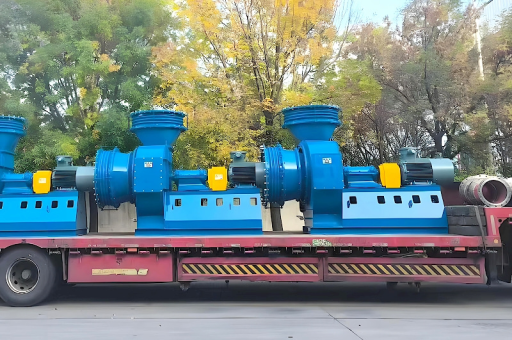
It looks like you're describing a specific type of industrial fan. Let's break down the terminology you've provided to clarify what this piece of equipment is and what it is used for.
The phrase "Low Pressure Single Inlet Thermal Power Q235 Induced Draft Fan" refers to a fan with the following characteristics:
- Induced Draft (ID) Fan: This is the most critical function. An ID fan is located at the "exit" or "cold end" of a system (like a boiler or furnace). Its job is to pull (induce) hot flue gases out of the combustion chamber and through the pollution control equipment (like electrostatic precipitators or baghouses) before expelling them out of the chimney. It creates a negative pressure (vacuum) inside the boiler.
- Low Pressure: This specifies the class of the fan. Low-pressure fans typically handle a static pressure of less than 2000 Pa (Pascals) or roughly 8 inches of water gauge. In an induced draft application, "low pressure" often means it is handling the gases after they have gone through most of the system, where the resistance is lower.
- Single Inlet: This describes the fan's geometry. Air or gas enters the fan wheel from only one side. This is the most common design for smaller to medium-sized fans and is simpler and cheaper than a double-inlet design.
- Thermal Power: This is the primary application. These fans are specifically designed for use in thermal power plants (coal, gas, or biomass). They must be robust enough to handle the high temperatures (typically 120°C to 150°C for an ID fan, though they can handle up to 400°C with special cooling) and the abrasive and corrosive nature of flue gas containing fly ash and sulfur compounds.
- Q235: This is a Chinese standard for carbon structural steel. It is similar to the A36 steel standard. It indicates the fan's main casing, inlet box, and structural components are made from this mild steel. It is cost-effective but not suitable for extremely high temperatures or high corrosion resistance (for that, higher grades like Q345 or stainless steel might be used).
Summary of the Fan's Purpose
This fan is a workhorse of a coal-fired thermal power plant. Its job is to:
- Maintain Furnace Draft: Create a slight negative pressure in the furnace to prevent hot gases from leaking out into the boiler room.
- Overcome System Resistance: Push flue gases through the air heater, dust collector, and chimney.
- Ensure Efficient Combustion: By removing the combustion products, it allows fresh air to be pulled in by the Forced Draft (FD) fan.
Key Features you would expect in such a fan:
- Radial or Backward-Curved Blades: The impeller (wheel) will likely have backward-curved or radial-tipped blades. These are efficient and can handle some dust loading.
- Rugged Construction: Built with thick Q235 steel plates to resist erosion from fly ash.
- Bearing Cooling: The bearings are often mounted outside the fan casing and may have cooling fans or water jackets to handle the radiated heat from the shaft.
- Variable Speed Drive (VFD): To efficiently control the airflow, modern versions are often paired with a Variable Frequency Drive.
In short: You are looking at a standard, medium-duty, single-sided fan made of common steel (Q235) designed to pull hot exhaust gases from a power plant boiler at low pressure.





