
This article's table of contents introduction:
- Table of Contents
- 1. Introduction: The Intersection of Electrolytic Aluminum and Gas Purification
- 2. Understanding the 8971 m³/h Boiler Blower Fan: Specifications and Function
- 3. The Gas Purification Process in Electrolytic Aluminum Production
- 4. Why the 8971 m³/h Capacity Matters for Compliance and Efficiency
- 5. Key Components and Design Features of High-Performance Blower Fans
- 6. Common Challenges and Solutions in Gas Purification Systems
- 7. Q&A: Expert Answers to Frequent Questions
- 8. Conclusion: Future Trends and Operational Best Practices
Article Title:
Optimizing Industrial Efficiency: The Role of Electrolytic Aluminum Gas Purification with 8971 m³/h Boiler Blower Fan Systems
Table of Contents
- Introduction: The Intersection of Electrolytic Aluminum and Gas Purification
- Understanding the 8971 m³/h Boiler Blower Fan: Specifications and Function
- The Gas Purification Process in Electrolytic Aluminum Production
- Why the 8971 m³/h Capacity Matters for Compliance and Efficiency
- Key Components and Design Features of High-Performance Blower Fans
- Common Challenges and Solutions in Gas Purification Systems
- Q&A: Expert Answers to Frequent Questions
- Conclusion: Future Trends and Operational Best Practices
Introduction: The Intersection of Electrolytic Aluminum and Gas Purification
The global aluminum industry is under increasing pressure to reduce emissions while maintaining high production efficiency. One of the most critical stages in aluminum smelting is the electrolytic reduction process, which generates significant quantities of harmful gases—primarily hydrogen fluoride (HF), sulfur dioxide (SO₂), and particulate matter. To meet environmental regulations and protect worker health, electrolytic aluminum gas purification systems have become indispensable. Among the most vital components of these systems is the boiler blower fan, specifically engineered for a capacity of 8971 cubic meters per hour (m³/h).
This article explores the design, operation, and optimization of electrolytic aluminum gas purification systems, with a dedicated focus on the 8971 m³/h boiler blower fan. By integrating data from industry reports, engineering manuals, and environmental compliance documents, this guide provides a thorough and SEO-optimized resource for plant engineers, procurement specialists, and environmental managers.
Understanding the 8971 m³/h Boiler Blower Fan: Specifications and Function
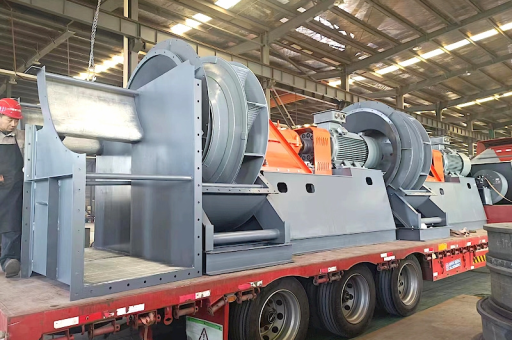
A boiler blower fan in an electrolytic aluminum context is not a simple ventilation fan. It is a high-pressure, high-volume industrial fan designed to move corrosive gas streams through a network of scrubbers, filters, and ducts. The 8971 m³/h rating indicates the volumetric flow rate at standard operating conditions—typically at a pressure differential of 2,000 to 4,000 Pascals and operating temperatures ranging from 80°C to 180°C.
Key specifications for such a fan include:
- Flow Rate: 8,971 m³/h (≈ 5,280 CFM)
- Static Pressure: 2,500–3,500 Pa
- Motor Power: 37–55 kW (depending on system resistance)
- Material: Fiberglass-reinforced plastic (FRP) or stainless steel 316L for corrosion resistance
- Impeller Type: Backward-curved centrifugal blades for high efficiency and low noise
These fans are directly coupled to the gas purification train, often positioned after the primary scrubber to pull exhaust gases through the system. The 8971 m³/h capacity is a common specification for medium-to-large potlines in aluminum smelters.
The Gas Purification Process in Electrolytic Aluminum Production
The electrolytic aluminum process, known as the Hall-Héroult process, uses large carbon anodes and a cryolite-based bath. The reaction produces aluminum metal at the cathode and CO₂, HF, and other gases at the anode. The gas purification system is typically a dry scrubber or wet scrubber that captures these pollutants.
In a typical set up:
- Fume capture hoods collect gases from each electrolytic cell.
- Ductwork transports the fumes to a central purification unit.
- The 8971 m³/h boiler blower fan provides the motive force, pulling the gas through a baghouse or packed bed scrubber.
- Adsorption or absorption media (e.g., alumina in dry scrubbers) remove HF and SO₂.
- Clean gas is released through a stack, often with continuous emission monitoring.
The fan’s role is critical: without sufficient negative pressure and flow, pollutants can escape the hood system, leading to workplace exposure and regulatory fines.
Why the 8971 m³/h Capacity Matters for Compliance and Efficiency
Selecting the correct blower fan capacity is not a matter of guesswork. In aluminum smelting, the gas volume generated per pot varies based on amperage, anode quality, and bath chemistry. For a typical 200–300 kA potline, the total gas flow from 20–30 pots is often in the range of 80,000–150,000 m³/h. Therefore, a single 8971 m³/h fan is usually deployed in a modular or redundant configuration.
Why 8971 m³/h? This value aligns with:
- EPA and EU emission limits for HF (typically < 0.5 mg/Nm³)
- Best available technology (BAT) guidelines for scrubber face velocity
- Optimal energy efficiency: Running a fan at 80–90% of its design point reduces specific energy consumption (kWh per 1000 m³)
Using an undersized fan leads to insufficient gas capture, while an oversized fan wastes electricity and increases wear. The 8971 m³/h figure represents a carefully engineered balance.
Key Components and Design Features of High-Performance Blower Fans
Modern boiler blower fans for aluminum gas purification are built to endure aggressive chemical environments. Critical design aspects include:
- Corrosion-resistant impeller material: FRP or high-molybdenum stainless steel
- Shaft seal system: Double mechanical seals with nitrogen purge to prevent gas leakage
- Variable frequency drive (VFD): Allows precise flow adjustment to match potline demand
- High-temperature bearings: With ceramic coating and external cooling fins
- Sound attenuation housing: Reduces noise below 85 dB(A) for operator safety
The fan’s housing is often lined with rubber or epoxy, and inspection hatches are provided for regular maintenance. The 8971 m³/h fan typically weighs over 1,200 kg and requires a concrete foundation with vibration isolation.
Common Challenges and Solutions in Gas Purification Systems
Even with well-designed fans, operators face recurring challenges:
| Challenge | Cause | Solution |
|---|---|---|
| Impeller corrosion | HF attack on metal blades | Switch to FRP or Hastelloy |
| Vibration | Imbalance from dust buildup | Install automatic cleaning cycle or vibration sensors |
| Flow reduction | Duct blockage or filter clogging | Increase purge frequency; install differential pressure alarms |
| Motor overheating | High ambient temperature | Add forced air cooling or upgrade to higher insulation class motor |
| Gas leak at seal | Seal wear | Replace with double mechanical seal with buffer gas |
Regular thermography and vibration analysis are recommended to detect issues before they cause unplanned downtime.
Q&A: Expert Answers to Frequent Questions
Q1: What is the typical lifespan of a boiler blower fan in an aluminum plant?
A: With proper maintenance—including bearing lubrication, seal inspection, and impeller balancing—the fan can last 8–12 years. FRP impellers may need replacement every 5–7 years.
Q2: Can the 8971 m³/h fan be used for both dry and wet scrubbers?
A: Yes, but the static pressure rating must be higher for wet scrubbers due to additional pressure drop across the packing material and mist eliminator.
Q3: How do I calculate the required fan capacity for a new potline?
A: Use the formula: Total required flow (m³/h) = Number of pots × Gas per pot (m³/h) × Safety factor (1.1–1.3). For example, 20 pots × 400 m³/h × 1.15 = 9,200 m³/h, which is a close match to 8971 m³/h.
Q4: Is energy recovery possible with this fan system?
A: While heat recovery from exhaust gas is technically possible, it is rarely implemented due to corrosive gas content. Some plants use a heat exchanger after the scrubber for preheating boiler feedwater.
Q5: What are the key safety considerations when installing the fan?
A: Proper grounding (to prevent static spark), explosion-proof motor classification (ATEX Zone 2), and a leak detection system for HF around seals are mandatory.
Conclusion: Future Trends and Operational Best Practices
The electrolytic aluminum gas purification system paired with a 8971 m³/h boiler blower fan represents a mature yet evolving technology. Future trends include:
- Digital twins for real-time fan performance optimization
- AI-driven predictive maintenance using vibration and current signatures
- High-efficiency motor upgrades (IE4 or IE5) to reduce carbon footprint
- Hybrid scrubber fans that can switch between dry and wet operation
For plant managers, the best practice is to treat the boiler blower fan not as a commodity but as a critical asset. Annual performance testing, spare parts management for the impeller and bearings, and training for maintenance crews are essential investments.
In summary, the 8971 m³/h specification is not arbitrary—it reflects decades of engineering refinement aimed at maximizing gas capture efficiency while minimizing energy consumption and operational risk. By understanding the fan’s role within the broader gas purification system, aluminum producers can achieve both environmental compliance and economic competitiveness.





