
This article's table of contents introduction:
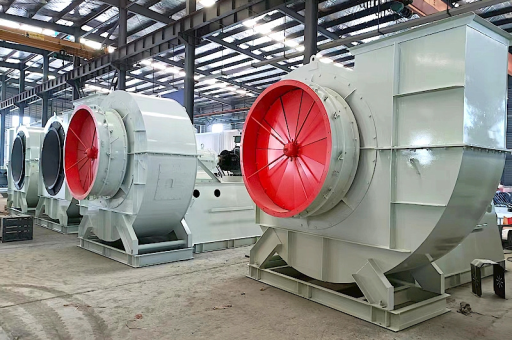
- What is an Induced Draft (ID) Fan?
- Why "Stainless Steel"?
- The "Kiln" Application
- The "Cooling Building" Concept
- Common Technical Specifications for Such a Fan
- Summary of the System Flow
- If you are looking for a specific solution, please clarify:
This sounds like you are describing a specific industrial application where stainless steel induced draft fans are used to ventilate or cool a building, likely a kiln building or a cooling building in a high-temperature manufacturing process.
Here is a breakdown of why these specific components are used together and what they accomplish:
What is an Induced Draft (ID) Fan?
- Function: It is a fan located at the outlet of a system (or building). It creates negative pressure (vacuum) inside the space, pulling air out of the building or ductwork.
- Contrast: Unlike a forced draft fan (which pushes air in), an ID fan sucks air through the system.
- Benefits for Kilns: It removes hot, dirty, or corrosive air, fumes, and excess heat from the building or kiln shell.
Why "Stainless Steel"?
Standard carbon steel fans would corrode or rust quickly in this environment. Stainless steel (typically 304 or 316L grade) is used for:
- Corrosion Resistance: Kilns often release acidic fumes (e.g., from chlorides in waste incineration or ceramics) or moisture. 316L is particularly resistant to chlorides.
- High Temperature Strength: Stainless steel retains its structural integrity better than carbon steel at elevated temperatures (e.g., 400°C to 800°C+).
- Hygiene/Contamination: In food or pharmaceutical drying kilns, stainless steel prevents contamination of the product.
The "Kiln" Application
- Cooling Zone: Kilns often have a specific cooling section where the product (bricks, ceramics, cement clinker, or lime) is rapidly cooled by ambient air. The ID fan pulls the hot air away from the product.
- Ventilation: The fan removes residual heat, moisture, and combustion byproducts from the building itself (the "kiln building"), preventing heat buildup that could harm workers or equipment.
The "Cooling Building" Concept
Sometimes, the cooling of the product happens in a separate building adjacent to the kiln:
- Process Air: The ID fan pulls ambient air over the hot product (moving on a conveyor or in a tunnel) and exhausts it.
- Building Ventilation: The same fan (or a dedicated one) is used to ventilate the entire building volume to keep worker conditions safe and equipment cool.
Common Technical Specifications for Such a Fan
| Feature | Typical Requirement |
|---|---|
| Material | Stainless Steel 304, 316L, or 310S (for extreme heat) |
| Wheel Type | Radial / Paddlewheel (for handling dust and high heat) |
| Temperature Range | 100°C to 450°C (continuous); up to 800°C (with cooling shafts) |
| Drive | Belt-driven (to isolate motor from heat) or direct drive |
| Motor | Variable Frequency Drive (VFD) for precise control of ventilation rate |
| Housing | Scroll housing made of SS, often insulated to prevent heat loss & protect workers |
Summary of the System Flow
- Kiln heats product -> Hot gas and fumes rise.
- Cooling air is drawn over the product.
- Stainless Steel ID Fan pulls the spent hot air out of the building/ductwork.
- Exhaust is sent to a chimney, scrubber, or baghouse (filtration).
If you are looking for a specific solution, please clarify:
- What is the exact kiln product? (Cement, ceramics, waste incineration, food?)
- What is the maximum gas temperature?
- Is the air clean or dusty/corrosive?
- Do you need to ventilate the building (worker comfort) or the product (process cooling)?
In short: This is a rugged, corrosion-resistant ventilation system designed to extract hot, potentially corrosive air from a kiln cooling process, ensuring safety and product quality.





