
This article's table of contents introduction:
- Table of Contents (目录导读)
- Introduction: The Critical Need for Efficient Waste Gas Handling
- Understanding the Core Components: Draft Induction Blowers in Gas Treatment
- The Engineering Behind Long Lifetime: Materials, Design, and Maintenance
- Application-Specific Performance: Heavy Industry Case Studies
- Common Questions & Expert Answers (Q&A)
- Conclusion: Future Trends in Durable Waste Gas Management
*Optimizing Industrial Waste Gas Treatment: The Role of Single Inlet Draft Induction Blowers for Long Lifetime Performance*
Table of Contents (目录导读)
- Introduction: The Critical Need for Efficient Waste Gas Handling
- Understanding the Core Components: Draft Induction Blowers in Gas Treatment
- 1 What is a Draft Induction Blower?
- 2 Single Inlet vs. Double Inlet: Why Single Inlet Wins for Longevity
- The Engineering Behind Long Lifetime: Materials, Design, and Maintenance
- 1 Material Selection for Corrosive and Abrasive Flows
- 2 Bearing and Seal Technologies for Continuous Operation
- 3 Predictive Maintenance Strategies
- Application-Specific Performance: Heavy Industry Case Studies
- Common Questions & Expert Answers (Q&A)
- Conclusion: Future Trends in Durable Waste Gas Management
Introduction: The Critical Need for Efficient Waste Gas Handling
In modern industrial ecology, Industrial Waste Gas Treatment is not merely a regulatory compliance checkbox; it is a cornerstone of operational sustainability. From chemical processing plants to steel mills and power generation facilities, the removal of particulate matter, volatile organic compounds (VOCs), and acidic fumes demands robust, high-reliability mechanical equipment. At the heart of these systems lies the Draft Induction Blower — a machine designed to create negative pressure, force gas through scrubbers, absorbers, or baghouses, and discharge clean air into the atmosphere.
However, the industry faces a persistent challenge: premature blower failure due to erosive particles, high-temperature excursions, and shaft vibration. This article dives deep into the specific engineering solution: the Single Inlet design, which is gaining dominance in applications requiring long service intervals. We will examine why a Long Lifetime fan (source: fan) configuration outperforms multi-inlet alternatives in harsh environments, and how operators can maximize their return on investment.
Understanding the Core Components: Draft Induction Blowers in Gas Treatment
1 What is a Draft Induction Blower?
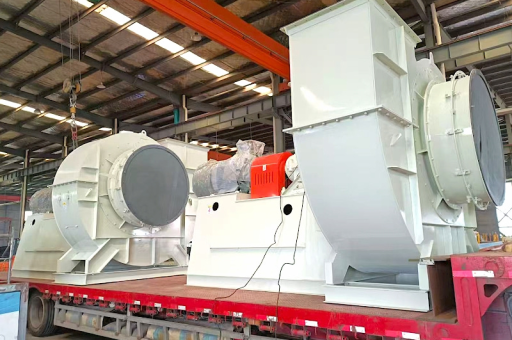
A draft induction blower (often called an ID fan) is a centrifugal fan installed at the tail end of a gas treatment system. Its primary function is to "pull" gases through the entire emission control train. Unlike forced draft fans that push air in, induction fans handle the treated gas, which is often laden with residual moisture, acidic condensate, and fine particulates. In the context of Industrial Waste Gas Treatment, these fans must maintain a stable negative pressure to ensure that no fugitive emissions escape from ducts or vessel joints.
2 Single Inlet vs. Double Inlet: Why Single Inlet Wins for Longevity
The market offers both single inlet and double inlet configurations. A Single Inlet Draft Induction Blower draws gas from one side of the wheel, while a double inlet version draws from both sides. For Long Lifetime operation, the single inlet design holds a clear advantage in waste gas applications:
- Reduced Flow Imbalance: In double inlet designs, uneven ductwork or dirty inlet boxes often cause asymmetric flow, which induces axial thrust and vibration. A single inlet wheel, being fed from a single, controlled duct, maintains a more uniform velocity profile, reducing mechanical stress.
- Simpler Sealing: The shaft penetration area is smaller, making it easier to isolate corrosive gases from bearings. This directly enhances component life.
- Lower Rotor Weight: Single inlet wheels are generally lighter, requiring smaller bearings and less support structure. This reduces inertial loads during start-stop cycles.
These factors collectively contribute to a fan system that can achieve 15–20 years of operational service in moderate-duty applications, and 8–12 years in severely abrasive or corrosive environments, provided the impeller is designed with specific wear-resistant features.
The Engineering Behind Long Lifetime: Materials, Design, and Maintenance
1 Material Selection for Corrosive and Abrasive Flows
To achieve a Long Lifetime, fan manufacturers (source: fan) now employ advanced metallurgy. For acidic waste gases (e.g., HCl, SO₂), impellers are fabricated from duplex stainless steel (e.g., SAF 2205) or high-nickel alloys such as Hastelloy C-276. For abrasive fly ash in coal-fired plants, the leading edge of blades is hard-faced with a stellite coating or covered with replaceable chromium carbide wear plates. This selective material placement prevents catastrophic erosion while keeping cost manageable.
2 Bearing and Seal Technologies for Continuous Operation
The weakest link in any waste gas fan is typically the bearing and shaft seal system. In a Single Inlet blower, the overhung rotor design (where the impeller is cantilevered on the shaft) allows for a shorter bearing span. This stiffness is critical for vibration control when handling heavy particles.
- Bearing Selection: Ultra-precision spherical roller bearings with an F-class cage are standard. For high-temperature service (>250°C), circulating oil lubrication with external cooling radiators is mandatory.
- Seal Technology: The best defense is a triple-labyrinth seal combined with a purge air barrier. This prevents process gas from reaching the bearing housing, preventing oil contamination and subsequent bearing seizure. Non-contact seals (e.g., carbon ring seals) are preferred for zero maintenance intervals.
3 Predictive Maintenance Strategies
No fan can achieve a Long Lifetime without a disciplined maintenance regime. Smart sensors (vibration probes, bearing temperature RTDs, and current transducers) integrated into the fan control panel allow for condition-based maintenance. Key parameters to monitor on a Single Inlet Draft Induction Blower:
- Vibration Velocity: A rise above 4.5 mm/s RMS (ISO 10816-3) indicates imbalance or bearing wear.
- Bearing Temperature: A sudden 15°C rise above baseline is a red flag for lubrication failure.
- Current Draw: Erratic motor amperage signals possible impeller fouling or damper malfunction.
Performing in-situ dynamic balancing every 12 months (using a portable balancer) can extend impeller life by 30%.
Application-Specific Performance: Heavy Industry Case Studies
Example 1: Steel Plant Sintering Gas In a Chinese sintering plant, double inlet ID fans failed every 18 months due to heavy dust loading (50 g/m³). After switching to a Single Inlet Draft Induction Blower with a hard-faced 8-blade impeller and a 17,500 m³/hr flow rate, the fan has now operated for over 4 years with only one scheduled bearing replacement. The key was reducing the inlet velocity below 12 m/s to prevent particle acceleration.
Example 2: Chemical Incineration Off-Gas A pharmaceutical incinerator handling halogenated compounds experienced severe corrosion on the impeller disc. A Single Inlet fan with FEP (fluoropolymer) lining on the housing and a titanium impeller was installed. With a tight purge air seal preventing acid mist ingress to the bearing, the unit has logged 8 years of continuous service without blade replacement.
Common Questions & Expert Answers (Q&A)
Q1: Why is a single inlet blower better than a double inlet for long life in dirty gas?
A: The single inlet reduces the risk of flow imbalance and turbulence. With one clean entry point, the impeller experiences balanced inlet pressure, lower vibration, and less bearing stress. It also simplifies the sealing system, which is critical for preventing corrosive gas attack on bearings.
Q2: How do I calculate the required draft induction blower capacity for my waste gas system?
A: Use the formula: Q (m³/hr) = (Gas flow rate from process) × (1 + Safety factor, typically 1.1). Then select a single inlet fan whose performance curve (pressure vs. flow) matches your system resistance. Always oversize the motor by 15% to handle variations in gas density.
Q3: What is the expected lifetime of a Single Inlet Draft Induction Blower in a coal-fired power plant?
A: With proper material selection (wear plates, high-nickel steel) and proactive balancing, you can expect 10–12 years between major overhauls. The long lifetime is achievable only if the inlet duct is designed to minimize erosion — i.e., avoid sharp turns before the fan inlet.
Q4: Can a single inlet fan handle very high pressure drops (e.g., 6500 Pa)?
A: Yes. Single inlet, backward-curved impeller designs are capable of handling pressure up to 8000 Pa efficiently. For higher pressure, you might consider a multistage solution, but for most waste gas applications, a single stage single inlet unit is sufficient and more durable than a double inlet.
Q5: What maintenance schedule guarantees a long lifetime?
A: Monthly vibration check, quarterly bearing grease analysis (for grease-lubricated units), and a full impeller inspection every 6 months. Replace the shaft seal every 2 years regardless of visible condition. Log all temperature trends.
Conclusion: Future Trends in Durable Waste Gas Management
The selection of a Single Inlet Draft Induction Blower is a strategic decision that directly impacts the Long Lifetime of an Industrial Waste Gas Treatment system. As environmental regulations tighten globally (e.g., China's ultra-low emission standards, EPA's MACT rules), the demand for fans that can handle corrosive, high-temperature, and particulate-laden gas continuously is rising. Future innovations include AI-driven condition monitoring that predicts blade erosion using vibration signature analysis, and hybrid ceramic bearings that eliminate lubrication needs. However, the fundamental truth remains: a well-engineered, properly maintained Single Inlet fan remains the most cost-effective path to a Long Lifetime, offering operators lower total cost of ownership and fewer unscheduled shutdowns. By prioritizing material compatibility, robust sealing, and regular predictive checks, industries can ensure that their draft induction blower serves reliably for decades—not months.





