
This article's table of contents introduction:
- Breakdown of the Name
- Application: ID Fan vs. FD Fan
- Typical Specifications for this Fan
- Key Engineering Considerations
- Summary
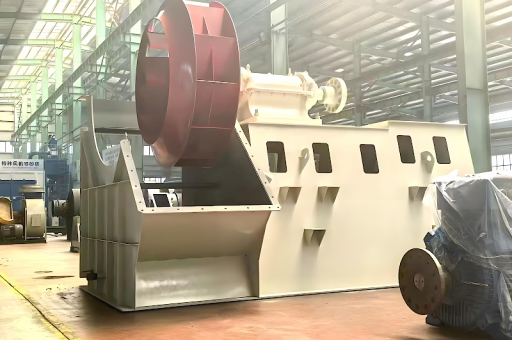
It appears you're describing a specific type of industrial fan used in power generation. Let's break down what "Double Inlet Medium Pressure Coal Fired Boiler Centrifugal Fan" means and its applications.
This description typically refers to either an Induced Draft (ID) Fan or a Forced Draft (FD) Fan for a medium-sized coal-fired boiler.
Here is a detailed breakdown of the terminology and the fan's characteristics:
Breakdown of the Name
- Double Inlet (Double Suction):
- The fan casing has two air inlets (one on each side of the impeller).
- Why? This design allows the fan to handle a very large volume of air or flue gas while keeping the impeller width manageable. It also helps balance the axial thrust on the bearings.
- Medium Pressure:
- This refers to the fan's pressure rise capability.
- Typical range: 1500 Pa to 5000 Pa (approx. 6 to 20 inches w.g.).
- Why? Coal boiler systems require enough pressure to overcome the resistance of:
- The air pre-heater.
- The coal pulverizers (if forced draft).
- The boiler furnace (draft loss).
- The dust collector (baghouse or ESP) and ductwork (if induced draft).
- Coal Fired Boiler Centrifugal Fan:
- Application: Specifically designed for the harsh environment of a coal power plant.
- Type: Centrifugal fans use a rotating impeller to increase the velocity of the gas, which is then converted into pressure.
- Key Design Feature (Airfoil vs. Radial):
- For clean air (Forced Draft): These are almost always Airfoil (AF) or Backward Inclined (BI) blades. Airfoil blades are highly efficient (85-90%) but are made of hollow steel plates that require clean air.
- For dirty flue gas (Induced Draft): These are typically Radial or Radial Tip blades. These are stronger, self-cleaning, and resistant to erosion from fly ash.
Application: ID Fan vs. FD Fan
This fan is crucial for the boiler's air and gas system.
- If it is a Forced Draft (FD) Fan:
- Location: At the beginning of the air path (before the boiler).
- Role: Draws fresh ambient air, pushes it through the air pre-heater, and forces it into the furnace to support combustion.
- Gas: Clean, ambient air.
- Challenge: Handles high volumes at medium pressure. Efficiency is a primary concern.
- If it is an Induced Draft (ID) Fan:
- Location: At the end of the gas path (after the boiler and pollution control equipment).
- Role: Sucks the hot, dirty flue gas out of the boiler furnace, through the economizer, air heater, and dust collector, and pushes it up the stack. It maintains a negative pressure (vacuum) in the furnace.
- Gas: Hot (150°C - 180°C), abrasive flue gas containing fly ash, SOx, NOx.
- Challenge: Erosion, corrosion, and high temperature. The double-inlet design helps handle the massive volume of exhaust gas.
Typical Specifications for this Fan
| Parameter | Typical Value / Range |
|---|---|
| Flow Rate | 100,000 to 600,000 m³/h (for a medium boiler) |
| Total Pressure | 2000 Pa to 5000 Pa |
| Speed | 600 - 1000 RPM (often via variable frequency drive) |
| Temperature | Ambient (FD) or 130°C - 180°C (ID) |
| Impeller Type | Airfoil (FD) or Radial/Radial Tip (ID) |
| Material | Carbon Steel (FD) or Abrasion-resistant steel + Hard-facing (ID) |
| Drive | Direct drive or with coupling (to handle high power) |
Key Engineering Considerations
- Erosion (ID Fan only): This is the #1 killer. A double-inlet fan for ID service requires thick wear plates on the blades and casing, and often a sacrificial lining. Erosion is worst when the fan operates near its "peak pressure" point.
- Vibration: Large double-inlet fans are heavy. Bearings must be generously sized. Shafts must be stiff. A rotor imbalance from even a small amount of ash buildup can cause severe vibration.
- Variable Speed Operation: Most modern medium-pressure fans use a Variable Frequency Drive (VFD) or a hydraulic coupling. This is far more efficient than using a damper or inlet vanes to control flow.
- Critical Speed: The shaft speed must be far below the first critical speed of the rotor assembly to avoid resonance.
Summary
The Double Inlet Medium Pressure Coal Fired Boiler Centrifugal Fan is the heart of the boiler's air/gas system. It is a large, robust machine designed to move massive volumes of air or gas at a moderate pressure rise for a medium-sized coal power plant. Its double-inlet design balances flow and reduces mechanical stress, while its specific blade type (airfoil for clean air, radial for dirty gas) dictates its service life and efficiency.
If you are selecting, maintaining, or troubleshooting one of these, the most critical factors are material selection for erosion resistance (if it's an ID fan) and rotor balancing and bearing health.





