
This article's table of contents introduction:
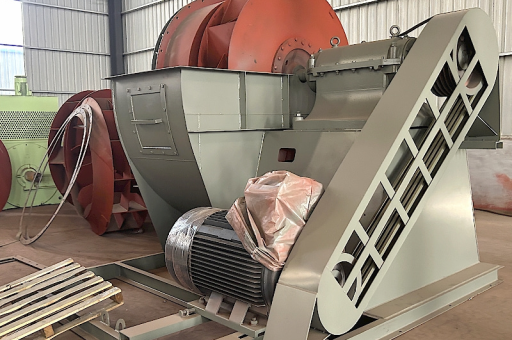
- Fan Type: Centrifugal Flow Fan
- Material: Alloy Steel
- Application: Industrial Boiler
- Design/Type: SA
- Key Performance: High Air Flow
- Summary: The Likely Application
- Professional Insights:
This sounds like a description of a very specific, heavy-duty piece of industrial equipment. Let me break down what each term in that phrase means and what the application likely is.
Here is the interpretation of "Alloy Steel High Air Flow Industrial Boiler SA Centrifugal Flow Fan":
Fan Type: Centrifugal Flow Fan
- What it is: Unlike a propeller fan (like a desk fan) that moves air parallel to its axis, a centrifugal fan (or squirrel-cage fan) draws air in axially and then expels it radially (at a 90-degree angle) using a rotating impeller.
- Why for this application: Centrifugal fans are excellent for generating high pressure. For an industrial boiler, you need to overcome the resistance of the boiler tubes, heat exchangers, ductwork, and pollution control equipment (baghouses, scrubbers).
Material: Alloy Steel
- Standard Fans: Normal fans are made of carbon steel (mild steel).
- Why Alloy Steel? This is a critical upgrade. Alloy steel includes elements like Chromium, Molybdenum, Nickel, or Manganese.
- High Temperature: Boiler environments are hot. Alloy steel maintains its strength and resistance to creep (deformation under heat stress) better than carbon steel.
- Corrosion Resistance: Flue gases contain acidic compounds (sulfuric acid from sulfur in fuel, for example). Alloy steel (specifically Corten steel or stainless grades) resists this corrosion.
- Erosion Resistance: Fly ash and particulates in the gas stream erode fan blades. Alloy steel is harder and more durable.
Application: Industrial Boiler
- Purpose: This fan is a critical component of the boiler's air system. It is most likely one of two types:
- Forced Draft (FD) Fan: Sits at the front of the boiler. It forces fresh, ambient air into the furnace to support combustion. (This is the more likely use of "SA" - see below).
- Induced Draft (ID) Fan: Sits at the back of the boiler (after the economizer/scrubber). It pulls the hot flue gas out of the furnace and maintains a negative pressure (vacuum) in the boiler to prevent backdrafting.
- Primary Air (PA) Fan: Used specifically in coal-fired boilers to "push" the coal powder into the furnace.
Design/Type: SA
- Interpretation: "SA" is likely a manufacturer's model designation for a specific blade or housing design. In the context of boiler fans, the most common interpretation is "Single-Advance" or "Single-Air" design. However, a more specific interpretation is that it refers to an "S-Alternative" or a specific proprietary model line (e.g., from a company like New York Blower, Chicago Blower, or a specific OEM).
- Common Boiler Fan Types (for context):
- Radial Blade: High pressure, handles dirty air (common for ID fans).
- Backward Curved (or Backward Inclined): Higher efficiency, non-overloading horsepower characteristic (common for FD fans).
- Airfoil: Highest efficiency, but blades are hollow and susceptible to erosion (requires clean air).
- SA (Single-Air): Often refers to a single-width, single-inlet (SWSI) design with a specific blade shape optimized for medium pressure and high flow.
Key Performance: High Air Flow
- Scale: Industrial boiler fans move massive amounts of air—often measured in cubic feet per minute (CFM) or cubic meters per hour (m³/h)—ranging from 50,000 CFM to over 1,000,000 CFM for large power plants.
- Pressure: These fans create a static pressure (SP) ranging from 20 inches of water gauge (in. w.g.) for FD fans to over 100 in. w.g. for ID fans.
Summary: The Likely Application
This fan is almost certainly an Induced Draft (ID) Fan or a Primary Air (PA) Fan for a medium-to-large industrial boiler burning solid fuel (coal, biomass, or high-sulfur oil).
Why?
- Alloy Steel is expensive and only used when necessary (high heat, corrosive flue gas, or erosive fly ash).
- High Air Flow and Centrifugal design confirm it's a major boiler air/gas mover.
- The "SA" designation likely refers to a specific, heavy-duty impeller design that balances efficiency with the ability to handle hot, dirty, corrosive gas.
Professional Insights:
- Maintenance: Fans handling dirty flue gas (ID fans) require frequent inspection for erosion on the leading edges of the blades and wear at the shaft/housing seals.
- Vibration: Due to the high mass and RPM, these fans require robust foundations and high-quality dynamic balancing. Any imbalance due to uneven dust buildup or blade erosion is immediately noticeable.
- Drive System: They are typically driven by a large electric motor (often 500 HP to 5,000+ HP), sometimes with a variable frequency drive (VFD) for energy efficiency, coupled via a long shaft or directly mounted.
To give you a perfectly precise answer, I would need to know:
- The specific brand of the fan (e.g., Turbair, Greenheck, New York Blower, Robinson Fans).
- The exact model number (e.g., SA-3010 or SA 150).
- The application: FD (fresh air in) or ID (flue gas out)?
However, based on the phrase alone, the most accurate description is: A high-pressure, corrosion/erosion-resistant centrifugal fan used on an industrial boiler for moving hot or dirty air at very high volumes.





