
This article's table of contents introduction:
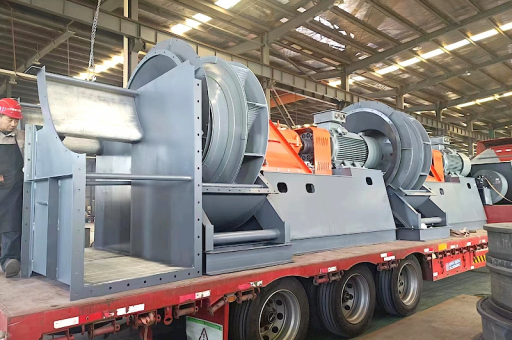
- Table of Contents
- Introduction: Why High Temperature Fans Matter
- Technical Overview: What is a High Temperature Backward Furnace High Pressure Centrifugal Fan?
- Key Design Features: Backward Curved Blades and Material Selection
- Performance Characteristics: Pressure, Temperature, and Efficiency
- Common Applications: From Steel Mills to Cement Kilns
- Maintenance & Safety: Ensuring Longevity Under Extreme Heat
- Frequently Asked Questions (FAQ)
- Conclusion: A Critical Component for Modern Industrial Processes
*The Role of High Temperature Backward Furnace High Pressure Centrifugal Fan in Industrial HVAC Systems*
Table of Contents
- Introduction: Why High Temperature Fans Matter
- Technical Overview: What is a High Temperature Backward Furnace High Pressure Centrifugal Fan?
- Key Design Features: Backward Curved Blades and Material Selection
- Performance Characteristics: Pressure, Temperature, and Efficiency
- Common Applications: From Steel Mills to Cement Kilns
- Maintenance & Safety: Ensuring Longevity Under Extreme Heat
- Frequently Asked Questions (FAQ)
- Conclusion: A Critical Component for Modern Industrial Processes
Introduction: Why High Temperature Fans Matter
In industrial environments where processes involve extreme heat, dust, and corrosive gases, standard ventilation equipment fails quickly. The High Temperature Backward Furnace High Pressure Centrifugal Fan is engineered to overcome these harsh conditions. Unlike standard axial fans or forward-curved centrifugal fans, this specialized unit moves large volumes of hot gas—often exceeding 400°C—against significant system resistance.
Why is this important? Without reliable fan systems, furnaces, kilns, and boilers would suffer from poor combustion efficiency, overheating, and premature component failure. The demand for robust, high-temperature fans has grown with stricter emissions regulations and the push for energy-efficient manufacturing.
Technical Overview: What is a High Temperature Backward Furnace High Pressure Centrifugal Fan?
Simply put, this is a centrifugal fan designed to handle gas temperatures typically ranging from 200°C to 600°C, with special models capable of 800°C+ for short durations. The term "backward" refers to the blade orientation: the blades curve away from the direction of rotation. This design creates high static pressure while maintaining stable airflow, even when the gas density decreases due to heat.
Key components:
- Impeller: Backward curved blades, often made of heat-resistant steel or stainless steel.
- Housing: Reinforced casing with thermal expansion joints.
- Shaft & Bearings: Water-cooled or air-cooled bearing systems to prevent overheating.
- Drive system: Belt-driven or direct-coupled motor, often with variable frequency drive (VFD) for precise control.
When searching for this fan on industrial procurement sites or technical forums, you will see it referenced as an "FdB" fan (Furnace, backward, high pressure) in many engineering standards.
Key Design Features: Backward Curved Blades and Material Selection
The backward curved blade is the most critical design element. Compared to forward-curved or radial blades, backward blades offer:
- Higher efficiency: Less energy loss due to reduced air recirculation.
- Non-overloading power curve: As system resistance drops, motor power draw remains stable or decreases, preventing motor burnout.
- Lower noise levels: Smoother airflow transition.
Material choice is paramount. For standard industrial furnaces, the impeller is often fabricated from Corten steel, 310S stainless steel, or Inconel alloys. The fan housing is lined with ceramic fiber or refractory insulation to protect the structure.
Real-world example: In a glass manufacturing plant, a backward furnace fan operating at 450°C with 12 kPa static pressure was retrofitted. The previous forward-curved fan failed every 6 months due to impeller fatigue. The backward design lasted over 3 years with only routine bearing maintenance.
Performance Characteristics: Pressure, Temperature, and Efficiency
For these fans, performance is defined by three variables:
- Temperature: Affects air density. At 400°C, air density is roughly half of that at 20°C. The fan must be sized to account for this density reduction (often using the "density correction factor" per AMCA standards).
- Static Pressure: Typically ranges from 5 kPa to 25 kPa (500–2500 mm H₂O). High pressure is needed to overcome duct resistance, filtration systems, and furnace backpressure.
- Volume Flow Rate: Ranges from 10,000 m³/h for small furnaces to over 500,000 m³/h for large power plant boilers.
Efficiency Note: Top-tier backward curved fans achieve 82–86% static efficiency at their best point (BEP). This is 10–15% higher than standard forward-curved fans, translating to significant energy savings over a year.
Common Applications: From Steel Mills to Cement Kilns
| Industry | Application | Typical Temperature | Pressure |
|---|---|---|---|
| Steel | Blast furnace gas evacuation | 300–600°C | 15–20 kPa |
| Cement | Kiln exhaust & clinker cooling | 350–450°C | 8–12 kPa |
| Power generation | Induced draft (ID) fans for boiler | 200–400°C | 10–18 kPa |
| Petrochemical | Catalytic cracker flue gas | 400–700°C | 12–25 kPa |
| Incineration | Waste-to-energy plant | 500–850°C | 6–15 kPa |
In each case, the fan must handle not only high temperature but also particulate matter (ash, soot) and corrosive gases (SOx, NOx). Backward furnace fans are often equipped with wear liners and erosion-resistant coatings.
Maintenance & Safety: Ensuring Longevity Under Extreme Heat
Common failure modes:
- Bearing failure due to conducted heat from shaft.
- Impeller fatigue from thermal cycling.
- Shaft misalignment from uneven expansion.
Best practices:
- Install cooling fins or a water jacket on the bearing housing.
- Use thermal grease and monitor bearing temperature in real-time.
- Schedule vibration analysis weekly—a 3–5 mm/s increase in velocity is a red flag.
- Inspect blade tip clearance quarterly; buildup of deposits can cause imbalance.
Pro tip: Always specify a minimum speed for the fan to avoid resonance during startup and shutdown (avoid the critical speed range).
Frequently Asked Questions (FAQ)
Q1: Can a High Temperature Backward Furnace Fan handle corrosive gases?
Yes. Special coatings (e.g., borosilicate glass flake lining) or alloys (e.g., Hastelloy) can be used. However, the upfront cost increases by 20–40%.
Q2: What is the difference between a backward fan and a forward fan for high temperature?
Backward fans have a higher pressure capability and better efficiency at high temperature. Forward fans are cheaper but suffer from power spikes and lower efficiency when gas density drops.
Q3: How do I calculate the required power for my application?
Use the formula:
Power (kW) = (Flow m³/s × Pressure Pa) / (1000 × Fan Efficiency × Drive Efficiency)
Remember to correct pressure for actual temperature using density ratio.
Q4: Can I use a standard centrifugal fan for a furnace exhaust?
Not recommended. Standard fans lack the thermal insulation, expansion joints, and high-temperature bearing systems required. They typically fail within weeks.
Q5: Why is my fan vibrating after installation?
Possible causes: foundation resonance, imbalance due to thermal distortion, or misalignment of the shaft. First, check if vibration increases with temperature—if yes, it is likely thermal distortion.
Conclusion: A Critical Component for Modern Industrial Processes
The High Temperature Backward Furnace High Pressure Centrifugal Fan is not merely a commodity piece of equipment—it is a precision-engineered system that directly impacts production uptime, energy consumption, and emission control. From the backward curved blade geometry that maximizes efficiency, to the specialized alloys and cooling systems that withstand extreme heat, every design choice is driven by the demanding environments of steel mills, cement plants, and power stations.
Investing in a properly sized, high-quality backward furnace fan reduces total cost of ownership by 30–50% over 10 years compared to low-cost alternatives. For engineers and plant managers, understanding its design principles, installation requirements, and maintenance pitfalls is essential for optimizing industrial HVAC and process exhaust systems.
As industries continue to push for higher productivity with lower emissions, the backward furnace high pressure fan will remain an indispensable element of thermal management. Always consult with an experienced supplier for dynamic simulation and FMEA (Failure Mode and Effects Analysis) before final specification.





