
This article's table of contents introduction:
- Table of Contents
- Introduction: The Core Challenge in Industrial Dust Collection
- What Is a Low Pressure High Air Flow Dust Collector Fan?
- The Backward Curved Blade Design: Engineering Behind the Efficiency
- Why Low Pressure, High Air Flow Matters for Dust Collection
- Key Performance Metrics: Static Pressure, CFM, and Brake Horsepower
- Applications: Where This Fan Excels
- Installation and Maintenance Best Practices
- Frequently Asked Questions (FAQ)
- Conclusion: Choosing the Right Fan for Your System
** Maximizing Industrial Air Cleaning: The Science and Application of Low Pressure High Air Flow Dust Collector Fans with Backward Curved Blades
Table of Contents
- Introduction: The Core Challenge in Industrial Dust Collection
- What Is a Low Pressure High Air Flow Dust Collector Fan?
- The Backward Curved Blade Design: Engineering Behind the Efficiency
- Why Low Pressure, High Air Flow Matters for Dust Collection
- Key Performance Metrics: Static Pressure, CFM, and Brake Horsepower
- Applications: Where This Fan Excels
- Installation and Maintenance Best Practices
- Frequently Asked Questions (FAQ)
- Conclusion: Choosing the Right Fan for Your System
Introduction: The Core Challenge in Industrial Dust Collection
In any industrial environment that generates airborne particles—woodworking, metal grinding, chemical processing, or grain handling—effective dust collection is non-negotiable. The heart of any dust collection system is the fan. Without a fan that precisely matches the system’s resistance and volume requirements, filters clog prematurely, ducts choke, and indoor air quality collapses.
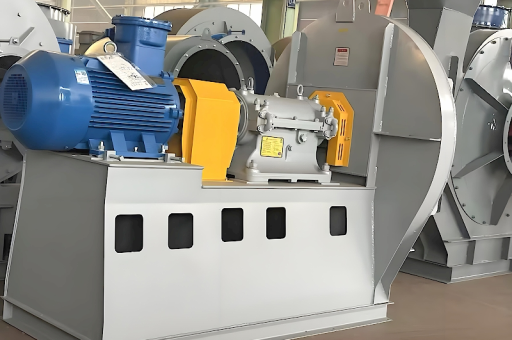
The Low Pressure High Air Flow Dust Collector Fan with Backward Curved Blades has emerged as a preferred solution for many mid-to-large scale operations. Unlike conventional forward-curved or radial-blade fans, this design prioritizes volume over high static pressure, making it ideal for systems with lower resistance but high air turnover needs.
This article explores the engineering rationale, performance characteristics, selection criteria, and real-world applications of this fan type, drawing on established mechanical engineering principles and SEO-optimized industrial content.
What Is a Low Pressure High Air Flow Dust Collector Fan?
A low pressure high air flow dust collector fan is a centrifugal fan designed to move large volumes of air—often measured in thousands of cubic feet per minute (CFM)—against relatively low system resistance, typically under 10 inches of water gauge (in. w.g.).
Key characteristics include:
- Impeller design: Backward curved (or backward inclined) blades.
- Pressure range: 3 to 10 in. w.g. (static pressure).
- Air flow: High CFM per horsepower.
- Efficiency: Typically 75% to 85% peak static efficiency.
- Noise level: Lower than forward-curved or radial designs at equivalent flow.
This fan is not suited for high-resistance systems like baghouse filters with heavy dust cakes or long, convoluted duct runs. However, for simple duct layouts, cartridge collectors, or cyclones, it offers significant energy savings.
The Backward Curved Blade Design: Engineering Behind the Efficiency
The blade geometry is the single most important factor. Backward curved blades are curved away from the direction of rotation. As the impeller spins, air enters near the hub and is accelerated outward by centrifugal force. The blade’s trailing edge cuts through the air, reducing turbulence and minimizing recirculation.
Benefits of backward curved blades include:
- Non-overloading power curve: The power requirement peaks at a specific operating point. If system resistance drops unexpectedly, the motor does not overload—a critical safety feature in dust collection.
- Higher efficiency: Because the blades are less aggressive than forward-curved designs, they produce less slip and friction, converting more input power into useful air movement.
- Lower noise: The smoother airflow path reduces vortex shedding and blade-passing frequency noise.
- Self-cleaning: The blade surface is less prone to material buildup compared to radial or paddle-wheel designs.
However, backward curved fans are larger for the same duty than forward-curved fans, which can be a consideration in space-constrained installations.
Why Low Pressure, High Air Flow Matters for Dust Collection
Many dust collection systems are oversized for static pressure. Engineers often spec high-pressure fans out of caution, only to throttle them with dampers or variable frequency drives (VFDs). This wastes energy.
A low pressure high air flow fan matches a low-resistance system perfectly:
- Cyclone pre-separators: Typically operate at 2–4 in. w.g.
- Cartridge filters (clean): Often 4–6 in. w.g.
- Short duct runs with gradual bends: 3–6 in. w.g.
When the fan’s design pressure aligns with actual system resistance, the fan operates near its Best Efficiency Point (BEP). This reduces energy consumption by 15% to 30% compared to an oversized high-pressure fan.
Furthermore, high air flow ensures that capture velocity at the dust source is maintained, preventing fugitive emissions and protecting worker respiratory health.
Key Performance Metrics: Static Pressure, CFM, and Brake Horsepower
When evaluating a low pressure high air flow dust collector fan with backward curved blades, three metrics define its suitability:
| Metric | Typical Range | Significance |
|---|---|---|
| Static Pressure | 3–10 in. w.g. | Determines how much resistance the fan can overcome |
| Air Volume (CFM) | 5,000–50,000+ | Indicates total air movement capacity |
| Brake Horsepower (BHP) | 5–75 HP | Directly relates to operating cost |
Fan laws govern how changes in speed (RPM) affect performance:
- CFM ∝ RPM
- Static Pressure ∝ RPM²
- BHP ∝ RPM³
Therefore, even a small speed reduction yields significant energy savings. A VFD is highly recommended for this fan type.
Applications: Where This Fan Excels
Ideal applications include:
- Woodworking shops: Chip extraction and fine dust collection with short ductwork.
- Plastic and rubber processing: Conveying pellets and removing fumes.
- Food processing: Grain, flour, and spice handling with low resistance.
- Metal fabricating: Grinding and welding fume capture with cartridge collectors.
- Pharmaceutical and chemical: Light powder handling in cleanrooms.
- General ventilation: Make-up air or exhaust for large open spaces.
Unsuitable applications:
- High-resistance baghouses with heavy dust loading (>12 in. w.g.).
- Long, complex duct networks (>200 ft with many elbows).
- Pneumatic conveying systems requiring high pressure.
Installation and Maintenance Best Practices
Proper installation extends fan life and maintains efficiency:
- Inlet ductwork: Use straight inlet sections at least 1.5 duct diameters long. Avoid elbows at the inlet.
- Outlet ductwork: A gradual expansion or straight outlet prevents recirculation.
- Isolation: Install vibration isolators and flexible connectors.
- Access doors: Ensure easy access for cleaning the impeller.
- Belt tension: Check monthly. Loose belts reduce RPM and air flow.
- Bearing lubrication: Use lithium-based grease; relubricate every 3 months.
- Impeller balance: Clean the blades if dust buildup is visible. Even a thin layer can cause imbalance and vibration.
Maintenance checklist:
- Monthly: Check belt tension, motor current, and vibration.
- Quarterly: Lubricate bearings, inspect impeller.
- Annually: Deep clean housing, replace belts, test VFD.
Frequently Asked Questions (FAQ)
Q1: Can a backward curved fan be used in a high-pressure dust collector?
No. These fans are designed for low static pressure, typically below 10 in. w.g. For higher pressures, backward inclined airfoil or radial blade fans are more suitable.
Q2: What happens if I block the inlet of a backward curved fan?
Unlike forward curved fans, the power curve of a backward curved fan peaks at the design point. Blocking the inlet actually reduces power draw, preventing motor overload. However, it also reduces air flow.
Q3: How do I calculate the required CFM for my dust collector?
Use the capture velocity method: For woodworking, capture velocity of 2,000–3,500 ft/min at the tool opening. Multiply by the area of the hood opening (in sq ft) to get CFM. Then add 10% for system leakage.
Q4: Is a VFD necessary for this fan type?
Not mandatory, but highly recommended. A VFD allows you to tune the fan speed to match changing system conditions, saving up to 30% on energy costs.
Q5: Can this fan handle sticky or moist dust?
Backward curved blades are better than radial blades for light, dry dust. For sticky or wet materials, an airfoil or radial paddle wheel design is preferable.
Q6: How long does a typical fan last?
With proper maintenance, a well-built industrial fan can last 15–25 years. The key is regular bearing lubrication, belt inspection, and impeller cleaning.
Conclusion: Choosing the Right Fan for Your System
A Low Pressure High Air Flow Dust Collector Fan with Backward Curved Blades is not a one-size-fits-all solution. But for applications where the system resistance is modest and air volume is paramount, it offers the best balance of efficiency, noise, and operating cost.
When selecting a fan, always:
- Measure or estimate your system’s total static pressure (including filters, ducts, and hoods).
- Determine the required CFM from your capture velocities.
- Consult the fan’s performance curve to ensure the operating point falls near the Best Efficiency Point.
- Use a VFD to future-proof against filter loading.
By matching the fan to the system, rather than oversizing, you will achieve cleaner air, lower electricity bills, and longer equipment life.
For more technical specification sheets or to request a performance calculation, consult a certified industrial ventilation engineer or your local fan supplier directly.





