
This article's table of contents introduction:
- Table of Contents
- Introduction: Why Material and Design Matter in Air Purification
- What Is a Backward Curved Centrifugal Fan?
- Why Alloy Steel? The Material Advantage
- How Alloy Steel Backward Curved Centrifugal Fans Enhance Air Purification
- Key Performance Metrics: Efficiency, Pressure, and Longevity
- Common Applications in Industrial and Commercial Air Cleaning
- Frequently Asked Questions (FAQ)
- Conclusion: The Future of Filtration and Fan Technology
** The Critical Role of Alloy Steel Backward Curved Centrifugal Fans in Modern Air Purification Systems
Table of Contents
- Introduction: Why Material and Design Matter in Air Purification
- What Is a Backward Curved Centrifugal Fan?
- Why Alloy Steel? The Material Advantage
- How Alloy Steel Backward Curved Centrifugal Fans Enhance Air Purification
- Key Performance Metrics: Efficiency, Pressure, and Longevity
- Common Applications in Industrial and Commercial Air Cleaning
- Frequently Asked Questions (FAQ)
- Conclusion: The Future of Filtration and Fan Technology
Introduction: Why Material and Design Matter in Air Purification
Air purification systems—from hospital HVAC units to industrial fume scrubbers—depend on one critical component: the fan. Without reliable airflow, even the most advanced HEPA or carbon filters are useless. The choice of fan material and blade geometry directly influences system efficiency, maintenance costs, and long-term durability. Among the many options, Alloy Steel Backward Curved Centrifugal Fans have become the gold standard for demanding air purification environments.
Why? Because these fans combine a corrosion-resistant, high-strength alloy steel construction with an aerodynamically optimized backward curved blade design. This synergy delivers high static pressure, low noise, and exceptional resistance to particulate wear. This article explores the specific advantages of these fans, their operating principles, and why they outperform alternatives in modern air purification setups.
What Is a Backward Curved Centrifugal Fan?
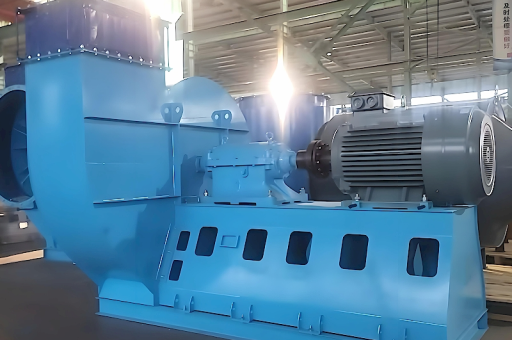
A backward curved centrifugal fan (also called a backward inclined fan) features blades that curve away from the direction of rotation. Unlike forward curved or radial blade designs, the backward curve creates a unique airflow pattern:
- Air enters at the impeller center (eye).
- The rotating impeller flings air outward via centrifugal force.
- The backward curve guides air smoothly toward the volute casing, minimizing turbulence and recirculation.
Key characteristics:
- Non-overloading power curve: As system resistance increases, motor power draw does not spike dangerously. This protects the fan and motor from burnout.
- High static pressure capability: Essential for pushing air through dense filter media or long ductwork.
- Lower noise levels: The smooth flow reduces blade pass frequency noise compared to forward curved fans.
In air purification, where filters create significant backpressure, this non-overloading property is a lifesaver. It allows the fan to handle varying filter loads without risking electrical or mechanical failure.
Why Alloy Steel? The Material Advantage
The term "alloy steel" refers to steel that contains additional elements (e.g., chromium, nickel, molybdenum, vanadium) to enhance specific properties. For centrifugal fans used in air purification, alloy steel offers three decisive benefits:
| Property | Benefit for Air Purification |
|---|---|
| Corrosion Resistance | Withstands moisture, acidic fumes, and chemical vapors often found in industrial exhaust or lab ventilation. |
| Wear Resistance | Handles abrasive dust particles (e.g., from woodworking, mining, or cement) without rapid blade erosion. |
| Strength-to-Weight Ratio | Allows for larger, faster rotating impellers without deformation, enabling higher airflow at lower energy cost. |
Comparison with alternatives:
- Carbon steel: Cheaper but rusts quickly when exposed to humid or chemically aggressive airstreams.
- Stainless steel: Excellent corrosion resistance but heavier and more expensive; alloy steel offers a balanced cost-performance trade-off.
- Aluminum: Lightweight and corrosion-resistant but far weaker; cannot withstand the high tip speeds or particle impact seen in heavy-duty purification.
For a fan used continuously—such as in a pharmaceutical cleanroom or a municipal waste incinerator—alloy steel’s durability translates directly into lower total cost of ownership.
How Alloy Steel Backward Curved Centrifugal Fans Enhance Air Purification
A. High Static Pressure for Dense Filtration Trains
Modern air purification often uses multi-stage filtration: pre-filters, bag filters, HEPA filters, and sometimes activated carbon beds. Each stage adds resistance. A backward curved fan designed with alloy steel impellers can deliver static pressures of 10–30 inches of water gauge (inWG) or more, ensuring adequate airflow even when filters become partially loaded.
B. Consistent Airflow Over Long Duct Runs
In large buildings or industrial plants, the fan must push air hundreds of feet through ducts. The backward curve’s efficiency (typically 75–85% static efficiency) minimizes energy loss. Alloy steel’s rigidity keeps the impeller stable at high RPM, maintaining concentric rotation and reducing vibration.
C. Resistance to Chemical and Moisture Attack
Consider a fan in a battery recycling facility or a chemical fume hood. The air may contain sulfuric acid mist, chlorine, or volatile organic compounds (VOCs). Alloy steel—especially chromium-molybdenum grades—forms a passive oxide layer that resists corrosion far better than standard mild steel. This prevents blade pitting and balancing issues that would otherwise shut down the system.
D. Handling Particulate Without Erosion
A backward curved blade’s airfoil shape is inherently less prone to particle impact than radial or forward curved blades. Combined with hardened alloy steel, these fans can tolerate airborne dust loads of 50–100 mg/m³ without significant wear—common in wood processing, grain handling, or metal grinding operations.
Key Performance Metrics: Efficiency, Pressure, and Longevity
When selecting an Alloy Steel Backward Curved Centrifugal Fan for air purification, engineers focus on three parameters:
- Static Efficiency (η): Typically 70–85%. Higher efficiency means lower electricity consumption and reduced carbon footprint.
- Static Pressure (Ps): Measured in Pa or inWG. Look for a fan that matches the system’s pressure drop at the design airflow.
- Impeller Tip Speed: For alloy steel, safe maximum tip speeds range from 60 to 100 m/s, depending on the exact alloy and impeller diameter.
Maintenance benefits:
- Alloy steel impellers exhibit low erosion rates, extending service intervals to 2–5 years in typical use.
- Backward curved designs are self-cleaning to some degree—centrifugal force flings particles outward, reducing build-up inside the impeller.
These features make them ideal for continuous-duty applications in hospitals, semiconductor fabs, and food processing plants.
Common Applications in Industrial and Commercial Air Cleaning
| Application | Why Alloy Steel Backward Curved Fans Are Used |
|---|---|
| Pharmaceutical Cleanrooms | High static pressure for HEPA filter banks; corrosion resistance from VOCs. |
| Wastewater Treatment | Handles damp, corrosive air from aeration tanks and sludge drying. |
| Cement & Mining | Abrasive dust resistance; alloy steel blades survive thousands of hours of particle impact. |
| Commercial Kitchens | Grease-laden air; backward curve prevents fan stall when filters clog. |
| Chemical Processing | Resists acidic and alkaline fumes; easy to balance after slight wear. |
| HVAC Filtration Upgrades | Retrofitting older systems to meet higher MERV ratings requires fans that can handle increased pressure drop. |
Frequently Asked Questions (FAQ)
Q1: Why choose a backward curved centrifugal fan over a forward curved one for air purification?
A: Backward curved fans have a non-overloading power curve, higher static efficiency, and handle higher pressure differentials. Forward curved fans are cheaper but can overheat motors if filter resistance increases unexpectedly.
Q2: Is alloy steel always better than stainless steel for these fans?
A: Not always. Stainless steel (e.g., 304 or 316) offers superior corrosion resistance for extremely aggressive chemicals. However, alloy steel provides a better strength-to-cost ratio for most industrial air cleaning applications, especially where abrasive particles are present.
Q3: Can you retrofit an existing purification system with an alloy steel backward curved fan?
A: Yes. Many fan manufacturers offer direct replacement impellers and housings. Ensure that the motor and drive components are rated for the new fan’s speed and power. Consulting with a fan engineer is recommended to match the fan curve to the system curve.
Q4: How often should I inspect or replace the impeller?
A: In clean conditions (e.g., hospital HVAC), inspection every 12–18 months is sufficient. In abrasive or corrosive environments (e.g., sawmills or chemical exhaust), inspect every 6 months. Replace if blade thickness has reduced by more than 20% or if balance has degraded.
Q5: Does the backward curved design reduce energy consumption?
A: Yes. Typical static efficiency of 75–85% means less electrical energy is wasted as heat or turbulence. Over a 10-year lifespan, this can save thousands of dollars in electricity costs compared to less efficient fan types.
Conclusion: The Future of Filtration and Fan Technology
As air quality regulations tighten and industries push toward zero-emission operations, the demand for robust, efficient fan solutions will only grow. Alloy Steel Backward Curved Centrifugal Fans sit at the intersection of mechanical durability and aerodynamic intelligence. They offer the high static pressure needed for advanced filtration, the material resilience to handle hostile airstreams, and the operational stability to run for years without failure.
Whether you are designing a new cleanroom, upgrading a dust collection system, or retrofitting a hospital HVAC plant, these fans provide a proven, long-term answer to the question: “How do I move air efficiently through increasing filtration resistance?”
By investing in alloy steel construction and backward curved geometry, you are not just buying a fan—you are securing the performance backbone of your entire air purification strategy.
For more technical specifications or to discuss a custom fan solution for your facility, contact your local industrial fan distributor or visit the fan knowledge base online.





