
This article's table of contents introduction:
- Table of Contents
- Introduction: The Critical Role of High Pressure Fans in Industrial Ventilation
- Understanding the Core Components: Centrifugal Fan vs. Axial Fan
- Why "Backward" Matters: The Aerodynamics of Backward Curved & Inclined Blades
- Deep Dive: The Boiler FD Fan (Forced Draft) – Purpose and Performance
- High Pressure Operation: Key Technical Specifications & Calculations
- Efficiency Comparison: Backward Bladed vs. Forward Bladed vs. Radial Fans
- Selection Criteria: How to Choose the Right Fan for Your Boiler System
- Installation, Maintenance & Vibration Analysis Best Practices
- Common Q&A: Troubleshooting High Pressure Centrifugal Fans
- Conclusion: Future Trends in High Pressure Fan Technology
*The Ultimate Guide to High Pressure Centrifugal Ventilation Fans: Backward Bladed Boiler FD Fan Design, Efficiency & Applications*
Table of Contents
- Introduction: The Critical Role of High Pressure Fans in Industrial Ventilation
- Understanding the Core Components: Centrifugal Fan vs. Axial Fan
- Why "Backward" Matters: The Aerodynamics of Backward Curved & Inclined Blades
- Deep Dive: The Boiler FD Fan (Forced Draft) – Purpose and Performance
- High Pressure Operation: Key Technical Specifications & Calculations
- Efficiency Comparison: Backward Bladed vs. Forward Bladed vs. Radial Fans
- Selection Criteria: How to Choose the Right Fan for Your Boiler System
- Installation, Maintenance & Vibration Analysis Best Practices
- Common Q&A: Troubleshooting High Pressure Centrifugal Fans
- Conclusion: Future Trends in High Pressure Fan Technology
Introduction: The Critical Role of High Pressure Fans in Industrial Ventilation
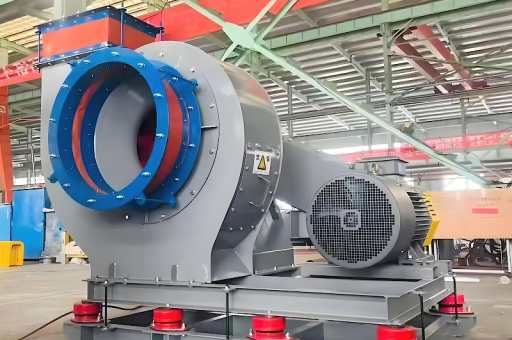
In the demanding world of industrial combustion, power generation, and heavy manufacturing, the humble fan is anything but simple. Among the most crucial pieces of rotating equipment is the High Pressure Centrifugal Ventilation Fan, specifically the Backward Bladed Boiler FD Fan. These machines are the lungs of a boiler system; they provide the precise volume of air at the high static pressure required to force air through fuel beds, burners, and heat exchangers.
Without a properly engineered FD fan, combustion efficiency plummets, emissions increase, and boiler capacity is severely limited. This article provides a comprehensive, technical deep-dive into these fans, focusing on the backward blade design, its aerodynamic advantages, and its specific application as a Forced Draft (FD) fan in high-pressure boiler environments. We will analyze why this design dominates the market for high-efficiency, high-pressure applications.
Understanding the Core Components: Centrifugal Fan vs. Axial Fan
To understand the power of a Boiler FD Fan, one must first distinguish between the two primary dynamic fan types.
- Axial Fans: These move air along the axis of the fan shaft (like a propeller). While capable of moving large volumes of air, they generate relatively low static pressure. They are not suitable for pushing air through the resistance (pressure drop) of a coal bed or a dense bank of boiler tubes.
- Centrifugal Fans (Radial Fans): These are the workhorses of high-pressure systems. Air enters the impeller axially and is thrown radially outward (centrifugal force). The scroll housing then converts this velocity energy into static pressure. A High Pressure Centrifugal Ventilation Fan is specifically designed with a robust impeller and tight clearance tolerances to generate the pressure differential needed for boiler operations.
Why "Backward" Matters: The Aerodynamics of Backward Curved & Inclined Blades
The term "Backward" in the context of a Centrifugal Fan refers to the direction of the blade tip relative to the direction of rotation. There are two sub-types:
- Backward Curved (BC): The blade curves away from the direction of rotation.
- Backward Inclined (BI): The blade is a straight paddle inclined away from the direction of rotation.
Why are backward bladed fans the standard for Boiler FD Fans?
- High Efficiency: They are the most efficient centrifugal fan design (often exceeding 85% static efficiency). This is because the air leaves the impeller at a velocity closer to the wheel tip speed, reducing shock losses.
- Non-Overloading Power Curve: This is the most critical feature for a boiler fan. The power curve for a backward bladed fan rises to a peak and then drops off as the flow rate increases beyond the design point. This means the motor will not burn out if the system resistance falls unexpectedly (e.g., a duct opens).
- Self-Limiting Pressure: They produce high pressure but are inherently more stable than forward curved fans.
Expert Analysis: While backward curved blades offer superior efficiency, they are cast or fabricated with complex geometries. This makes them more expensive than simple radial bladed fans, but the energy savings over a 10-year lifecycle of a boiler FD fan pay for the initial investment many times over.
Deep Dive: The Boiler FD Fan (Forced Draft) – Purpose and Performance
A boiler fan system typically consists of two main types: Forced Draft (FD) and Induced Draft (ID) .
- The FD Fan sits at the front end of the boiler. It pushes fresh air into the furnace.
- The ID Fan sits at the exhaust end, pulling flue gas out of the stack.
The High Pressure Centrifugal Backward Boiler FD Fan must overcome:
- The resistance of the air preheater.
- The pressure drop across the fuel bed (grate) or burner nozzles.
- The furnace pressure (which must be slightly negative to prevent blowback).
Key Performance Metrics for a Boiler FD Fan:
- Flow Rate: Measured in m³/s or CFM. This must match the stoichiometric air requirement plus excess air for complete combustion.
- Static Pressure: Measured in kPa, mmWC, or inches WC. A typical high-pressure boiler FD fan operates in the range of 2.5 to 8 kPa (25 mbar to 80 mbar).
- Temperature: The fan handles ambient air (20-40°C) but must be rated for the ambient environment.
High Pressure Operation: Key Technical Specifications & Calculations
When selecting a High Pressure Centrifugal Ventilation Fan for a boiler, engineers must reference the Fan Laws. These laws dictate how a fan performs when the speed or diameter changes.
The Core Fan Laws:
- Flow (Q) ∝ RPM (If you double the speed, you double the air volume).
- Pressure (P) ∝ RPM² (If you double the speed, you quadruple the static pressure).
- Power (Pw) ∝ RPM³ (If you double the speed, you need eight times the motor power).
Why this matters for the Backward Boiler FD Fan: The Backward FD fan is controlled via a Variable Frequency Drive (VFD) or inlet guide vanes. Due to the non-overloading power characteristic, the VFD control is very safe. The impeller material is typically Carbon Steel for standard temperature, but for high-temperature preheater air, an alloy steel or stainless steel shaft is required to prevent thermal expansion and fatigue.
Efficiency Comparison: Backward Bladed vs. Forward Bladed vs. Radial Fans
| Feature | Backward Curved (Boiler FD Fan) | Forward Curved (Squirrel Cage) | Radial (Paddle Wheel) |
|---|---|---|---|
| Efficiency | 85-90% (Highest) | 60-75% | 65-75% |
| Pressure | High | Medium | Very High (Low Volume) |
| Power Curve | Non-Overloading | Overloading | Overloading / Flat |
| Blade Shape | Deep, aerodynamic | Shallow, cupped | Straight, radial |
| Typical Use | Boiler FD/ID, HVAC | Low-pressure HVAC | Pneumatic conveying, dust |
Conclusion from table: For a Boiler FD Fan requiring high pressure and high flow simultaneously, the Backward Bladed design is the only commercial solution that offers efficiency without the risk of motor burnout via overloading.
Selection Criteria: How to Choose the Right Fan for Your Boiler System
When sourcing a High Pressure Centrifugal Ventilation Fan for a boiler, do not just look at the price. Follow this checklist:
- System Resistance Curve: Calculate the total pressure drop (static pressure) from the fan discharge to the burner. This is specific to your ductwork geometry.
- Operating Point: The fan must operate at its Best Efficiency Point (BEP) . Running far left or right of BEP causes vibration and wear.
- Temperature Rise: A high-pressure fan compresses air, causing a temperature rise. Ensure the motor chosen can handle the ambient heat plus the compression heat.
- Noise Level: Backward bladed fans are generally quieter than radial fans due to smooth airflow. However, you may require a silencer.
- Material of Construction: For a standard Boiler FD Fan handling clean air, carbon steel with a robust hub is sufficient. For corrosive or dusty environments, consider abrasion-resistant liners.
Installation, Maintenance & Vibration Analysis Best Practices
A high-performance Backward Boiler FD Fan is a precision machine. Improper installation can destroy the impeller in hours.
- Foundation: The fan base must be rigid. A flexible base will cause resonance.
- Alignment: Always use laser alignment between the motor shaft and fan shaft.
- Vibration Monitoring: Install accelerometer ports (IMC class). ISO 1940 G2.5 balancing is the minimum standard for this fan.
- Lubrication: Use high-temperature grease. Over-greasing is a common cause of bearing failure.
Critical Maintenance Tip: Because the backward blading creates a "shoveling" effect, any buildup of dirt on the blades will unbalance the rotor and drastically reduce efficiency. For a Boiler FD Fan, routine blade cleaning is non-negotiable.
Common Q&A: Troubleshooting High Pressure Centrifugal Fans
Q1: Why is my Backward Boiler FD Fan vibrating excessively? A: Check for three things: (1) Blade erosion or dust buildup causing unbalance; (2) Loose foundation bolts; (3) Resonance from the Variable Frequency Drive (VFD) operating near a critical speed. Run a vibration spectrum analysis.
Q2: The fan is running but airflow is low. What went wrong? A: Most likely, the system resistance is higher than calculated. Check your duct dampers. Ensure the inlet box is clear. Also, verify the fan's rotation direction (spiral housing orientation). A backward blade fan running backward will produce almost zero pressure.
Q3: Can I use a Forward Curved fan instead of a Backward one for my boiler? A: No. A forward curved fan is an overloading fan. If the boiler tube bank wears out or a duct fails, the resistance drops. The forward fan will then draw maximum power and trip the motor or burn it up. The Backward fan will stabilize itself.
Q4: How do I adjust the pressure of the High Pressure Centrifugal Fan? A: The most efficient method is using a VFD to adjust RPM. The next best is Inlet Guide Vanes (IGVs). Never use a discharge damper on a backward bladed fan; this wastes energy and can cause stall.
Q5: What is the lifespan of a Boiler FD Fan impeller? A: With proper balancing and clean air, a well-designed Backward Bladed steel impeller can last 15-20 years. In harsh, dusty environments, expect 5-8 years before fatigue cracking.
Conclusion: Future Trends in High Pressure Fan Technology
The High Pressure Centrifugal Ventilation Fan with Backward Blades remains the gold standard for Boiler FD Fan applications. We are seeing a trend toward aerofoil blades (hollow, aerodynamic vanes) which push efficiencies above 90%. Furthermore, smart monitoring via IoT sensors allows predictive maintenance on vibration and thermal growth.
If you are upgrading your boiler system, prioritize a high-quality Backward Bladed fan. The initial capital expenditure is offset by the stability of the non-overloading power curve and the significant electricity savings over the fan’s lifetime. Always consult your fan manufacturer for a detailed system analysis to ensure the operating point matches the BEP.
Remember: The right fan doesn't just move air; it optimizes combustion, saves fuel, and protects your investment. Choose the Backward Boiler FD Fan for reliability under pressure.





