
This article's table of contents introduction:
- Breaking Down the Description
- Why Use Aluminium Alloy in a Dust Collector Fan?
- "Energy Saving" Design Features
- Typical Applications
- Key Specifications to Look For (When Buying)
- Potential Caveats (Important)
- Summary Recommendation
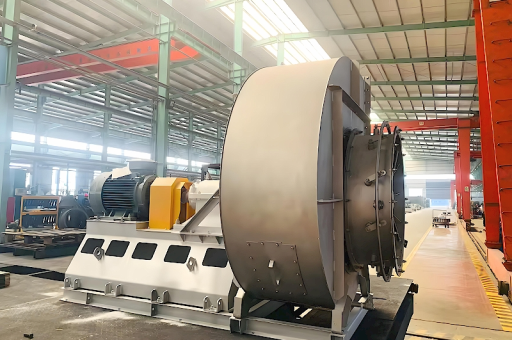
It appears you are describing a specific type of industrial fan commonly used in dust collection systems.
To give you the most accurate technical and commercial information, here is a breakdown of what that description means, its advantages, and where it is typically used.
Breaking Down the Description
- Aluminium Alloyed (Impeller): The fan wheel (impeller) is made from cast or fabricated aluminum alloy (e.g., ADC12, A356, or 5083).
- Dust Collector Fan: Designed to handle air streams containing particulate matter (dust, shavings, granules).
- Energy Saving: Implies high aerodynamic efficiency (often >80%), use of high-efficiency motors (IE3/IE4), and optimized volute design.
- Radial Blower: A fan where the airflow is centrifugal; the air enters axially and exits perpendicularly (radially). Radial blowers generate high static pressure but lower volume compared to axial fans.
Why Use Aluminium Alloy in a Dust Collector Fan?
This is the key differentiator. The choice of aluminum over traditional steel (mild or stainless) offers critical advantages:
| Feature | Benefit for Dust Collection |
|---|---|
| Non-Sparking (Explosion Proof) | This is the #1 reason. Aluminum is non-ferrous. If the fan ingests metal particles (e.g., from grinding), a steel fan can spark and ignite explosive dust (aluminum, magnesium, wood, flour, chemical powders). Aluminum alloy impellers reduce this risk. |
| Lightweight | Reduces inertia on the motor shaft. This means lower starting current, less stress on bearings, and faster response to VFD (Variable Frequency Drive) speed changes. |
| Corrosion Resistance | Better than mild steel if handling slightly corrosive fumes or high-humidity air. (For highly acidic fumes, stainless steel or FRP is still superior). |
| Ease of Balancing | The lower mass makes it easier to achieve precise dynamic balancing at high RPMs, reducing vibration and noise. |
"Energy Saving" Design Features
A modern energy-saving radial blower for dust collection doesn't just use a high-efficiency motor. It includes:
- Backward-Curved Impeller (BIC): Most energy-saving radial blowers use backward-curved blades. Unlike forward-curved or radial pad- wheel designs, BIC blades have a non-overloading power curve. This prevents motor burnout if the filter is clean (low restriction).
- Aerodynamic Volute: The housing (volute) is designed with computational fluid dynamics (CFD) to minimize turbulence and recirculation losses.
- High-Efficiency Motor: Usually paired with IE3 (Premium) or IE4 (Super Premium) efficiency motors. Often coupled directly (direct drive) to avoid belt friction losses.
- VFD Compatibility: The fan design allows for precise speed control to match the exact airflow demand of the process, leading to massive power savings compared to damper control.
Typical Applications
This specific type of fan is ideal for:
- Fine Dust Collection: Sanding, grinding, polishing (especially of metal or wood).
- Metal Additive Manufacturing (3D Printing): Extraction of fine metal powders (Titanium, Steel).
- Pharmaceutical & Chemical: Handling powders where a spark could cause a catastrophic explosion.
- Food Processing: Flour dust, sugar dust (risk of dust explosion).
- Central Vacuum Systems: High static pressure required for long pipe runs.
Key Specifications to Look For (When Buying)
If you are sourcing this fan, check these parameters:
- Impeller Material: Confirm the specific alloy (e.g., Aluminium 5083 for marine-grade corrosion resistance or cast aluminum).
- Static Pressure: High (e.g., 2,000 – 6,000 Pa / 8” – 24” w.g.).
- Airflow (CFM/m³/hr): Medium to high.
- Motor Power (kW/HP): Ensure IE3 or IE4.
- ATEX / IECEx Rating: If for explosive dust, the entire unit (not just the impeller) must have a certification (e.g., Zone 21 or 22, Category 2D or 3D).
- Temperature Rating: Aluminum impellers can lose strength at high temperatures (usually max 150°C / 300°F). For hot gas, steel is required.
Potential Caveats (Important)
- Not for abrasive dust: Aluminum is softer than steel. If you are collecting heavy, sharp particles like sand, glass, or granite, an aluminum impeller will erode quickly. A steel impeller with tungsten carbide coating is better.
- The "Non-Sparking" Myth: A solid aluminum impeller is low-sparking, but not totally non-sparking. If a heavy steel bolt gets sucked in and hits the aluminum at high speed, sparks can still occur. For strict ATEX zones, a plastic (FRP/PP) or Monel impeller might be required, or the aluminum must be encapsulated.
- Weld Repair: Repairs on cracked aluminum impellers are much more difficult and expensive than on steel.
Summary Recommendation
If you are moving combustible dust (wood, aluminum, chemical powders, grain) and need high efficiency with lower starting torque, the "Aluminium Alloyed Dust Collector Fan Energy Saving Radial Blower" is an excellent choice. It provides the best balance of safety, weight, and aerodynamic performance for non-abrasive particulate streams.
Would you like a rough specification sheet or a comparison of common brands (e.g., Howden, New York Blower, Cincinnati Fan, or a specific Asian OEM like Dalian or Shanghai)?





