
This article's table of contents introduction:
- Understanding the Context (The Hazard)
- The Core Requirement: Explosion Protection Standard
- Specific Protection Measures for the Fan (2145 Pa)
- Specific Certification for "2145 Pa"
- Summary Table: Answer to Your Query
- Final Recommendation
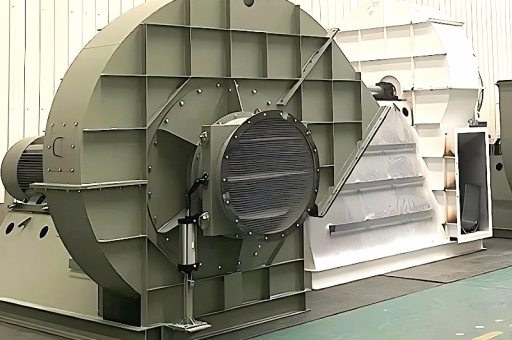
This is a highly specific technical query. The string "Explosion Protection 2145pa Power Plant Fan Biomass Boiler Air Supply" appears to be a request for an explosion protection system or certification standard for a fan (likely a primary air or secondary air fan) handling air for a biomass boiler in a power plant, with a specified pressure of 2145 Pa.
Let's break down the key requirements and constraints based on this information.
Understanding the Context (The Hazard)
- Biomass Boiler Air Supply: In a biomass power plant, the air supply fan (Primary Air Fan - PAF or Secondary Air Fan - SAF) draws ambient air and pushes it into the boiler furnace.
- The Explosion Risk: Contrary to what one might think, the fan itself is not burning fuel. The explosion risk comes from combustible dust (fine biomass particles like sawdust, bark dust, or agricultural residue) or combustible gas (like CO from incomplete combustion, or methane from biomass storage) being present in the air stream.
- The 2145 Pa Pressure:
- Pressure Classification: 2145 Pa (Pascals) is approximately 6 inches water gauge (in w.g.) or 31 psi.
- Fan Type: This pressure range indicates this is a medium-pressure fan. It's a typical design point for a baghouse filter inlet fan, a primary air fan feeding a stoker grate, or a secondary air fan.
- Implication for Protection: 2145 Pa is a low static pressure. This is important because explosion protection often uses deflagration isolation. At this low pressure, standard explosion isolation valves (like flap valves) will function correctly. If it were a high-pressure fan (e.g., 5000+ Pa), the explosion dynamics would be different.
The Core Requirement: Explosion Protection Standard
You are likely looking for the equipment classification standard. For a fan handling air with potential combustible dust or gas in a power plant, the standard is typically ATEX (EU) or NEC/IECEx (International/USA). The most likely zone classification is:
- Zone 21 (Dust) or Zone 2 (Gas): The fan is handling air, not fuel-rich mixtures. Under normal operation, the concentration of combustible dust/gas is below LEL (Lower Explosion Limit). It only becomes hazardous during abnormal conditions (e.g., a furnace puff-back, a hopper failure, a dust extraction system malfunction).
- Equipment Category 2D (ATEX) or Division 2 (NEC): This means the fan does not need to be "explosion-proof" (which would mean it can contain an explosion internally) but rather "explosion-protected" (it must not be a source of ignition).
Specific Protection Measures for the Fan (2145 Pa)
Based on the pressure, the following are the critical design elements:
A. Spark and Incendiary Particle Protection
- Construction Material: The fan housing and impeller must be non-sparking.
- Impeller: Typically aluminum or stainless steel (e.g., 316L). Avoid carbon steel on carbon steel contact inside the casing.
- Casing: Often carbon steel with a "spark-resistant" (aluminum or rubber) wear liner at the impeller clearance zone.
- Tight Clearances: The gap between the impeller and the inlet cone must be maintained to prevent metal-on-metal contact.
- Access Door: A bolted, gasketed access door is required to prevent dust ingress into bearings.
B. Deflagration Isolation (Crucial for 2145 Pa)
Since 2145 Pa is a low static pressure, if an explosion occurs upstream (e.g., in a boiler furnace or a dust collector), the flame and pressure wave will travel backward through the duct toward the fan.
- Requirement: A Deflagration Isolation Valve is required.
- Type for 2145 Pa: A Mechanical Flap Valve (passive) or a Chemical Isolation System (active).
- Passive Valve: A weighted flap that closes instantly when the flame front or pressure wave hits it.
- Constraint: 2145 Pa is below the typical cracking pressure for many large flap valves (which need ~1-2 in w.g. / 250-500 Pa to stay open). Ensure the valve's open position holding mechanism is designed for low static pressure. A "venturi" type is usually not needed here.
- Placement: The isolation valve must be installed in the duct between the fan outlet and the boiler/dust collector, as close to the fan as possible.
C. Thermal Protection (Bearings)
- Temperature Sensors: Each bearing housing must have a PT100 (RTD) sensor connected to a PLC. The trip point is typically 80-90°C alarm / 100-120°C shut-down.
- Outboard Drive: For a 2145 Pa fan, the motor is typically direct-coupled. The shaft seal between the fan housing and the bearing housing must be a packed gland or labyrinth seal to prevent dust from reaching the non-ATEX rated motor bearings.
Specific Certification for "2145 Pa"
You cannot just "rate" a fan for 2145 Pa and explosion protection. The certification process requires:
- Risk Analysis (HAZOP): An analysis proving that under normal operation (2145 Pa design point), the fan does not contain an explosive atmosphere for a significant amount of time.
- Maximum Allowable Working Pressure (MAWP): The fan housing must be designed to withstand the maximum possible explosion overpressure (Pmax). For biomass dust in a low-pressure duct, this is typically 5 to 2 barg (7.2 to 29 psi). A standard fan housing at 2145 Pa (0.01 barg) will collapse if it contains an explosion. Therefore, the system must include explosion venting or suppression, or the fan must be located in a safe outdoor area.
- Type Examination: A notified body (e.g., DEKRA, TÜV, SGS) must review the fan design.
Summary Table: Answer to Your Query
| Requirement | Specification for 2145 Pa Fan |
|---|---|
| Fan Type | Medium Pressure Fan (Centrifugal preferred) |
| Hazard Zone | Zone 21 (Dust) or Zone 22 (Fuel fines) |
| Ignition Protection | Non-sparking impeller (Al/Bronze/SS), tight clearances |
| Static Pressure | 2145 Pa (Design Point) |
| Explosion Isolation | Passive Mechanical Flap Valve (Required in ductwork) |
| Explosion Containment | Not feasible (housing too thin). Use Venting to safe area. |
| Certification | ATEX II 2D c T3 (typical) or equivalent IECEx |
| Bearing Protection | PT100 sensors, labyrinth shaft seal |
Final Recommendation
If you are sourcing a fan labeled "Explosion Protection 2145pa Power Plant Fan Biomass Boiler Air Supply" , you are looking for:
A Centrifugal Fan with a non-sparking impeller, designed for 2145 Pa static pressure, compliant with ATEX II 2D, including a Deflagration Isolation Flap Valve on the outlet ductwork, and PT100 bearing temperature sensors. The fan housing must have explosion venting panels certified for biomass dust.
Crucial Note: Do not operate this fan in an environment where the dust concentration can exceed 25% of the LEL without proper isolation. The 2145 Pa pressure is low enough that the system is vulnerable to back-pressure explosions from the boiler. A damper interlock (fan trip on furnace pressure high) is essential.





