
This article's table of contents introduction:
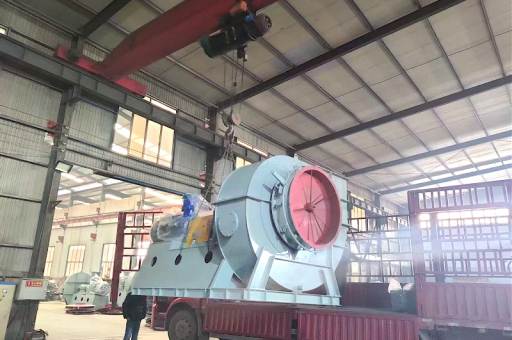
- The "Coupling Drive" Advantage
- Why Stainless Steel?
- "Efficient Energy Saving" – The Design Features
- Recommended Specifications (Typical)
- Top Manufacturers/Styles to Look For
- Final Recommendation for Your Tender/Purchase Order
It sounds like you are looking for a high-efficiency, energy-saving stainless steel blower specifically designed for pneumatic conveying (coupling driving) of coal powder from a coal mill system (such as in cement plants, steel plants, or power generation).
Here is a breakdown of the key specifications and recommendations for this type of equipment, often referred to as an "Abrasion-Resistant High-Pressure Centrifugal Fan" or "Mill Exhaust Fan."
The "Coupling Drive" Advantage
In coal mill systems, efficiency is critical. Direct coupling (vs. belt drive) offers:
- Higher Transmission Efficiency: No belt slip losses (typically 99% efficiency vs. 95-97% for belts).
- Constant Speed Ratio: Ensures stable air volume and pressure for consistent coal mill operation.
- Lower Maintenance: No belts to replace due to heat or abrasion.
Why Stainless Steel?
Coal mill blowers face two killers: Abrasion (from coal particles) and Corrosion (from sulfur oxides / moisture).
- Standard solution: Q235 Carbon Steel + Wear lining (ceramic tiles).
- Your request (Stainless Steel): Typically, full 304 or 316L stainless is not recommended for the impeller and housing of a coal mill fan because it is softer than hardened steel and expensive.
- Best Practice: Duplex Stainless Steel (e.g., 2205) or Wear-Resistant Alloy (like Hardox) for the impeller, with a Stainless Steel (304) Housing treated with a Tungsten Carbide spray or Ceramic Epoxy lining.
"Efficient Energy Saving" – The Design Features
To achieve true energy savings (reducing kWh/ton of coal), the blower must incorporate:
- High-Efficiency Airfoil Blades: Backward-curved hollow blades (aerodynamic profile) to reduce turbulence and noise.
- Variable Speed Drive (VSD) Ready: The coupling should be designed to accept a motor with a VFD (Variable Frequency Drive) to match fan speed exactly to mill demand (saving 20-35% energy vs. dampers).
- Leakage Reduction: Special shaft seals (e.g., labyrinth seals with purge air) to prevent air leakage which wastes motor power.
- Optimized Inlet Cone: A bell-mouth inlet with anti-swirl vanes to reduce vortex losses.
Recommended Specifications (Typical)
| Parameter | Specification |
|---|---|
| Fan Type | Centrifugal, Single-Inlet, Double-Suction (for large mills) |
| Impeller Material | DUPLEX 2205 or 16MnCr5 hardened steel (Not standard 304) |
| Housing Material | 304 Stainless Steel (or Q235 with 3mm SS cladding) |
| Drive Type | Direct Coupling (Flexible Coupling, e.g., Falk or Lovejoy) with Spacer (for easy impeller removal) |
| Efficiency (Peak) | ≥ 85% (High-efficiency range) |
| Pressure | 6000 – 12000 Pa (depending on mill type) |
| Temperature | 80°C – 150°C (Safe for coal conveying; optional cooling impeller for >150°C) |
| Energy Saving Feature | VFD-ready + Automatic Inlet Guide Vanes (IGVs) |
Top Manufacturers/Styles to Look For
- New York Blower (NYB) – DH Series: High efficiency, 304SS options.
- Howden / Robinson Fans: Known for "Energy Efficiency" modifications.
- Greenheck / Twin City: For smaller mills.
- Chinese OEMs (e.g., Zibo Decent, Shanghai Vana): Many offer "Y6-51" or "SAS Axial Flow" (but ensure SS304 housing + hardfaced impeller).
Final Recommendation for Your Tender/Purchase Order
"We require a Direct Coupled Centrifugal Blower for Coal Mill Pneumatic Conveying. Impeller must be Stainless Steel 2205 or equal with tungsten carbide coating. Housing to be 304 Stainless Steel. The unit must be High Efficiency (>85%) with VFD compatibility. Provide certified efficiency curves and NPSH (if applicable). Guarantee a specific power consumption ≤ XX kWh per ton of coal conveyed."
Warning: Do not buy a standard "stainless steel fan" from a general HVAC supplier. Coal mill fans require heavy-gauge steel (min 10ga / 3.4mm for housing, min 12ga / 2.6mm for blades) and dynamic balancing to ANSI/AMCA 200 standard.





