
This article's table of contents introduction:
- Table of Contents
- Introduction: The Critical Role of Specialized Blowers
- What is a Stainless Steel Material Handling Blower?
- The Imperative of High Temperature Resistance
- Understanding Explosion Proofing (ATEX, IECEx, NEC)
- Key Engineering Features & Material Science
- Common Q&A: Practical Insights for Engineers
- Maintenance & Safety Best Practices
- Conclusion: Selecting the Right Blower for Hazardous Environments
The Ultimate Guide to Stainless Steel Material Handling Blowers: High Temperature & Explosion Proofing Explained
Table of Contents
- Introduction: The Critical Role of Specialized Blowers
- What is a Stainless Steel Material Handling Blower?
- The Imperative of High Temperature Resistance
- Understanding Explosion Proofing (ATEX, IECEx, NEC)
- Key Engineering Features & Material Science
- Common Q&A: Practical Insights for Engineers
- Maintenance & Safety Best Practices
- Conclusion: Selecting the Right Blower for Hazardous Environments
Introduction: The Critical Role of Specialized Blowers
In modern industrial processes, handling bulk materials or corrosive gases is a daily reality. From pneumatic conveying of plastic pellets to ventilating chemical fumes, the equipment used must withstand extreme conditions. A standard fan or blower fails quickly under high heat or in explosive atmospheres. This is where the Stainless Steel Material Handling Blower becomes indispensable. Engineered for durability, these blowers combine the corrosion resistance of stainless steel with the thermal stability and spark-proof construction required for safety. This guide provides a deep dive into the technology, standards, and selection criteria for these specialized industrial workhorses, optimized for engineers and procurement specialists.
What is a Stainless Steel Material Handling Blower?
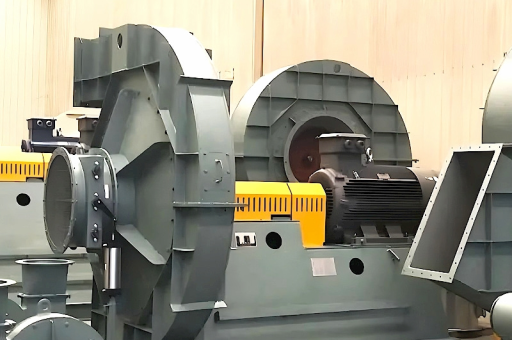
A Stainless Steel Material Handling Blower is a centrifugal or positive displacement fan designed specifically to move air, gases, or particulate-laden streams in demanding environments. Unlike standard mild steel blowers, these are constructed from grades like 304L or 316L stainless steel.
- Why Stainless Steel? It offers superior resistance to oxidation, corrosion from acidic or alkaline materials, and maintains structural integrity at high temperatures.
- Material Handling Focus: The design features robust impellers that resist wear from abrasive materials (dust, granules, powders) and non-clogging housing configurations.
- Applications:
- Pneumatic conveying systems (cement, fly ash, food grains).
- Exhaust systems for chemical reactors.
- Ventilation in waste-to-energy plants.
- Dust collection in metalworking and pharmaceutical facilities.
The Imperative of High Temperature Resistance
Standard fans typically operate below 150°F (65°C). However, many processes—such as drying ovens, boiler exhausts, or hot gas recirculation—require handling air streams at 350°F (175°C) to over 1000°F (538°C) .
A High Temperature Blower achieves this through:
- Material Grade Selection: 316L stainless steel retains its strength better than carbon steel at elevated temperatures. For extreme heat, Inconel or Hastelloy alloys (though not stainless) are used, but premium 310S stainless steel handles up to 2000°F in some cases.
- Shaft & Bearing Cooling: An extended shaft or a cooling fan on the motor side prevents heat from traveling to the bearings, which would otherwise fail.
- Thermal Expansion Management: The blower housing must allow for expansion to prevent warping and impeller rub, often using an adjustable inlet cone.
- Drain Holes: Prevent condensate accumulation that can cause thermal shock.
Key Insight: The blower must be rated for continuous operating temperature, not just peak. Oversizing the motor is also critical because hot air is less dense, requiring more power to move the same mass flow.
Understanding Explosion Proofing (ATEX, IECEx, NEC)
In environments with flammable dust, gases, or vapors, a standard motor or fan can become an ignition source. An Explosion Proof Blower is designed to contain an internal explosion and prevent it from igniting the surrounding atmosphere.
The Three Key Components of Explosion Proofing:
- Motor Classification: The motor must be certified (e.g., Class I, Division 1 for gases; Class II, Division 1 for dusts per NEC; or Zone 1/21 per ATEX). It must be totally enclosed with a specific flame path gap.
- Spark-Path Prevention: The impeller and housing are designed to prevent contact. A close clearance but non-contact fit eliminates sparks from metal-on-metal contact. Non-sparking materials (e.g., aluminum bronze or special polymers) are sometimes used for the impeller, but a fully stainless steel construction (which does not spark as easily as carbon steel) is the standard for corrosion resistance.
- Grounding Conductive Path: The entire blower assembly must be electrically bonded to a ground to prevent static discharge from moving particles.
Certifications to Look For:
- ATEX (EU): The directive for equipment in explosive atmospheres. Look for the CE mark and the "Ex" symbol.
- IECEx (International): A global certification system ensuring safety.
- NEC/CEC (North America): Classes and Divisions (I, II, III) or Zones (0, 1, 2).
Critical Note: A blower labeled "Explosion Proof" must be matched to the specific gas group (A, B, C, D) or dust type of your facility. Using a Group D motor in a Group B (hydrogen) environment is extremely dangerous.
Key Engineering Features & Material Science
To achieve peak performance in high-temperature, explosion-proof material handling, the blower design includes:
- Continuous Welds: Seams are fully welded to prevent leaks of hazardous materials.
- Heavy-Gauge Housings: Thicker stainless steel (e.g., 10-gauge vs 14-gauge) to resist denting and corrosion penetration.
- Flanged Connections: Robust flanges for tight sealing with ductwork.
- Direct Drive vs. Belt Drive: Direct drive (motor coupled directly to impeller) is preferred for explosion proofing because belts can create static charge and require maintenance. When belts are needed, they must use static-conductive belts.
- Drain Connections: Essential for removing condensation in high-temperature applications to prevent rust inside the housing.
Common Q&A: Practical Insights for Engineers
Q: Are all stainless steel blowers inherently explosion-proof? A: No. Stainless steel is corrosion-resistant, but it does not automatically make a blower explosion-proof. You must specifically buy a unit with certified spark-resistant construction (e.g., AMCA Type A or B) and an explosion-proof motor with the correct Class/Division rating.
Q: Can I use a standard high-temperature blower in a dusty explosion hazard area? A: Not without proper certification. High heat and dust are a deadly combination. The blower must be rated for Class II or Zone 21/22 dust environments, which require features like a dust-tight enclosure and a thermal protection device on the motor to prevent overheating from dust buildup.
Q: What is the maximum temperature for a stainless steel explosion-proof blower? A: Typically, up to 400°F (204°C) for standard configurations using a cooling shaft. For temperatures above 400°F, you need special high-temp alloys and a heat slinger or remote-mounted motor (belt driven) to isolate the motor from the heat.
Q: How do I size the blower for material handling with high temperature? A: You must calculate the ACFM (Actual Cubic Feet per Minute) at the operating temperature, not just the SCFM (Standard). Hot air expands, so a 1000 SCFM blower at 500°F effectively moves about 1,860 ACFM. Use the fan affinity laws and always size the motor for the density of the hot air.
Q: What maintenance is critical for these blowers? A: The top three checks are: (1) Bearing temperature monitoring (infrared gun); (2) Impeller clearance checks (to spot wear or thermal growth issues); (3) Grounding continuity testing (to ensure the explosion-proof bond is intact).
Maintenance & Safety Best Practices
- Pre-Startup Check: Verify that the rotation direction is correct. Running a centrifugal blower backward won't move material and can cause motor overload.
- Vibration Analysis: High vibration in a material handling blower indicates unbalanced or worn impeller vanes, which can cause sparking.
- Periodic Cleaning: In high-temperature applications, carbon deposits can build up on the impeller. This acts as insulation, causing overheating. Schedule regular cleaning.
- Never Block Safety Devices: Do not disable thermal overloads or pressure relief panels in an effort to "get more work" out of the blower.
- Use Correct Fasteners: Always use stainless steel bolts (grade 8 or better) in the housing and flanges to avoid galvanic corrosion with the parent material.
Conclusion: Selecting the Right Blower for Hazardous Environments
Choosing the correct Stainless Steel Material Handling Blower for high-temperature, explosion-proof applications is not just a procurement decision—it is a safety and operational necessity. You cannot compromise on material science, thermal management, or certification.
To make the right choice:
- Define the Operating Envelope: Temperature (continuous), gas composition (corrosivity), dust explosibility (Kst value).
- Match the Certification: ATEX Zone 1 or NEC Class I Div 1 for gas; Class II Div 1 for dust.
- Specify the Material: 316L SS for corrosive/high temp; 304L for moderate duty.
- Engage a Specialist: Contact a reputable manufacturer who can provide fan curves at your specific operating conditions.
Investing in a high-quality, thoroughly certified blower from a trusted supplier (visit fan for expert resources) ensures that your system operates safely, efficiently, and with maximum uptime, even in the most punishing industrial environments.





