
This article's table of contents introduction:
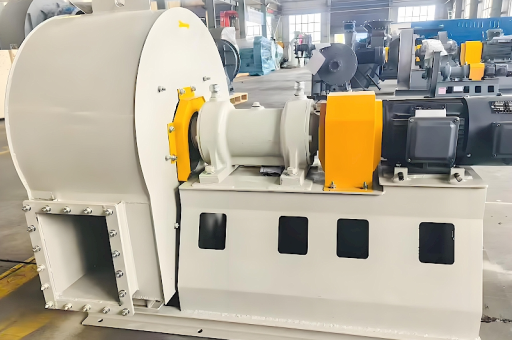
- Table of Contents (Directory Guide)
- 1. Introduction: The Heart of Industrial Boiler Airflow
- 2. Key Components: AC Motor, Boiler, Primary Air Fan, and Flue Gas Fan
- 3. High-Temperature Challenges in Flue Gas Fan Applications
- 4. Design Considerations for Primary Air Fans in Boiler Systems
- 5. Performance Optimization: Variable Speed Drives and Material Selection
- 6. Common Questions & Expert Answers
- 7. Conclusion: Future Trends in High-Temperature Fan Technology
Article Title:
Optimizing High-Temperature AC Motor Industrial Boiler Primary Air Flue Gas Fan Systems for Efficiency and Durability
Table of Contents (Directory Guide)
- Introduction: The Heart of Industrial Boiler Airflow
- Key Components: AC Motor, Boiler, Primary Air Fan, and Flue Gas Fan
- High-Temperature Challenges in Flue Gas Fan Applications
- Design Considerations for Primary Air Fans in Boiler Systems
- Performance Optimization: Variable Speed Drives and Material Selection
- Common Questions & Expert Answers
- Conclusion: Future Trends in High-Temperature Fan Technology
Introduction: The Heart of Industrial Boiler Airflow
In any industrial boiler system, the AC motor-driven primary air flue gas fan is not just a component—it is the lungs of the entire combustion process. Without reliable airflow management, boiler efficiency drops, emissions rise, and equipment failure becomes inevitable. This article explores the engineering behind high-temperature primary air flue gas fans, focusing on how AC motor technology, advanced materials, and system design can improve reliability and energy efficiency.
Industrial boilers rely on two critical fans: the primary air fan (which supplies combustion air to the burner) and the flue gas fan (which extracts exhaust gases from the boiler). When these fans operate at high temperatures—often exceeding 400°C—the challenges multiply. Thermal expansion, material fatigue, and motor overheating are common issues. Understanding how to mitigate these risks is essential for plant engineers, maintenance teams, and energy managers.
Key Components: AC Motor, Boiler, Primary Air Fan, and Flue Gas Fan
AC Motor: The Driving Force
AC induction motors are the industry standard for industrial fan applications due to their robustness, low maintenance, and compatibility with variable frequency drives (VFDs). For high-temperature environments, motors must be equipped with:
- Class H insulation (rated for 180°C+)
- Sealed bearings with high-temperature grease
- External cooling fins or forced ventilation
Boiler System Integration
The boiler itself dictates the fan’s operating parameters. A typical industrial boiler requires:
- Primary air pressure: 1.5–3.5 kPa
- Flue gas temperature: 150°C–450°C
- Flow rate: 10,000–100,000 m³/h
Primary Air Fan vs. Flue Gas Fan
| Feature | Primary Air Fan | Flue Gas Fan |
|---|---|---|
| Medium | Ambient air | Hot exhaust gases |
| Typical temp | 20°C–50°C | 200°C–450°C |
| Material | Carbon steel | Stainless steel or alloy |
| Bearing cooling | Not required | Often water-cooled |
High-Temperature Challenges in Flue Gas Fan Applications
Operating a flue gas fan at high temperature introduces several engineering hurdles:
a. Thermal Expansion and Clearance
At 400°C, a steel impeller can expand by 1.5–2 mm in diameter. If the fan housing does not account for this, rotor-stator contact can occur, leading to catastrophic failure.
b. Material Degradation
Standard carbon steel loses tensile strength above 300°C. For continuous operation at 450°C, fan blades must be made from high-alloy stainless steel or nickel-based superalloys.
c. Bearing and Lubrication Failure
Conventional grease degrades rapidly above 150°C. High-temperature fans require:
- Oil mist lubrication
- Water-cooled bearing housings
- Ceramic hybrid bearings
d. Motor Overload
An AC motor running in a hot environment experiences reduced cooling efficiency. Without proper ventilation, the motor can overheat and trip, causing unplanned downtime.
Design Considerations for Primary Air Fans in Boiler Systems
Though the primary air fan sees lower temperatures, its design still requires careful attention:
- Wheel design: Backward-curved blades are preferred for high efficiency and low noise.
- Inlet box: Should include turning vanes to reduce turbulence.
- Variable inlet vanes: Allow airflow modulation without VFDs, though VFDs offer better energy savings.
- Corrosion protection: If the air intake contains moisture or pollutants, consider coated or galvanized steel.
Real-world example: A cement plant in Germany replaced a fixed-speed primary air fan with a VFD-controlled AC motor fan, achieving 22% energy savings and reducing bearing failures by 60%.
Performance Optimization: Variable Speed Drives and Material Selection
VFD + AC Motor = Smart Fan System
Variable frequency drives allow the AC motor to run at precisely the speed required, rather than at full speed with dampers. This reduces energy consumption by up to 35% and extends fan component life.
Critical rule: The VFD must be rated for the motor’s full load current at the fan’s maximum ambient temperature.
Material Selection for High-Temperature Fans
| Temperature Range | Recommended Material |
|---|---|
| Up to 200°C | Carbon steel (A36) |
| 200°C–350°C | Corten steel or 304 stainless |
| 350°C–500°C | 316L stainless or Inconel 600 |
| Above 500°C | Ceramic-coated Inconel or Hastelloy |
Maintenance Checklist
- Check impeller balance every 6 months (thermal creep can shift mass)
- Inspect shaft seals – high temperature accelerates elastomer aging
- Monitor motor winding temperature with RTDs
Common Questions & Expert Answers
Q1: Can a standard AC motor drive a high-temperature flue gas fan?
No. Standard AC motors use Class B or F insulation, which fails above 155°C. For high-temperature fan applications, use a motor with Class H insulation and an external cooling fan.
Q2: What is the main cause of primary air fan failure in boiler systems?
The most common causes are bearing wear (due to dust ingress) and impeller imbalance (due to uneven thermal expansion or erosion). Using a fan with dust-tight bearings and wear-resistant blades significantly improves lifespan.
Q3: Is a VFD necessary for all industrial boiler fans?
Not always, but highly recommended. If the boiler runs at a constant load for 24/7 operation, a fixed-speed fan with inlet vanes may be acceptable. For variable loads (most industrial scenarios), a VFD pays for itself within 12–18 months.
Q4: How do I calculate the required power for a boiler primary air fan?
Formula:
Power (kW) = (Flow m³/s × Pressure Pa) / (Fan efficiency × Motor efficiency × 1000)
Example: 50 m³/s × 3000 Pa / (0.75 × 0.92 × 1000) = 217 kW
Q5: Can I retrofit an existing boiler fan for higher temperature?
Yes, but retrofitting requires:
- Changing the impeller to high-temperature alloy
- Upgrading motor insulation
- Adding a cooling air system for the shaft/bearings
Always consult the fan manufacturer before modifying.
Conclusion: Future Trends in High-Temperature Fan Technology
The next generation of AC motor industrial boiler primary air flue gas fans will feature:
- Smart sensors: Vibration, temperature, and pressure transmitters feeding data to a PLC for predictive maintenance.
- Ceramic coatings: Nano-ceramic thermal barrier coatings on impellers to reduce heat transfer to the shaft.
- High-efficiency EC motors: Electronically commutated motors operating at 95% efficiency, even in hot environments.
Whether you are upgrading an existing system or designing a new plant, the key to maximizing uptime and efficiency lies in matching the AC motor, fan materials, and cooling strategy to the actual flue gas temperature. Neglecting any one of these factors will lead to early failures and higher operating costs.
Final tip: Always request a thermal stress analysis from your fan supplier before specifying a high-temperature flue gas fan. This simple engineering step can prevent 80% of premature failures.
This guide is based on field experience and engineering standards from industrial fan manufacturers and boiler OEMs. For specific ratings, always refer to your equipment datasheet.





