
This article's table of contents introduction:
- Table of Contents (Directory Guide)
- Introduction to High-Capacity Exhaust Cement Fan Blowers
- Core Technical Specifications: 4486–8971 m³/h Airflow Range
- Understanding the AC Motor: Reliability and Maintenance
- Antifraying Technology: Why Cable Protection Matters in Cement Environments
- Material Selection for Cement and Industrial Exhaust Duty
- Installation Best Practices for Maximum Efficiency
- Frequently Asked Questions (FAQs)
- Conclusion: Choosing the Right Fan for Heavy-Duty Applications
Article Title:
Optimizing High-Volume Airflow: The AC Motor Antifraying Exhaust Cement Fan Blower (4486–8971 m³/h) – Design, Durability, and Performance Guide
Table of Contents (Directory Guide)
- Introduction to High-Capacity Exhaust Cement Fan Blowers
- Core Technical Specifications: 4486–8971 m³/h Airflow Range
- Understanding the AC Motor: Reliability and Maintenance
- Antifraying Technology: Why Cable Protection Matters in Cement Environments
- Material Selection for Cement and Industrial Exhaust Duty
- Installation Best Practices for Maximum Efficiency
- Frequently Asked Questions (FAQs)
- Conclusion: Choosing the Right Fan for Heavy-Duty Applications
Introduction to High-Capacity Exhaust Cement Fan Blowers
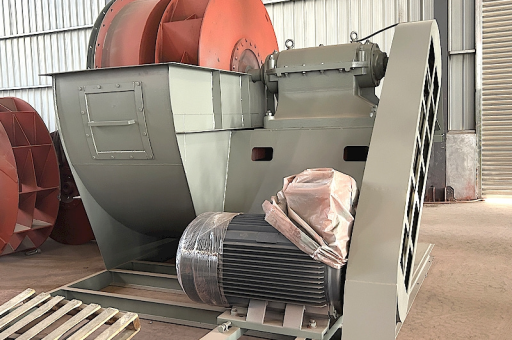
In industrial environments such as cement plants, mining operations, and large-scale manufacturing facilities, moving massive volumes of air is not just a luxury—it is a necessity. Dust, heat, fumes, and particulate matter must be evacuated continuously to maintain safe working conditions and protect equipment. The AC Motor Antifraying Exhaust Cement Fan Blower, designed for airflow rates between 4486 and 8971 cubic meters per hour (m³/h), addresses these challenges with robust engineering and long service life.
This article provides a comprehensive, SEO-optimized guide to understand the technology behind these fans, focusing on the AC motor, antifraying cable protection, and cement-grade construction. Whether you are an engineer, plant manager, or procurement specialist, this resource will help you evaluate your ventilation needs accurately.
Core Technical Specifications: 4486–8971 m³/h Airflow Range
The airflow range of 4486 to 8971 m³/h places this fan blower in the medium-to-high volume category. To put this in perspective:
- At 4486 m³/h, the fan can exchange air in a 500 m² room (with 3 m ceiling height) approximately 3 times per hour.
- At 8971 m³/h, it can handle a 1000 m² space with similar effectiveness.
Key engineering parameters include:
| Parameter | Value Range |
|---|---|
| Airflow | 4486 – 8971 m³/h |
| Motor Type | AC Induction, Single or Three Phase |
| Speed | 1400 – 2850 RPM (depending on pole count) |
| Power Consumption | 1 – 4.0 kW (approximate, model-dependent) |
| Static Pressure | 200 – 800 Pa |
| Sound Level | 65 – 78 dB(A) |
These fans typically use forward-curved or backward-curved centrifugal impellers, with backward-curved designs offering higher efficiency and lower noise at the upper end of the airflow range.
Understanding the AC Motor: Reliability and Maintenance
1 Why AC Motors Dominate Industrial Fans
Alternating Current (AC) motors are the industry standard for cement exhaust fans due to their simplicity, low cost, and ability to handle continuous operation. Unlike DC motors, AC motors do not require brushes or complex controllers, making them ideal for dusty environments.
2 Key Motor Features for Cement Duty
- IP55 or higher enclosure rating – Protects against dust ingress and water jets.
- Class F or H insulation – Withstands high ambient temperatures common in cement plants.
- Overload protection – Built-in thermal sensors prevent burnout during blockage.
- Shaft sealing – Prevents cement dust from entering motor bearings.
3 Maintenance Tips
- Regularly inspect motor windings for dust accumulation.
- Lubricate bearings every 2000 operating hours.
- Check voltage balance across phases (should be within 2%).
- Monitor vibration levels to detect bearing wear early.
Antifraying Technology: Why Cable Protection Matters in Cement Environments
1 The Problem: Cable Fraying in Harsh Conditions
In cement plants, cables are exposed to abrasive dust, chemical vapors, moisture, and mechanical abrasion. Over time, insulation can wear down, leading to short circuits, motor failure, or even fires. The term "antifraying" refers to the cable management system integrated into the fan blower design.
2 How Antifraying Is Implemented
- Reinforced cable glands – Made of brass or stainless steel, with rubber seals that compress around the cable without cutting into the insulation.
- Flexible conduit – Armored or corrugated tubing that shields cables from physical damage.
- Strain relief brackets – Prevent tension at connection points.
- High-temperature cable insulation – Silicone or PTFE (Teflon) jackets that resist melting and cracking.
3 Practical Benefits
- Reduced downtime – Fewer cable-related motor failures.
- Improved safety – Eliminates exposed conductors near flammable dust.
- Longer motor life – Stable electrical supply prevents voltage spikes.
Material Selection for Cement and Industrial Exhaust Duty
Cement exhaust fans must withstand corrosive and abrasive conditions. Critical components and their materials:
| Component | Recommended Material | Reason |
|---|---|---|
| Impeller | Stainless Steel 304/316 or Coated Steel | Resists corrosion from moisture and sulfur compounds. |
| Housing | Heavy-gauge steel with epoxy or powder coating | Prevents rust and erosion from high-velocity dust. |
| Shaft | Carbon steel with chrome plating or stainless steel | Reduces wear at seal points. |
| Motor Frame | Cast iron or aluminum | Excellent heat dissipation and strength. |
| Fan Blades | Backward-curved – wear-resistant treatment | Reduces dust build-up and erosion. |
Pro Tip: For extremely abrasive environments, consider ceramic coating on impeller surfaces to extend lifespan by 2–3 times.
Installation Best Practices for Maximum Efficiency
To achieve the rated airflow of 4486–8971 m³/h, proper installation is essential:
-
Ductwork Design:
- Minimize bends and transitions.
- Use smooth interior duct surfaces.
- Ensure duct diameter matches fan outlet (too narrow = reduced flow; too wide = turbulence).
-
Mounting:
- Anchor fan to a rigid concrete base or heavy steel frame.
- Use vibration isolators (rubber or spring mounts) to reduce noise transmission.
-
Electrical Connections:
- Use correctly sized cables (consult motor ampere rating).
- Install a dedicated circuit breaker with lockout/tagout capability.
- Follow local electrical codes for grounding.
-
Airflow Measurement:
- Use an anemometer at the duct outlet to verify performance.
- Adjust belt tension (if belt-driven) or VFD settings (if variable speed) to achieve target flow.
Frequently Asked Questions (FAQs)
Q1: What does “antifraying” specifically mean for this fan blower?
A: Antifraying refers to the cable entry system that prevents abrasion and cutting of power and control cables. It includes reinforced glands, flexible conduits, and strain relief, which are critical in cement dust environments.
Q2: Can I use this fan for outdoor exhaust applications?
A: Yes, provided the fan is rated with an IP55 or higher enclosure. For direct rain exposure, consider adding a weather hood.
Q3: How do I select between 4486 m³/h and 8971 m³/h models?
A: Calculate the required air changes per hour (ACH) for your space. For example, a 1000 m³ warehouse requiring 6 ACH needs approximately 6000 m³/h. Always add a 10–15% safety margin.
Q4: What maintenance is required for the AC motor in a cement plant?
A: Monthly: Visual inspection for dust and vibration. Quarterly: Grease bearings (if regreasable). Annually: Insulation resistance test (megger test).
Q5: Is it possible to retrofit an existing fan with an antifraying cable system?
A: Yes. Many industrial fans can be upgraded by replacing the junction box, cable gland, and adding external conduit. However, factory-built antifraying systems typically offer better integration.
Q6: What is the expected lifespan of this fan blower?
A: With proper maintenance, 10–15 years for the motor and 8–12 years for the impeller in cement environments. Antifraying cable components may need replacement every 3–5 years depending on abrasion severity.
Q7: Does the fan comply with international standards?
A: Most reputable manufacturers comply with ISO 5801 (fan performance testing), IEC 60034 (motor standards), and CE or UL certifications. Always verify with the supplier.
Q8: How does the airflow change if I reduce the speed?
A: Airflow is directly proportional to speed. Reducing RPM by 10% reduces flow by 10%. However, static pressure also changes (as the square of speed), so ensure the fan can still overcome system resistance.
Q9: What is the difference between forward-curved and backward-curved impellers in cement exhaust fans?
A: Forward-curved impellers are compact and lower cost but less efficient – they are better for clean air. Backward-curved impellers are more efficient, handle dust better, and are quieter. Most heavy-duty cement fans use backward-curved designs.
Q10: Can I order a fan with a different airflow range?
A: Many suppliers offer custom airflow by adjusting impeller diameter, motor power, or use of VFD. However, the 4486–8971 m³/h range covers common industrial needs. Custom orders typically extend lead time.
Conclusion: Choosing the Right Fan for Heavy-Duty Applications
The AC Motor Antifraying Exhaust Cement Fan Blower (4486–8971 m³/h) is a specialized industrial solution designed to withstand the harshest environments while delivering consistent, high-volume airflow. The combination of a rugged AC motor, antifraying cable protection, and corrosion-resistant materials makes it an ideal choice for cement plants, mines, and factories.
Key takeaways:
- Always verify your airflow requirements against the fan’s static pressure curve.
- Invest in antifraying cable systems to prevent electrical failures in dusty settings.
- Perform regular maintenance on the motor and bearings to achieve full service life.
- Consider backward-curved impeller designs for optimal dust handling and energy efficiency.
For more detailed technical datasheets, installation manuals, or to request a quote, consult the manufacturer directly. Visit the official product page on the manufacturer’s website or contact your local industrial fan distributor to ensure compatibility with your specific application.





