
This article's table of contents introduction:
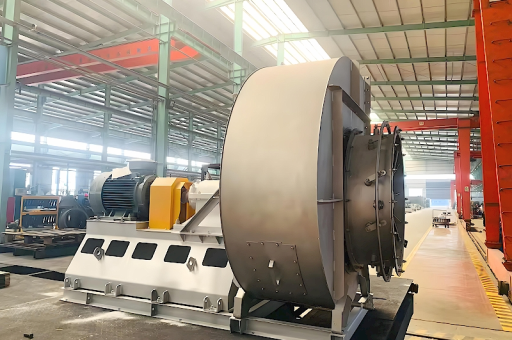
- Introduction: The Role of the Single Inlet High Pressure Centrifugal Fan in Blast Furnaces
- Core Design Principles: Single Inlet vs. Double Inlet Configurations
- Performance Under High Temperature Conditions: Material Selection and Thermal Management
- Key Technical Specifications and Operating Parameters
- Common Challenges and Solutions in High Temperature Blast Furnace Fan Systems
- Frequently Asked Questions (FAQs)
- Maintenance Best Practices for Extended Service Life
- Conclusion
*High-Efficiency Single Inlet High Pressure Centrifugal Fan for High Temperature Blast Furnace Applications: Design, Performance, and Maintenance Guide*
Article Content
Table of Contents
- Introduction: The Role of the Single Inlet High Pressure Centrifugal Fan in Blast Furnaces
- Core Design Principles: Single Inlet vs. Double Inlet Configurations
- Performance Under High Temperature Conditions: Material Selection and Thermal Management
- Key Technical Specifications and Operating Parameters
- Common Challenges and Solutions in High Temperature Blast Furnace Fan Systems
- Frequently Asked Questions (FAQs)
- Maintenance Best Practices for Extended Service Life
- Conclusion
Introduction: The Role of the Single Inlet High Pressure Centrifugal Fan in Blast Furnaces
In modern steelmaking, the blast furnace is the heart of iron production, and its performance heavily depends on the reliable operation of industrial fan systems. Among these, the Single Inlet High Pressure Centrifugal Fan stands out as a critical component, especially when tasked with handling high temperature gases in harsh environments. Unlike standard fans, these units are engineered to generate substantial static pressure—often exceeding 10,000 Pa—while maintaining structural integrity at inlet temperatures ranging from 200°C to 450°C, and in some peak cases, up to 600°C.
These fans are designed to force combustion air into the furnace tuyeres or to extract hot, dust-laden gases from the top of the furnace. The single inlet design offers a simpler, more compact structure compared to double inlet configurations, making it ideal for space-constrained blast furnace sites. By leveraging a single-sided aerodynamic impeller and a robust housing, this fan type delivers concentrated airflow with minimal leakage, which is critical for maintaining furnace pressure stability.
Core Design Principles: Single Inlet vs. Double Inlet Configurations
The Single Inlet High Pressure Centrifugal Fan operates by drawing gas axially through a single inlet and accelerating it radially through a specially designed impeller. This creates a high-pressure differential suitable for blast furnace applications.
| Feature | Single Inlet | Double Inlet |
|---|---|---|
| Airflow Path | One-sided entry | Symmetrical two-sided entry |
| Pressure Capability | Higher per unit width | Moderate, but higher volume |
| Footprint | Compact, more rigid | Larger, requires more support |
| Temperature Suitability | Excellent for high temp direct flow | Good, but thermal expansion symmetry needed |
| Maintenance Access | Easy to inspect from one side | Requires disassembly from both sides |
For high temperature blast furnace duties, the single inlet design is favored because the entire gas flow passes through one side of the impeller. This reduces the number of seals and minimizes thermal distortion risks. Manufacturers often reinforce the impeller with radial backward-curved blades made from corrosion-resistant alloy steel, such as 16MnR or stainless steel 304/316, to withstand thermal stress.
Performance Under High Temperature Conditions: Material Selection and Thermal Management
High temperature operation is the most demanding aspect of blast furnace fan engineering. Standard fans fail when exposed to sustained temperatures above 150°C due to thermal expansion, material creep, and bearing degradation. The Single Inlet High Pressure Centrifugal Fan for blast furnace service addresses these issues through deliberate material choices:
- Impeller Material: High-strength low-alloy steel (e.g., Q345R) or heat-resistant stainless steel (e.g., SUS310S) for blades operating above 350°C.
- Shaft and Bearings: Heat-treated 40Cr with double-row spherical roller bearings designed for high temperature grease or oil circulation systems.
- Housing: Cast iron or reinforced welded steel with external cooling ribs to radiate heat.
- Cooling System: An external cooling fan or water-cooled bearing housing is typically integrated to keep bearing temperatures below 85°C even when process gas exceeds 400°C.
A practical example: A fan handling blast furnace gas at 350°C must have a thermal expansion gap of at least 2–3 mm between the impeller tip and the volute tongue. Without this, blade rubbing against the housing could cause catastrophic failure.
Key Technical Specifications and Operating Parameters
When specifying a Single Inlet High Pressure Centrifugal Fan for a high temperature blast furnace, engineers must consider the following parameters:
- Flow Rate (Q): Typically 50,000 to 500,000 m³/h depending on furnace size.
- Total Static Pressure (P): 8,000 – 25,000 Pa. For high top pressure furnaces, up to 35,000 Pa may be required.
- Working Temperature: Continuous operation at 250–450°C, with short-term peaks up to 600°C.
- Speed: 1,450 – 2,980 RPM, driven by direct coupling or V-belt drive.
- Noise Level: Usually 85–100 dB(A), requiring industrial silencers.
- Efficiency: Over 80% at best efficiency point (BEP) for modern aerodynamic designs.
These fans are often paired with adjustable inlet guide vanes (IGVs) to modulate airflow without varying motor speed, which saves energy and reduces wear on the drive system.
Common Challenges and Solutions in High Temperature Blast Furnace Fan Systems
Operating a Single Inlet High Pressure Centrifugal Fan under extreme conditions often presents several challenges:
Challenge 1: Thermal Fatigue of Impeller Blades
- Solution: Use finite element analysis (FEA) during design to optimize blade thickness and curvature. Implement shot peening on blade surfaces to reduce stress concentration.
Challenge 2: Dust Erosion and Corrosion
- Solution: Apply ceramic coating or hard-facing (e.g., Stellite) on leading edges and blade tips. Install a cyclone or bag filter upstream to reduce particulate load.
Challenge 3: Vibration Due to Imbalance
- Solution: Perform dynamic balancing to ISO 1940 G2.5 grade. Use proximity probes and accelerometers for real-time monitoring.
Challenge 4: Bearing Overheating
- Solution: Install separate cooling air blowers or water jackets. Use high-temperature synthetic lubricants with a drip-feed system.
Challenge 5: Scroll Casing Distortion
- Solution: Incorporate expansion joints in the ductwork and use stainless steel bellows between the fan and pipeline.
Frequently Asked Questions (FAQs)
Q1: What is the main advantage of a single inlet centrifugal fan over a double inlet for high temperature blast furnace service? A1: The single inlet design offers a more compact footprint, simpler sealing, and reduced risk of thermal expansion mismatch. It also provides easier maintenance access since only one side needs to be opened.
Q2: How do I select the correct motor power for a single inlet high pressure centrifugal fan handling 400°C air? A2: Calculate power using the formula: Power (kW) = (Q × P) / (3,600 × η × 1,000), where η is efficiency. Then apply a safety factor of 1.15–1.25 due to gas density reduction at high temperature. For example, hot air at 400°C is only about 40–50% of the density of ambient air, significantly affecting load.
Q3: Can this fan handle flammable blast furnace gas? A3: Yes, but it requires an explosion-proof design. The motor must be Ex-certified, and the impeller should be made of non-sparking material (e.g., aluminum bronze or stainless steel). Additionally, a gas detection system and pressure relief vents should be integrated.
Q4: What is the typical lifespan of such a fan in continuous blast furnace operation? A4: With proper maintenance, a well-built Single Inlet High Pressure Centrifugal Fan can last 10–15 years in high temperature blast furnace environments. However, major overhauls are recommended every 2–3 years to replace seals and inspect the impeller for cracks.
Q5: Is there a performance loss when the fan operates at partial load using inlet guide vanes? A5: Inlet guide vanes are highly efficient for pressure control, with energy losses typically below 5% compared to variable frequency drive (VFD) systems. However, for very high pressure requirements, VFDs may be preferred for their precise speed control.
Maintenance Best Practices for Extended Service Life
To maximize the service life of your Single Inlet High Pressure Centrifugal Fan in a blast furnace setting, follow these maintenance steps:
- Daily Inspection: Check vibration levels (below 4.5 mm/s RMS), bearing temperature (below 90°C), and grease condition.
- Weekly Checks: Measure current consumption, listen for abnormal blade rubbing, and inspect shaft seals for leakage.
- Monthly Tasks: Clean the impeller surface if handling sticky dust. Perform a visual inspection of blade erosion—replace if thickness is reduced by 20%.
- Quarterly: Rebalance the impeller and test the emergency shut-down system.
- Annual Overhaul: Replace bearings, inspect and recondition the volute throat, and check the inlet cone for wear. Replace gaskets and seal rings.
Always maintain a log of temperature, pressure differential, and vibration trends. A sudden increase in bearing temperature often indicates lubrication failure or misalignment.
Conclusion
The Single Inlet High Pressure Centrifugal Fan is an indispensable asset in high temperature blast furnace operations, offering superior pressure performance, durability, and modularity. Its single-sided entry design simplifies integration into existing furnace layouts while maintaining efficiency even when handling gases at temperatures exceeding 400°C. By understanding its design principles, thermal management requirements, and proper maintenance routines, steel plant operators can ensure uninterrupted production and reduce costly downtime.
When selecting a fan for your blast furnace, always prioritize material grade, cooling system robustness, and dynamic balancing quality. With these factors addressed, the fan will deliver reliable performance for over a decade, paying back its initial investment many times over through energy savings and reduced maintenance costs.
For further technical consultation on customizing a Single Inlet High Pressure Centrifugal Fan for your specific blast furnace parameters, consult with fan engineering specialists.





