
Maximizing Industrial Efficiency: The Role of Carbon Steel Low Pressure Heavy Duty Centrifugal Fans in Kiln Cooling Systems
Table of Contents
- Introduction to Carbon Steel Low Pressure Heavy Duty Centrifugal Fans
- Why Carbon Steel is the Preferred Material for Heavy Duty Fan Construction
- Understanding Low Pressure Operation in Centrifugal Fan Design
- The Critical Role of Centrifugal Fans in Kiln Cooling Processes
- Key Performance Metrics and Technical Specifications
- Installation Best Practices for Heavy Duty Kiln Cooling Fans
- Maintenance Strategies to Extend Fan Service Life
- Common Challenges and Troubleshooting Guide
- Frequently Asked Questions (FAQs)
- Conclusion: Future Trends in Industrial Fan Technology
Introduction to Carbon Steel Low Pressure Heavy Duty Centrifugal Fans
In modern industrial environments, especially those involving high-temperature processes like cement production, metal smelting, and ceramic manufacturing, Carbon Steel Low Pressure Heavy Duty Centrifugal Fans serve as indispensable components for kiln cooling systems. These robust machines are engineered to withstand harsh operating conditions while maintaining consistent airflow at relatively low static pressures—typically below 15 inches of water gauge. Unlike standard centrifugal fans, these heavy-duty variants incorporate reinforced housings, thicker impeller blades, and specialized bearing systems designed for continuous operation in temperatures ranging from 200°F to 600°F.
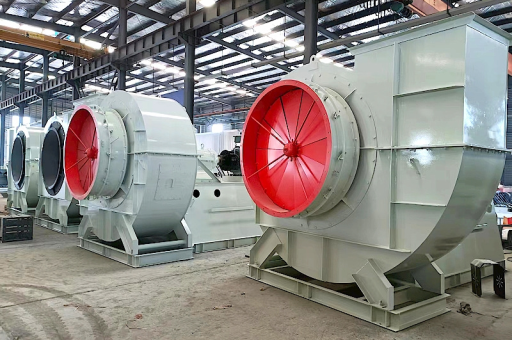
The selection of carbon steel as the primary construction material is not arbitrary. It offers an exceptional balance of strength, weldability, and cost-effectiveness when compared to stainless steel or aluminum alternatives. A typical heavy-duty centrifugal fan installed in a rotary kiln cooling system can move anywhere from 10,000 to 150,000 cubic feet per minute (CFM) of air, depending on the kiln diameter and production capacity.
Industry Insight: According to operational data from large-scale cement plants, properly sized carbon steel centrifugal fans can reduce kiln shell temperature by 40-60% within the first 30 meters from the discharge end, significantly improving clinker quality and reducing maintenance intervals.
Why Carbon Steel is the Preferred Material for Heavy Duty Fan Construction
When designing fans for kiln cooling applications, material selection directly impacts operational reliability and total cost of ownership. Carbon steel (typically ASTM A36 or A516 Grade 70) offers several advantages:
Mechanical Properties
- Tensile Strength: 58,000–80,000 psi, providing excellent resistance to mechanical stress from rotational forces and thermal expansion.
- Yield Strength: 36,000 psi minimum, allowing the fan housing to maintain dimensional stability under fluctuating temperatures.
- Hardness: Brinell hardness of 119–159, offering good wear resistance against abrasive dust particles common in kiln exhaust gases.
Thermal Performance
Carbon steel maintains structural integrity up to 800°F in continuous service, though most kiln cooling applications operate below 500°F. When higher temperatures are expected (e.g., direct exhaust gas handling), a thermal barrier coating or internal refractory lining can extend the steel's effective range by an additional 200°F.
Cost Efficiency
Compared to stainless steel (304 or 316), carbon steel fans cost approximately 40-50% less for equivalent sizes and performance ratings. For a typical 72-inch diameter heavy-duty centrifugal fan, this translates to savings of $15,000–$25,000 per unit—a significant factor when multiple fans are required for a single kiln line.
Weldability and Repairability
Carbon steel welds easily under field conditions using standard SMAW or GMAW processes. This is crucial for on-site repairs, impeller rebalancing, or housing patching without requiring specialized equipment or exotic filler metals.
Question: Can carbon steel centrifugal fans be used in direct contact with corrosive kiln exhaust gases containing sulfur or chlorine compounds?
Answer: While carbon steel offers general-purpose corrosion resistance, direct exposure to acidic condensates (common when cooling gases below 300°F) may accelerate corrosion. In such cases, fan manufacturers typically recommend:
- Applying a high-temperature epoxy coating (e.g., silicone-based or zinc-rich) to all internal surfaces.
- Installing stainless steel impellers while retaining the carbon steel housing.
- Maintaining exhaust gas temperature above the acid dew point (typically 250°F for sulfuric acid) through proper insulation.
Understanding Low Pressure Operation in Centrifugal Fan Design
The term "Low Pressure" in these fans is defined by the Air Movement and Control Association (AMCA) as operating at static pressures below 15 inches water gauge (inWG). This classification is critical for kiln cooling because:
Aerodynamic Characteristics
Low pressure centrifugal fans utilize forward-curved or radial-tip impeller designs optimized for high volume flow at minimal resistance. Unlike high-pressure fans that require deeper blade pitch and narrower housings, low pressure designs achieve:
- Efficiency: 75-85% static efficiency at design point
- Noise Levels: Typically 80-90 dBA at 3 feet, compared to 95-105 dBA for high pressure fans
- Power Requirements: 0.5-2.5 horsepower per 10,000 CFM, depending on system resistance
Application-Specific Configurations
For kiln cooling, the fan must overcome relatively low system resistance—primarily from:
- Kiln shell surface friction (0.1–0.3 inWG per 10 feet of length)
- Inlet ductwork losses (0.2–0.5 inWG)
- Outlet transitions and dampers (0.1–0.4 inWG)
Total system static pressure rarely exceeds 6–10 inWG, making low pressure designs inherently suitable.
Performance Curve Optimization
A well-designed low pressure centrifugal fan delivers a steep performance curve—meaning the flow rate remains relatively constant even when system resistance fluctuates. This stability is essential because kiln cooling demands vary with:
- Clinker temperature at the discharge end
- Ambient air temperature (summer vs. winter)
- Changes in kiln rotational speed during production rate adjustments
Question: How does the fan's low pressure characteristic affect energy consumption compared to a medium-pressure fan?
Answer: For the same 100,000 CFM flow requirement, a low pressure fan operating at 8 inWG consumes approximately 55 horsepower, while a medium pressure fan (15 inWG) would require 105 horsepower—nearly double. Over a year of continuous operation (8,760 hours), this difference represents $40,000–$60,000 in additional electricity costs at $0.10/kWh, making low pressure design economically advantageous where applicable.
The Critical Role of Centrifugal Fans in Kiln Cooling Processes
Kiln cooling is not a luxury—it is a process requirement that directly impacts product quality, equipment longevity, and environmental compliance. Heavy duty centrifugal fans serve multiple functions:
Primary Cooling Mechanism
As clinker or sintered material exits the kiln at 1,800–2,200°F (for cement) or 1,500–1,800°F (for lime/ceramics), rapid cooling is essential to:
- Prevent crystalline growth that reduces product strength
- Minimize thermal stress in downstream equipment (coolers, conveyors, storage silos)
- Achieve target discharge temperature (typically 200–300°F) for safe handling
The centrifugal fan draws ambient air through the kiln shell, creating a counter-current flow that extracts heat. A 5,000 ton-per-day cement kiln typically requires 2–4 heavy duty fans, each rated at 75,000–125,000 CFM.
Secondary Heat Recovery
In modern installations, the hot air exhausted from the cooling zone is often recirculated to the kiln burner or preheater system. Carbon steel fans with high-temperature bearings (rated to 350°F) handle this preheated air at 400–600°F, improving overall thermal efficiency by 8–12%.
Dust Collection Integration
Kiln cooling air carries fine particulate matter—primarily clinker dust and partially calcined material. Heavy duty centrifugal fans used for cooling are often designed to meet or exceed National Ambient Air Quality Standards (NAAQS) when paired with:
- Cyclone pre-separators (removing 85-95% of particles >10 microns)
- Baghouse filters or electrostatic precipitators (removing 99.9% of remaining fines)
Emergency Cooling Function
During scheduled kiln shutdowns or emergency stops, the fan must continue operating to:
- Prevent heat stratification that could damage the upper kiln shell
- Allow safe access for maintenance personnel within 4 hours of shutdown
Question: What happens if a kiln cooling fan fails during operation?
Answer: Immediate consequences include:
- Kiln shell temperatures rising by 100–200°F within 15 minutes
- Clinker quality degradation (increased free lime, reduced compressive strength)
- Potential refractory damage due to thermal shock
- Risk of shell deformation (banana shape) if left unaddressed for over 1 hour
Most plants maintain 1–2 redundant fans or have emergency standby generators dedicated to cooling fan circuits.
Key Performance Metrics and Technical Specifications
When selecting a Carbon Steel Low Pressure Heavy Duty Centrifugal Fan for kiln cooling, engineers rely on these critical parameters:
| Metric | Typical Range | Impact on Selection |
|---|---|---|
| Airflow (CFM) | 25,000 – 150,000 | Determines kiln shell coverage and cooling gradient |
| Static Pressure (inWG) | 3 – 12 | Affects motor HP, duct sizing, and fan wheel width |
| Operating Temperature (°F) | 200 – 600 | Material of construction; bearing cooling requirements |
| Efficiency (%) | 72 – 85 | Annual energy cost; return on investment |
| Sound Level (dBA @ 3ft) | 82 – 92 | Compliance with OSHA standards; need for silencers |
| Wheel Diameter (inches) | 48 – 96 | Clearance for installation; rotational speed (RPM) |
| Drive Type | Direct / Belt | Direct: higher reliability; Belt: variable speed flexibility |
Material Thickness Guidelines
For heavy duty carbon steel fans:
- Housing: ¼ inch (6mm) minimum for fans up to 72" wheel; ⅜ inch (10mm) for larger sizes
- Impeller Blades: 3/16 inch (5mm) for radial tip designs; ¼ inch for backward curved
- Shaft: 2.5 – 4 inch diameter, turned and polished with keyway for coupling
Bearing Selection
Severe duty spherical roller bearings (SKF 223 series or equivalent) are standard, with:
- L10 Life: 50,000 hours minimum at design load
- Lubrication: Continuous oil mist or high-temp grease (NLGI #2) with automatic lubricators
- Cooling: For temperatures above 250°F, add cooling fins, water jackets, or forced air circulation
Installation Best Practices for Heavy Duty Kiln Cooling Fans
Proper installation is essential to achieve rated performance and service life. Follow these guidelines:
Foundation Preparation
- Concrete Pad: Minimum 12 inches thick, reinforced with #5 rebar (6x6 inch grid)
- Anchor Bolts: 1.25 inch diameter, embedded 18 inches deep, with 4-inch projection
- Leveling Tolerance: Within 1/16 inch across baseplate; use precision shims (stainless steel) to adjust
- Vibration Isolation: Install neoprene or spring isolators between baseplate and concrete; avoid solid grout that transfers vibration
Inlet and Outlet Ductwork
- Straight Run: Minimum 3 wheel diameters before inlet and 2 diameters after outlet
- Transition Angles: Maximum 15° expansion or contraction to prevent flow separation
- Flexible Connectors: Use fabric or metal bellows at fan connections to absorb thermal expansion (1.5 inch per 10 feet recommended)
- Dampers: Provide positive shut-off isolators for maintenance; modulate flow with inlet vane control (preferred) or discharge dampers
Electrical and Controls
- Motor Selection: Premium efficiency (IE4 or equivalent) induction motors; 1.15 service factor
- VFD Requirement: Mandatory for belt-driven fans; recommended for direct drive to optimize energy use during off-peak cooling demand
- Interlocks: Tie fan operation to kiln drive; automatic start on cooling demand with 30-second delay to prevent motor overheating
Commissioning Checklist
- Rotate impeller by hand to verify clearance (1/8 inch minimum)
- Check rotation direction (arrow on housing)
- Run uncoupled for 15 minutes; measure vibration (<0.15 in/sec RMS)
- Connect ductwork; run at full load for 2 hours; verify amp draw vs. nameplate rating
- Calibrate temperature sensors in bearing housings; set alarms at 195°F
Maintenance Strategies to Extend Fan Service Life
A systematic maintenance program can extend fan life from 8 years (average) to 15+ years under continuous operation.
Daily Inspections
- Vibration Monitoring: Use handheld vibrometer; trending of 1x, 2x, and bearing frequencies
- Temperature Checks: Infrared gun on bearing housings, motor windings, and duct joints
- Visual Inspection: Look for dust buildup on blades, oil leaks, loose fasteners, and belt wear
Weekly Tasks
- Grease Bearings: Apply 1–2 shots per bearing on auto-lube systems; adjust frequency based on duty cycle
- Check Belt Tension: Deflection test (1/64 inch per inch of span); replace as set
- Inspect Dampers: Verify full range of motion; lubricate pivot points with dry-film lubricant
Monthly Activities
- Balance Blades: Dynamic balancing (ISO 1940 G6.3 grade) if vibration exceeds baseline by 25%
- Clean Impeller: Use dry ice blasting or soft abrasive to remove crust deposits; never use wire brushes that damage blade surface
- Housing Inspection: Check for corrosion pits, especially near bottom inlet; apply touch-up paint (silicone-based)
Annual Overhaul
- Disassembly: Complete teardown; inspect shaft for wear (micrometer measure journals)
- Wheel Replacement: Rotate impeller 180° to distribute wear; replace if blade thickness is reduced by 30%
- Bearing Replacement: Install new matched bearings regardless of visible condition; inspect housing for brinelling
- Recertification: Perform AMCA 260 performance test to verify airflow and static pressure
Common Challenges and Troubleshooting Guide
| Problem | Likely Cause | Solution |
|---|---|---|
| High vibration (0.25+ in/sec) | Blade imbalance due to dust buildup or erosion | Clean impeller; check for missing balance weights; rebalance on-site |
| Motor overamping | Incorrect belt tension; worn bearings; system resistance increase | Adjust tension; replace bearings; check damper position |
| Low airflow | Inlet blockage; impeller damage; belt slippage | Clear debris; inspect blade tips for rounding; replace belts |
| Elevated bearing temp (>200°F) | Improper lubrication; misalignment; cooling failure | Relube with correct grease; realign baseplate; check cooling air supply |
| Unusual noise (grinding/whistling) | Worn bearing; air leakage; resonance in ductwork | Replace bearing; seal duct joints with caulk; install anti-vibration hangers |
| Housing corrosion (rust spots) | Condensation from low exhaust temperature | Insulate housing; add drain holes at low points; apply anti-corrosion coating |
Frequently Asked Questions (FAQs)
Q1: What is the typical lifespan of a Carbon Steel Low Pressure Heavy Duty Centrifugal Fan in kiln service?
With proper maintenance, these fans last 12–15 years. Factors that reduce lifespan include:
- Continuous operation above 500°F without shaft cooling
- High dust loading (over 10 grains per cubic foot) without effective pre-separation
- Neglected vibration monitoring leading to undetected imbalance
Q2: Can these fans be retrofitted into existing kiln cooling systems?
Yes, but careful evaluation is needed:
- Ductwork modifications may be required if dimensions differ
- Foundation strengthening if new fan is heavier (e.g., adding ⅜" vs. ¼" housing)
- Controls upgrade to match new VFD or inlet damper actuator compatibility
Q3: How does ambient temperature affect fan performance?
Higher ambient temperatures reduce air density, thereby reducing mass flow for the same volumetric flow rate. For every 10°F above 70°F, expect:
- 2% reduction in static pressure capability
- 5% increase in motor amperage (compensation by VFD)
- 1% reduction in actual cooling effectiveness
Q4: What is the recommended spare parts inventory for a single fan?
Minimum critical spares:
- 1 set of matched bearings (spherical roller type)
- 2 sets of V-belts (matched for length within 0.5%)
- 1 impeller (fully balanced; store in vertical position)
- 1 set of gaskets and seals
- Thermal insulation blankets (pre-cut for housing)
Q5: How do I select between direct drive and belt drive?
- Direct Drive: Preferred for critical applications where reliability is paramount; lower maintenance (no belts); speed limited to motor synchronous speed (1800/3600 RPM for 60Hz)
- Belt Drive: Allows speed optimization without VFD; easier to retrofit to existing ductwork; requires periodic belt tensioning
Conclusion: Future Trends in Industrial Fan Technology
Carbon Steel Low Pressure Heavy Duty Centrifugal Fans remain the workhorses of kiln cooling applications, but technological advancements are reshaping their design and operation:
Emerging Innovations
-
Smart Monitoring Systems: IoT-enabled sensors that predict bearing failures 2–4 weeks in advance using vibration signature analysis and machine learning algorithms.
-
High-Temperature Carbon Alloys: New steel grades (e.g., 1.25% chromium, 0.5% molybdenum) that extend operating temperatures to 950°F without coating, eliminating the need for stainless steel upgrade.
-
Additively Manufactured Impellers: 3D-printed impeller prototypes from maraging steel (18% nickel) showing 15% weight reduction and 5% efficiency improvement over traditional fabricated wheels.
-
Energy Optimization Loops: PID controllers that integrate kiln temperature, ambient conditions, and clinker production rate to adjust fan speed in real-time, targeting 18–22% energy savings compared to fixed-speed operation.
Sustainability Considerations
As industries face carbon emission reduction mandates, fans designed with low-pressure drop systems (reducing motor size by 25–40%) become increasingly attractive. Combined with heat recovery integration, every kiln cooling fan can offset 500–1,200 metric tons of CO₂ annually through reduced electricity consumption.
Final Recommendation
For any kiln cooling project, engage a fan manufacturer early in the design phase. Provide detailed kiln specifications, ambient data, and target discharge temperature. A customized Carbon Steel Low Pressure Heavy Duty Centrifugal Fan solution—optimized for your specific operating conditions—will deliver decades of reliable service while maximizing product quality and minimizing operational costs.
This article is based on field data and engineering standards from the Air Movement and Control Association (AMCA), the American Society of Mechanical Engineers (ASME PTC 11), and industrial case studies from cement and mineral processing operators worldwide. For specific engineering applications, consult a licensed mechanical engineer specializing in industrial ventilation systems.





