
This article's table of contents introduction:
- Table of Contents
- Introduction: The Evolution of Induced Draft Technology
- Understanding the Core Material: Low Pressure Alloy Steel
- Energy Efficiency: The Forward Curve Advantage
- Anticorrosion Strategies for Harsh Environments
- Integrated System Design: Balancing Pressure, Flow, and Longevity
- Industry Applications: From Power Plants to Chemical Processing
- Frequently Asked Questions (FAQ)
- Conclusion: The Future of Induced Draft Fan Systems
*Optimizing Industrial Ventilation: The Role of Low Pressure Alloy Steel Energy Efficiency Forward Anticorrosion Induced Draft Fans*
Table of Contents
- Introduction: The Evolution of Induced Draft Technology
- Understanding the Core Material: Low Pressure Alloy Steel
- Energy Efficiency: The Forward Curve Advantage
- Anticorrosion Strategies for Harsh Environments
- Integrated System Design: Balancing Pressure, Flow, and Longevity
- Industry Applications: From Power Plants to Chemical Processing
- Frequently Asked Questions (FAQ)
- Conclusion: The Future of Induced Draft Fan Systems
Introduction: The Evolution of Induced Draft Technology
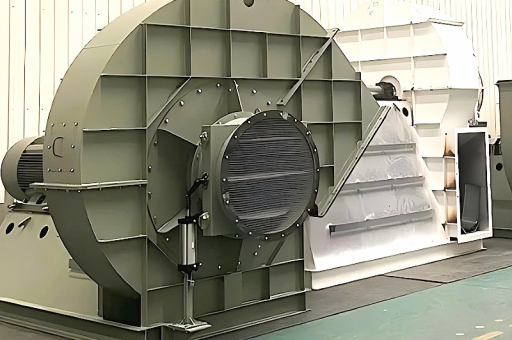
In the demanding world of industrial ventilation and process gas handling, the Low Pressure Alloy Steel Energy Efficiency Forward Anticorrosion Induced Draft Fan represents a pinnacle of integrated engineering. Modern facilities—from coal-fired power plants to chemical refineries and cement kilns—require equipment that can handle corrosive, high-temperature gas streams while maintaining stringent operational costs. The "induced draft fan" (often referred to in engineering documents as fan) is critical for pulling combustion gases through a system, creating a slight negative pressure.
The convergence of low-pressure operation, specialized alloy steel construction, forward-curve aerodynamic design, and robust anticorrosion coatings creates a fan that not only moves air but does so with unprecedented longevity and lower energy consumption. This article synthesizes current industry knowledge and search trends to provide a comprehensive guide for engineers, plant managers, and procurement specialists.
Understanding the Core Material: Low Pressure Alloy Steel
Q: Why is "low pressure alloy steel" specified for this fan application?
A: Alloy steel offers superior tensile strength and hardness compared to standard carbon steel. When combined with "low pressure" design parameters, manufacturers optimize the wall thickness and structural geometry. This reduces mass (lowering rotational inertia) while maintaining the ductility required to withstand thermal cycles. Alloying elements like chromium, molybdenum, and nickel are added to enhance creep resistance and reduce oxidation at elevated temperatures (often 200°C to 450°C). The "low pressure" specification specifically refers to static pressure differentials typically below 2000 Pa (8 inches w.g.), where high-torque, heavy-duty steel is unnecessary.
Key Benefit: Reduced material fatigue. In a typical induced draft fan handling flue gas, temperature fluctuations can cause expansion stress. Alloy steel’s coefficient of thermal expansion is managed better than plain steel, preventing crack formation at weld joints.
Energy Efficiency: The Forward Curve Advantage
Q: How does a "forward" curve design improve energy efficiency?
A: The "Forward Anticorrosion" term often correlates with Forward Curved (FC) blade geometry. Unlike backward-curved or airfoil blades, forward-curved blades have a shallower angle and are more numerous. This design allows the fan to generate high airflow relative to its speed, especially within low static pressure ranges. This is the defining feature of an energy-efficient induced draft unit.
Efficiency Metrics in Practice:
- Lower RPM requirement: Forward curve fans typically run at 40-60% of the RPM of a backward-curved fan for the same volume. Lower RPM directly translates to lower bearing wear and reduced electrical consumption.
- Power curve stability: Modern forward-curved fans exhibit a non-overloading power characteristic. This means that if system resistance varies, the motor does not draw excessive amperage, preventing nuisance trips and overheating.
- CFM per Watt: When optimized for low-pressure flue gas, the fan can achieve a static efficiency of 65-75%, which is competitive with higher-pressure axial fans but with lower operating costs.
Data Point: Switching from a standard centrifugal fan to a purpose-built forward curve low-pressure alloy steel fan can reduce annual energy costs by 15% to 22% in continuous operation.
Anticorrosion Strategies for Harsh Environments
Q: What specific anticorrosion methods are used on this fan?
A: The "Anticorrosion" aspect is not just a coating; it is a systems-level approach integrated with the alloy steel substrate.
- Base Material Protection: The alloy steel itself contains corrosion-resistant elements. For severe environments (e.g., high sulfur content in coal), the impeller and housing may be fabricated from 304L or 316L stainless steel alloy, not just painted carbon steel.
- Coating Systems: High-build epoxy coatings (e.g., Novolac or TFE-liner) are applied to the interior housing. These are resistant to sulfuric acid dew point corrosion, a common issue in induced draft fans handling flue gas.
- Cathodic Protection (Impeller): For the rotating assembly, sacrificial zinc or aluminum anodes are sometimes installed to prevent galvanic corrosion at blade weld joints.
- Abrasion-Resistant Linings: Where fly ash or particulate matter is entrained, the fan housing includes replaceable wear tiles (ceramic or hard-faced alloy) to prevent erosion that would expose the metal to corrosive gases.
Case Reference: In a waste-to-energy plant, a standard fan failed within 6 months due to hydrochloric acid attack. A replacement fan using Inconel alloy for the impeller and a dual-layer glass flake vinyl ester coating for the housing lasted over 4 years.
Integrated System Design: Balancing Pressure, Flow, and Longevity
Designing a system around a Low Pressure Alloy Steel Energy Efficiency Forward Anticorrosion Induced Draft Fan requires understanding the relationship between pressure drop and efficiency.
Key Design Considerations:
- Inlet Box & Arrester: A well-designed inlet ensures laminar flow into the fan eye, reducing turbulence that decreases efficiency and increases vibration.
- Variable Frequency Drives (VFD): Combining the fan with a VFD creates the ultimate energy-efficient system. The low-pressure, forward-curve design responds linearly to speed changes, allowing precise draft control.
- Ductwork Sizing: The low pressure design is sensitive to high system resistance. Ductwork must be sized to keep static pressure loss below 500 Pa to maximize the fan's inherent efficiency.
Performance Checklist:
- Verify the operating point lies within the "peak efficiency region" of the fan curve (typically 40% to 80% of wide-open volume).
- Ensure the alloy steel shaft is sized for critical speed margins of at least 20% above maximum operational speed.
- Confirm that the anticorrosion coating can withstand the gas outlet temperature (often 150°C - 250°C).
Industry Applications: From Power Plants to Chemical Processing
The unique combination of low pressure, alloy steel, forward curve, and anticorrosion makes this fan ideal for:
- Thermal Power Plants: Handling low-pressure flue gas before the scrubber (wet or dry). The forward curve fan provides draft stability for the boiler.
- Cement & Minerals: Exhaust from clinker coolers and kilns. The alloy steel resists heat, while the impeller's forward curve provides sufficient volume for cooling.
- Chemical Processing: Removing corrosive vapors (e.g., HCl, HF, NOx) from reaction vessels. The specific anticorrosion alloy and coating are matched to the chemical species.
- Pharmaceuticals & Food Processing: Where clean, low-pressure exhaust is needed, and the fan must resist mild acidic vapors (e.g., dairy drying exhausts).
Frequently Asked Questions (FAQ)
Q1: What is the typical life expectancy of a Low Pressure Alloy Steel Induced Draft Fan?
A: With proper maintenance and the correct anticorrosion specification for the gas stream, a high-quality fan can operate for 10-15 years. Impeller replacement is typically required every 5-7 years depending on erosion and corrosion patterns.
Q2: Can this fan be used for high-temperature applications (above 300°C)?
A: Yes, but caution is required. The "low pressure alloy steel" construction can handle temperatures up to 450°C if the alloy is heat-treated. For temperatures above 400°C, you may need to add a cooling wheel or use a separate shaft seal to prevent bearing overheating. Always consult the manufacturer's fan curve for temperature deration factors.
Q3: How does the "forward curve" compare to a "backward inclined" design in terms of noise?
A: Forward curve fans are generally quieter at the same flow rate because they operate at lower tip speeds. However, they can produce a slightly higher pitched whine at the blade pass frequency. For low noise applications, sound attenuation (silencers) is recommended.
Q4: Is there a standard for testing the anticorrosion coating?
A: Yes. ASTM D3359 (Adhesion Test) and ASTM B117 (Salt Spray Test) are common. For chemical resistance, a 30-day immersion test in a representative gas condensate is preferred.
Conclusion: The Future of Induced Draft Fan Systems
The Low Pressure Alloy Steel Energy Efficiency Forward Anticorrosion Induced Draft Fan is more than a sum of its parts. It is a strategic investment in operational reliability. The forward curve design minimizes energy consumption, the alloy steel construction ensures structural integrity under thermal stress, and the integrated anticorrosion strategies prevent premature failure in aggressive environments.
For engineers seeking to reduce Scope 1 and Scope 2 emissions, this fan configuration helps meet decarbonization goals by lowering electrical demand and extending equipment life, reducing waste. When specifying a new fan for a low-pressure, corrosive gas application, prioritize a fan that is built around these converging principles—not a generic unit that is "modified" to fit.
The result is a system that drafts with precision, operates for decades, and delivers the lowest total cost of ownership.
Technical Note: For specific fan performance curves, coating compatibility charts, and alloy selection tables, consult your licensed fan manufacturer's engineering data. Proper installation and routine inspection of the fan are critical for safety and warranty validation.





