
This article's table of contents introduction:
- Understanding Your Requirements
- Likely Blower Configuration
- Potential Specifications (Example)
- Application Details for "Materials Drying"
- Important Considerations & Potential Issues
- Recommended Alternatives
- Next Steps
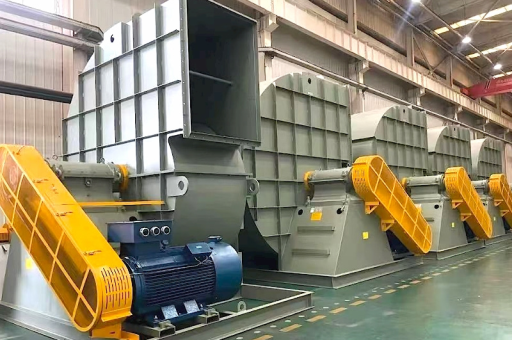
Based on the parameters you provided (10635–12427 Pa pressure, High Pressure Centrifugal Blower, Forward curve, for Materials Drying), here is a technical breakdown of what you are looking for, key specifications, and application notes.
Understanding Your Requirements
- Pressure Range (10635 – 12427 Pa): This is relatively high pressure for a centrifugal blower (approx. 1063 – 1243 mmH₂O or 7 – 49.9 inH₂O). Standard centrifugal fans typically operate below 5000 Pa. This range places you firmly in the High Pressure category, often requiring a multistage or specific impeller design.
- Forward Curve (FC) Blower: Forward-curved blades (also known as "squirrel cage" or "squirrel cage fans") operate at lower speeds for a given volume and pressure compared to backward-curved. They are compact, relatively quiet, and have a steep pressure curve. Crucial note: At very high static pressures (10k+ Pa), forward-curved fans can become inefficient and prone to overheating the motor if stalled or operated outside their design point. They are less common at this pressure than backward-curved or radial (paddle wheel) designs.
- Application: Materials Drying: This implies the air must be hot (High Temperature resistance), possibly high humidity, and potentially contain dust or particulates from the drying material (e.g., granules, textiles, food).
Likely Blower Configuration
Given the pressure and application, this is likely a multistage centrifugal blower or a high-speed single stage with a very robust forward curve wheel.
- Multistage (Most Likely): 2 or more impellers in series to achieve 12,000+ Pa. The forward curve design in a multistage setup is common for pneumatic conveying and drying systems.
- Material: Cast aluminum or steel housing (corrosion-resistant coating if for food/chemical drying). Impeller: Steel or stainless steel (AISI 304/316) to handle temperature and moisture.
- Drive: Direct drive (VFD capable) or Belt drive (for precise speed control to match pressure requirements).
- Motor: High efficiency (IE3/IE4), usually 2-pole (2900 RPM @ 50Hz / 3500 RPM @ 60Hz) or 4-pole with a pulley/belt ratio to achieve the required speed.
Potential Specifications (Example)
- Blower Type: Single Stage or Multistage High Pressure Centrifugal (Forward Curved).
- Duty: High Pressure, High Temperature (up to 80°C / 176°F continuous, or higher with special seals/bearings).
- Max Working Pressure: 12,500 Pa (Within your range).
- Material of Construction: SS304 housing & impeller for drying applications.
- Connection: Flanged inlet and outlet (e.g., 4" – 6" diameter depending on flow).
- Bearings: Sealed for life or regreasable, high-temperature grease.
- Special Features (for Drying):
- HEPA or Pre-filter on inlet to protect blower from dust.
- Heat Slingers on shaft to protect bearings from heat.
- Drain plugs for condensation buildup.
Application Details for "Materials Drying"
To use this blower effectively for drying, you typically need to pair it with:
- Heater: Air passing through the blower can be heated by a duct heater (electric, steam, or gas) placed before or after the blower.
- Drying Chamber/Conveyor: The high-pressure air is forced through nozzles (air knives) or through a porous product bed (fluidized bed drying).
- Ducting: Smooth, rigid ducting with minimal bends to avoid pressure drop.
- Filtering: A filter on the inlet is mandatory to prevent dust from eroding the forward-curved blades (which are sensitive to debris).
Important Considerations & Potential Issues
| Factor | Issue with Forward Curve at this Pressure | Mitigation |
|---|---|---|
| Efficiency | FC fans are ~60-70% efficient. Backward curved (BC) can be 80%+. At 12k Pa, this means high energy consumption. | Consider if BC is more suitable. |
| Stalling | If the system resistance increases (clogged filter), an FC fan can stall, causing motor overload. | Use a VFD with stall protection or a soft starter. |
| Temperature | High temp causes bearing failure and impeller expansion. | Use high-temp grease (300°F+) and heat barrier (cooling disk). |
| Noise | High pressure FC fans are significantly louder than low-pressure ones. | Install a silencer (inlet + outlet muffler). |
Recommended Alternatives
If you haven't finalized the blower type, consider these alternatives for 10635–12427 Pa / Materials Drying:
- Multistage Centrifugal (Regenerative Blower): Very common for this exact pressure range. Provides oil-free, smooth, high-pressure airflow. Very reliable for industrial drying (e.g., side channel blowers like FPZ, Elektror, Busch, or Gast).
- Backward Curved (BC) Centrifugal Fan: More efficient at this pressure. Handles dust better. Suitable for continuous duty drying. (e.g., New York Blower, Chicago Blower).
- High Pressure Radial Blower (Paddle Wheel): Excellent for dusty/hot air. Less efficient but very rugged.
Next Steps
To proceed with a purchase or design, you need to define the Flow Rate (m³/h or CFM) at this pressure. The same blower at 10,600 Pa can have a very different size than one at 12,400 Pa.
Please provide:
- Required Airflow (m³/h or CFM)
- Air Temperature (Max)
- Type of material being dried (e.g., grain, plastic pellets, paint)
- Power Supply (Voltage/Phase/Frequency)
Disclaimer: This information is for general reference. Always consult the specific manufacturer's performance curves (e.g., Siemens, Gardner Denver, Elektror, FPZ) to ensure the blower operates efficiently and safely at your exact operating point.





