
This article's table of contents introduction:
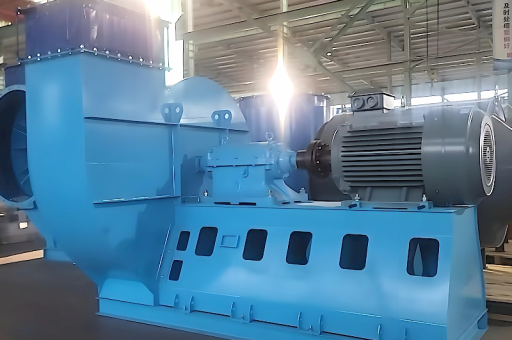
- Table of Contents
- Introduction: What Makes a Ventilation Fan “CE Certified”?
- Centrifugal Blower vs. Axial Ventilation Fan: Core Differences
- Why CE Certification Matters for Industrial Exhaust Systems
- Key Performance Parameters: Pressure, Airflow, and Noise
- How to Select the Right Fan for Your Application (With Q&A)
- Installation Best Practices for CE Certified Exhaust Fans
- Common Mistakes in Fan Selection and How to Avoid Them
- Frequently Asked Questions (FAQ)
- Conclusion
The Ultimate Guide to CE Certified Centrifugal Blower Exhaust Axial Ventilation Fans: Efficiency, Compliance, and Selection
Table of Contents
- Introduction: What Makes a Ventilation Fan “CE Certified”?
- Centrifugal Blower vs. Axial Ventilation Fan: Core Differences
- Why CE Certification Matters for Industrial Exhaust Systems
- Key Performance Parameters: Pressure, Airflow, and Noise
- How to Select the Right Fan for Your Application (With Q&A)
- Installation Best Practices for CE Certified Exhaust Fans
- Common Mistakes in Fan Selection and How to Avoid Them
- Frequently Asked Questions (FAQ)
- Conclusion
Introduction: What Makes a Ventilation Fan “CE Certified”?
When you search for industrial air movement equipment, you will frequently encounter the terms Centrifugal Blower, Exhaust Axial Ventilation Fan, and CE Certified. These three descriptors represent a specific class of high-performance ventilation equipment designed for safety, energy efficiency, and regulatory compliance.
A CE Certified fan means the manufacturer has declared that the product meets the essential health, safety, and environmental protection requirements of the European Economic Area (EEA). This certification is not optional for selling in Europe, but it is also a global quality benchmark. For a centrifugal blower exhaust axial ventilation fan, CE certification covers:
- Low Voltage Directive (LVD) for electrical safety.
- Machinery Directive for mechanical safety (e.g., blade guards, thermal protection).
- Electromagnetic Compatibility (EMC) to avoid interference with other equipment.
- ErP (Energy-related Products) directive for efficiency.
In short, a CE mark on a fan gives you legal assurance and technical reliability.
Centrifugal Blower vs. Axial Ventilation Fan: Core Differences
Understanding the Centrifugal Blower and the Axial Ventilation Fan is critical because they serve very different pressure and airflow needs.
| Feature | Centrifugal Blower | Axial Ventilation Fan |
|---|---|---|
| Airflow Direction | 90-degree turn (inlet to outlet) | Straight through (inline) |
| Pressure Capability | High static pressure (up to 2,000 Pa+) | Low static pressure (typically < 500 Pa) |
| Best For | Ducted systems, long runs, dust/fume extraction | Wall mounting, general ventilation, short ducts |
| Blade Design | Backward/forward curved, radial | Propeller or tube-axial |
| Noise Level | Lower noise at high pressure | Higher noise at high airflow |
| CE Certification Focus | Electrical safety + impeller burst test | Guard mesh compliance + electrical safety |
Example: If you need to extract welding fumes through 20 meters of ducting, a CE certified centrifugal blower is mandatory. For a warehouse ceiling exhaust, a CE certified axial ventilation fan is sufficient.
Why CE Certification Matters for Industrial Exhaust Systems
Many buyers overlook the certification details, but here is why it is non-negotiable:
- Legal Compliance for Export – If your facility is in the EU or UK, non-CE fans can be seized, and you face fines.
- Safety Guarantee – CE certification includes rigorous testing for blade retention, thermal overload, and fire resistance.
- Energy Efficiency – A CE certified fan often meets or exceeds ErP 2025 efficiency levels, reducing electricity costs.
- Insurance Requirements – Many industrial insurance policies mandate CE marking on all electrical equipment.
Real-world scenario: A factory purchased non-certified axial fans for a paint booth. During an inspection, the local authority shut down the line because the fans lacked CE documentation. The retrofit cost 40% more than buying CE-certified units from the start.
Key Performance Parameters: Pressure, Airflow, and Noise
When evaluating a Centrifugal Blower Exhaust Axial Ventilation Fan with CE certification, focus on these three metrics:
| Parameter | What It Measures | Typical Range (CE Fans) |
|---|---|---|
| Airflow (CFM or m³/h) | Volume of air moved per hour | 500 – 50,000 m³/h |
| Static Pressure (Pa) | Resistance the fan can overcome | 100 – 2,500 Pa |
| Noise Level (dB(A)) | Operational loudness at 1 meter | 55 – 85 dB(A) |
| Motor Efficiency (IE Class) | Electrical to mechanical conversion | IE2, IE3, IE4 (Premium) |
| IP Rating | Dust/water protection | IP54, IP55, IP65 |
Important Note: CE certification requires that the manufacturer provide a performance curve showing airflow vs. pressure. Never buy a fan without this curve – it is the only way to verify the fan will work in your system.
How to Select the Right Fan for Your Application (With Q&A)
Q: I need a fan for a chemical exhaust fume hood. Should I choose a centrifugal blower or an axial fan?
A: Always choose a Centrifugal Blower with CE certification. Fume hoods require high static pressure to overcome duct friction and filter resistance. Axial fans cannot generate enough pressure for safe chemical containment.
Q: My factory has a large open space with no ducting. What fan type is best?
A: A CE Certified Axial Ventilation Fan is ideal. Install it as a wall exhaust. Axial fans move high volumes of air at low pressure, perfect for general dilution ventilation.
Q: Does CE certification guarantee explosion-proof capability?
A: No. CE certification covers general safety. For explosive environments (e.g., paint spray booths, grain silos), you need ATEX-certified fans in addition to CE. Check the fan's Ex marking (e.g., Ex II 2G).
Q: Can I use a domestic axial fan in an industrial kitchen?
A: No. Industrial kitchens require CE-certified exhaust axial fans with motor thermal protection and grease-resistant coatings. Domestic fans will fail within weeks due to heat and grease buildup.
Installation Best Practices for CE Certified Exhaust Fans
Even a top-quality Centrifugal Blower Exhaust Axial Ventilation Fan will underperform if installed incorrectly. Follow these steps:
- Mounting Base – For centrifugal blowers, use vibration isolators to prevent resonance. For axial fans, ensure the wall opening is reinforced.
- Duct Connection – Use flexible connectors to avoid transmitting vibration to the ductwork. This also maintains CE-compliant noise levels.
- Electrical Wiring – CE fans must be wired according to local electrical codes. Use a dedicated circuit with a residual current device (RCD).
- Airflow Direction – Confirm the arrow on the fan casing matches your intended flow. Reversing an axial fan reduces performance by 50%.
- Maintenance Access – Install access panels for cleaning. A clogged impeller voids the CE certification's performance guarantee.
Common Mistakes in Fan Selection and How to Avoid Them
-
Mistake #1: Selecting base on airflow alone.
Fix: Always check static pressure. A 10,000 CFM axial fan at zero pressure will move almost no air through a filter. -
Mistake #2: Ignoring temperature rating.
Fix: CE certified fans have a maximum ambient temperature (e.g., -20°C to +60°C). For ovens, use a special high-temperature centrifugal blower. -
Mistake #3: Assuming all CE marks are equal.
Fix: Ask for the Declaration of Conformity (DoC) and test report from a notified body (e.g., TÜV, SGS). -
Mistake #4: Oversizing the fan.
Fix: Use a duct calculator or fan selection software. An oversized fan wastes energy and creates excessive noise.
Frequently Asked Questions (FAQ)
Q1: Is CE certification mandatory for ventilation fans outside the EU?
Yes, many countries (including Singapore, Australia, and UAE) accept CE as a quality standard, and importers often require it.
Q2: How long does a CE certified centrifugal blower last?
With proper maintenance, 10–15 years. Motors should be serviced every 6 months.
Q3: Can I retrofit an old fan with a CE-certified motor?
Typically, no. CE certification applies to the complete machine. Changing the motor without re-testing voids the certification.
Q4: What is the difference between an exhaust axial fan and a supply axial fan?
Exhaust fans are designed to pull air out and may have higher static pressure. Supply fans push air in and often have lower pressure ratings. Always match the fan to your system's static pressure.
Q5: Do CE fans need a VFD (Variable Frequency Drive)?
Not required, but recommended for energy savings. Ensure the VFD is also CE certified.
Conclusion
Choosing a Centrifugal Blower Exhaust Axial Ventilation Fan with CE certification is not just about compliance – it is about safety, efficiency, and long-term reliability. Whether you need a high-pressure centrifugal blower for ducted fume extraction or a high-volume axial fan for warehouse ventilation, always verify the certification documents, performance curve, and application suitability.
Final recommendation: Always buy from a manufacturer that provides a full test report, a Declaration of Conformity, and a performance curve. Never compromise on CE certification – it protects your people, your equipment, and your business.
For more technical guides on industrial fan selection, visit the official resource center at fan (your trusted source for CE certified ventilation solutions).





