
This article's table of contents introduction:
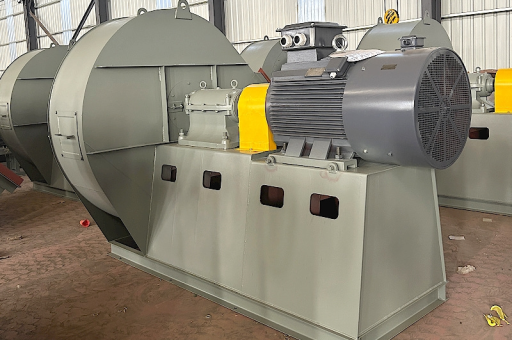
- What is a High Temperature Centrifugal Dust Removal Fan?
- Key Design Features
- Critical Performance Parameters
- Common Applications in Dust Removal
- Selection Checklist
- Typical Challenges & Solutions
- Maintenance Best Practices
- Top Manufacturers & Common Models (Examples)
- Summary Recommendation
This is a comprehensive guide to High Temperature Centrifugal Fans for Industrial Dust Removal. These fans are critical components in industries like cement, steel, metallurgy, chemical processing, and power generation, where hot, abrasive, and potentially corrosive gas streams must be moved safely.
What is a High Temperature Centrifugal Dust Removal Fan?
It is a purpose-built centrifugal fan designed to handle gas streams at elevated temperatures (typically 150°C to 600°C+, and up to 1000°C for special applications) while simultaneously moving air laden with dust, particulates, and fumes.
Unlike standard ventilation fans, these must balance three conflicting demands:
- High Temperature Resistance (Thermal)
- Wear/Abrasion Resistance (Mechanical)
- Structural Integrity (Avoiding thermal deformation and fatigue)
Key Design Features
A. Impeller (Wheel) Design
- Material: High-temperature alloys like Corten steel, 16MnR, or Stainless Steel (304, 310S) for high heat. For extreme temps, Inconel or Hastelloy.
- Blade Profile: Backward-curved blades are most common.
- Advantage: Self-limiting power, higher efficiency, less dust accumulation on blades compared to forward-curved.
- Reinforcement: Heavy-duty welding with continuous fillet welds to prevent stress cracking from thermal expansion.
B. Housing (Casing) Design
- Material: Thick gauge carbon steel (Q235B) or high-temp alloy. Internal lining with wear-resistant ceramic tiles or hard-facing (Stellite) is common on the cut-off and volute tongue.
- Insulation: External insulation blankets or double-wall construction to reduce heat loss to the environment and protect personnel (skin temperature < 45°C).
- Expansion Joints: Flexible connections (e.g., high-temp silicone, Teflon, or bellows) at the inlet and outlet to accommodate thermal expansion.
C. Shaft, Bearings, and Cooling
- Shaft: Longer shaft to allow the bearings to be further from the heat source. Often water-cooled or air-cooled.
- Cooling System:
- Water-cooled bearing housing: Circulating water (or glycol) in a jacket around the bearing pedestal.
- Air-cooled fan: A small fan mounted on the shaft to blow ambient air over the bearing housing.
- Bearings: High-temperature grease (e.g., synthetic oil-based, Mobilith SHC 100) or oil-lubricated spherical roller bearings.
D. Drive System
- Direct Drive: Motor directly coupled (less maintenance, but requires the motor to be heat-tolerant).
- Belt Drive (V-belt): More common. Allows the motor to be placed further away from the hot gas stream. Allows speed changes for variable airflow.
Critical Performance Parameters
| Parameter | Typical Value / Goal |
|---|---|
| Temperature | Up to 600°C (continuous), 800°C (peak) |
| Static Pressure (SP) | 500 - 5,000 Pa (higher for long ductwork) |
| Airflow (Volume) | 5,000 m³/hr to 500,000+ m³/hr |
| Dust Concentration | Up to 50 g/Nm³ (or higher with pre-treatment like a cyclone) |
| Efficiency | 75-85% (backward curved) |
| Inlet Gas | Hot, dry, abrading (often with corrosive elements like SOx) |
Important: The density of hot air is lower than cold air. The fan must be sized for the actual volume flow at operating temperature, not the standard mass flow.
- Cold Design Rule: A fan moving 100,000 m³/hr at 20°C will need a motor 2-3 times larger if it is installed on a system where the gas is at 200°C (because the gas expands, and the fan does more work moving the same mass in a larger volume).
Common Applications in Dust Removal
-
Baghouse (Fabric Filter) Dust Collectors:
The fan pulls the hot gas through the filter bags. Critical for keeping the bag temperature above the dew point (to prevent condensation and bag blinding) but below the bag's max temp (typically 260°C for PTFE).
-
Electrostatic Precipitators (ESP): Moving the hot gas through the high-voltage fields before the stack.
-
Cyclone Separators: As the primary or secondary suction fan after a cyclone.
-
Induced Draft (ID) Fans: Located after the dust collection system (closer to the stack). These handle cleaned gas but still at high temperature.
-
Kiln Exhaust: Cement, lime, or steel kilns where gas comes directly from the process.
Selection Checklist
When selecting a high-temperature centrifugal fan for dust removal, you MUST provide:
- [ ] Gas Flow Rate (Actual m³/hr or ACFM at the operating temperature)
- [ ] Operating Temperature (Average and Peak with duration)
- [ ] Static Pressure (Total system resistance at operating temp)
- [ ] Gas Composition (Presence of moisture, acid dew point, corrosive gases like Cl₂, SO₃, HF)
- [ ] Dust Characteristics (Type, concentration, particle size, abrasiveness, stickiness)
- [ ] Ambient Conditions (Elevation, ambient temperature for motor cooling)
Typical Challenges & Solutions
| Challenge | Solution |
|---|---|
| Thermal Stress Cracking | Use expansion joints on casing; allow impeller to float axially on shaft (if possible); thicker material. |
| Dust Build-up (Imbalance) | Use self-cleaning impellers (with fewer, larger blades or special airfoils); install access doors for cleaning. |
| Bearing Failure | Install temperature monitors (RTDs) on bearings; use proper cooling water flow/air cooling; monitor vibration. |
| Shaft Seal Leakage | Use labyrinth seals, carbon rings, or protective purge air to keep dust out of the bearing housing. |
| Motor Overload (Cold Start) | Use variable frequency drives (VFDs) or inlet/outlet dampers to limit current on startup. |
| Vibration / Resonance | Ensure dynamic balancing (G2.5 or better) ; install vibration sensors; stiff foundation. |
Maintenance Best Practices
- Vibration Monitoring: Continuous vibration analysis (acceleration, velocity) to detect imbalance from dust build-up or blade erosion.
- Thermal Imaging: Monthly check of bearing housing, motor, and casing hot spots.
- Grease Regimen: Use high-temp grease specifically for the operating range; don't over-grease (causes overheating).
- Water Cooling System: Check flow, pressure, and temperature of cooling water; clean water jacket yearly.
- Belt Tension: Inspect V-belts for heat damage; keep proper tension to avoid slippage (which generates more heat).
Top Manufacturers & Common Models (Examples)
| Manufacturer | Notable Series / Model | Specialty |
|---|---|---|
| Howden | SG, RG, and custom-built ID fans | High volume, high temperature, heavy industries |
| New York Blower (NYB) | HP Series, RF Series | High pressure, high temp, custom alloys |
| Greenheck | FanSizer / CSP series | Modular, robust for medium-temp industrial |
| Twin City Fan & Blower | PLR, BCS, & High-Temp Custom | Engineering-heavy solutions |
| Cincinnati Fan | HTB Series (High-Temp Blower) | Up to 600°C, standard designs. |
| China-based (e.g., Y4-73, Y4-68 series) | Y4-73, G4-73, Y5-47 series | Very common in cement/steel; cost-effective. |
Summary Recommendation
For high-temperature industrial dust removal fans:
- Use backward-curved airfoil or radial-tipped impellers for efficiency and dust shedding.
- Insist on water-cooled bearings for continuous operation above 150°C.
- Specify abrasion-resistant coating or ceramic lining on the volute tongue and cut-off.
- Include a VFD or variable inlet guide vanes for smooth start-up and energy savings.
- Always account for the gas density change between cold start and hot operation.
If you need a specific sizing calculation or help with a particular application (e.g., a cement plant baghouse or an electric arc furnace exhaust), feel free to ask!





