
This article's table of contents introduction:
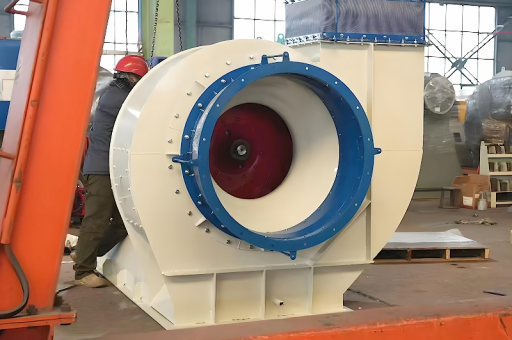
- Table of Contents
- Introduction: The Growing Demand for Smart Air Movement
- Why Customization Matters in Industrial Ventilation
- Key Technologies Behind High-Efficiency & Low-Noise Fans
- Noise Reduction Strategies: From Aerodynamics to Materials
- Energy Efficiency Metrics & ROI for Custom Centrifugal Fans
- Frequently Asked Questions (FAQ)
- Conclusion: Tailored Solutions for a Quieter, Greener Industry
Customized Industrial Centrifugal Fans With High Efficiency And Low Noise: Engineering the Future of Ventilation Systems
Table of Contents
- Introduction: The Growing Demand for Smart Air Movement
- Why Customization Matters in Industrial Ventilation
- Key Technologies Behind High-Efficiency & Low-Noise Fans
- Noise Reduction Strategies: From Aerodynamics to Materials
- Energy Efficiency Metrics & ROI for Custom Centrifugal Fans
- Frequently Asked Questions (FAQ)
- Conclusion: Tailored Solutions for a Quieter, Greener Industry
Introduction: The Growing Demand for Smart Air Movement
In modern industrial environments—from chemical processing plants to data centers, mining operations to food manufacturing—the need for customized industrial centrifugal fans with high efficiency and low noise has never been more critical. Traditional off-the-shelf fans often suffer from excessive energy consumption, disruptive noise levels, and poor adaptability to specific ductwork or pressure requirements. As sustainability regulations tighten and workplace noise exposure limits become stricter, engineers are turning to bespoke fan designs that optimize airflow while minimizing decibel output.
The global industrial fan market is projected to grow at a CAGR of 5.8% from 2024 to 2032, with custom high-efficiency models leading the segment. This article explores how advanced aerodynamic design, computational fluid dynamics (CFD), and smart material selection allow manufacturers to deliver fans that are both powerful and whisper-quiet.
Why Customization Matters in Industrial Ventilation
1 Matching System Resistance & Airflow Demands
No two industrial setups are identical. A customized centrifugal fan can be engineered to precisely match the system curve of your duct network. This eliminates the inefficiencies caused by oversized or undersized standard fans. Key parameters tailored during customization include:
- Impeller diameter and blade geometry (forward-curved, backward-curved, or radial)
- Housing scroll design to reduce turbulence
- Motor type and speed control (direct drive vs. belt drive)
- Inlet and outlet configurations for specific duct attachments
2 Material Selection for Harsh Environments
Custom fans can incorporate corrosion-resistant alloys (e.g., 316L stainless steel), spark-resistant aluminum, or anti-static coatings for explosive atmospheres. High-temperature models may use heat-treated steel or ceramic bearings.
3 Reduced Vibrational Noise
By balancing rotating components to ISO 1940 G2.5 or better, custom fans produce significantly less structural vibration, which translates to lower airborne noise. Precision machining of shafts and hubs is standard in custom designs.
Key Technologies Behind High-Efficiency & Low-Noise Fans
Modern custom centrifugal fans achieve efficiency levels exceeding 85% (vs. 60-70% for generic models) and noise reductions of 10-15 dB(A) through several breakthrough technologies:
1 Computational Fluid Dynamics (CFD) Optimization
CFD simulations allow engineers to model airflow patterns before manufacturing. This virtual testing eliminates the need for multiple physical prototypes. Key optimizations include:
- Reducing wake turbulence behind blades
- Smoothing pressure gradients across the impeller
- Minimizing flow separation at high volumetric flow rates
2 Backward-Curved Aerofoil Blades
Among the most efficient designs, backward-curved blades (especially aerofoil-profiled) offer the best combination of efficiency and low noise. They reduce stall risk and maintain lower tip-speed noise compared to radial or forward-curved alternatives.
3 Low-Speed, Large-Diameter Impellers
Running a larger impeller at slower RPM moves the same air volume as a small impeller at high speed—but with significantly reduced aerodynamic noise. Custom designs often increase impeller diameter by 20-30% while lowering rotational speed, dropping noise by 6-10 dB(A).
4 Smart Motor Control (EC Motors)
Electronically Commutated (EC) motors are increasingly integrated into custom fans. They provide:
- Variable speed control with 95%+ motor efficiency
- Soft-start to reduce mechanical stress
- Regenerative braking in some applications
Noise Reduction Strategies: From Aerodynamics to Materials
1 Inlet & Outlet Sound Attenuation
- Inlet bell mouth: A well-designed bell mouth reduces turbulence at the fan intake, cutting noise at the source.
- Discharge silencers: Custom rectangular or cylindrical silencers can be added directly to the fan outlet, absorbing mid-to-high frequency noise without significant pressure drop.
- Sound plenums: For extremely sensitive environments (e.g., hospital clean rooms), a sound-attenuating plenum can enclose the entire fan.
2 Anti-Resonant Housing
The fan housing itself can be a source of noise amplification. Custom designs often feature:
- Dual-wall construction with damping material (e.g., mineral wool) between layers
- Ribbed casing to increase structural stiffness and reduce panel vibration
- Isolation mounts between motor and baseplate
3 Blade Passage Frequency Tuning
Blade passage frequency (BPF) is a dominant tonal noise. Custom impellers can be designed with unequal blade spacing (sometimes called “vortex staggering”). This spreads the tonal energy across a range of frequencies, making the overall sound more pleasant and less intrusive.
4 Acoustic Insulation
External acoustic cladding using mass-loaded vinyl (MLV) or polyurethane foam can be applied to the fan housing. Some custom models offer removable acoustic jackets for easy maintenance access.
Energy Efficiency Metrics & ROI for Custom Centrifugal Fans
1 Efficiency Comparison Table (Typical Values)
| Fan Type | Static Efficiency | Noise at Full Load (1m distance) | Annual Energy Cost (24/7 operation at 50 HP) |
|---|---|---|---|
| Generic Forward-Curved | 62% | 95 dB(A) | $48,000 |
| Custom Backward-Curved Aerofoil | 86% | 78 dB(A) | $34,000 |
| Custom EC Motor Model | 89% | 74 dB(A) | $29,000 |
Based on $0.12/kWh and 8,760 hours/year. Actual savings will vary.
2 Payback Period
Despite higher upfront cost (20-40% premium over standard fans), custom high-efficiency low-noise models typically achieve a payback period of 12 to 24 months through energy savings alone. Additional savings come from reduced maintenance, longer bearing life, and avoidance of noise-related fines.
3 Compliance with Noise Regulations
Many jurisdictions enforce strict noise limits for industrial equipment:
- OSHA 1910.95: Permissible 8-hour exposure limit of 90 dB(A)
- EU Directive 2003/10/EC: Action level at 80 dB(A)
Custom fans ensure your facility stays compliant without the need for secondary noise barriers.
Frequently Asked Questions (FAQ)
Q1: What is the typical noise reduction I can expect from a customized centrifugal fan compared to a standard model? A: For an equivalent airflow and pressure, a well-engineered custom fan can achieve 10 to 18 dB(A) reduction. This means a fan producing 90 dB(A) off-the-shelf can be lowered to 72-80 dB(A) with custom aerodynamic and acoustic treatments.
Q2: Are custom industrial centrifugal fans more expensive to maintain? A: No—in fact, they often require less maintenance. Slower rotational speeds reduce bearing wear, and precision balancing extends component life. However, replacement parts may be less readily available, so it’s wise to stock critical spares.
Q3: Can any fan be retrofitted to become more efficient and quieter? A: While impeller replacements and housing modifications are possible, it’s usually more cost-effective to commission a fully custom fan from scratch. Retrofits may not achieve the same pressure matching or efficiency gains.
Q4: What certifications should I look for? A: Look for fans manufactured under ISO 9001 quality systems. For noise testing, request compliance with AMCA 300-05 (Sound Testing) and for efficiency, AMCA 210 (Air Performance) . For hazardous locations, check ATEX or IECEx certification.
Q5: How do I determine the right size of custom fan for my application? A: Provide your fan supplier with:
- Required airflow (CFM or m³/h)
- Static pressure (in.WG or Pa)
- Air density and temperature
- Duct dimensions and layout
- Ambient noise limit (dB(A) at a given distance)
Most manufacturers will run a CFD analysis and provide a detailed proposal.
Conclusion: Tailored Solutions for a Quieter, Greener Industry
The industrial ventilation landscape is evolving. Customized industrial centrifugal fans with high efficiency and low noise are no longer a luxury—they are a necessity for facilities aiming to reduce carbon footprints, meet stringent workplace safety standards, and improve operational economics. By investing in bespoke aerodynamic designs, premium materials, and advanced motor control, companies can achieve:
- Up to 85-90% fan efficiency
- Noise levels below 75 dB(A) in many applications
- Energy savings of 30-40% compared to generic counterparts
- Extended equipment lifespan through precision engineering
When selecting a custom fan manufacturer, prioritize those with in-house CFD capability, a proven track record in low-noise design, and comprehensive after-sales support. The upfront consultation may require detailed system analysis, but the long-term return—both financial and acoustic—is undeniable.
To learn more about custom fan sizing, noise prediction modeling, or to request a consultation for your facility, contact your local industrial fan representative.





