
This article's table of contents introduction:
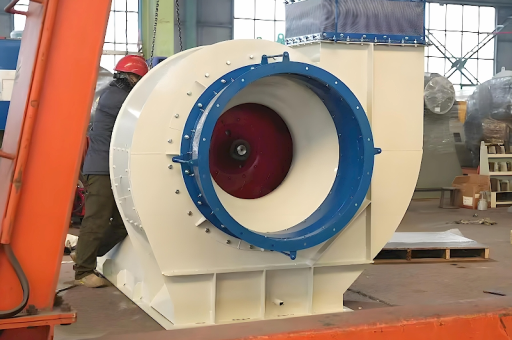
Article Title:
High-Performance Induced Draft Fans (1450–2900 RPM): Material Selection Guide for SS304, SS316, and Carbon Steel
Table of Contents (Directory Guide)
- Introduction: The Role of Induced Draft Fans in Industrial Systems
- Understanding the Speed Range: Why 1450–2900 RPM Matters
- Material Selection: SS304 vs. SS316 vs. Carbon Steel
- Performance Optimization and Energy Efficiency
- Common Applications Across Industries
- Frequently Asked Questions (FAQ)
- Conclusion: Choosing the Right Fan for Long-Term Reliability
Introduction: The Role of Induced Draft Fans in Industrial Systems
Induced draft fans (ID fans) are critical components in thermal power plants, cement kilns, steel mills, and chemical processing facilities. Their primary function is to draw combustion gases or exhaust through a system, maintaining negative pressure and ensuring efficient heat exchange or pollution control. The operating speed range of 1450–2900 RPM represents a versatile balance between high airflow capacity and mechanical stability.
Modern ID fans are constructed from three primary materials: SS304 (304 stainless steel), SS316 (316 stainless steel), and carbon steel. Each material offers distinct advantages depending on the operating environment, gas composition, and temperature. This article explores the technical nuances of selecting the right fan material and optimizing performance within the 1450–2900 RPM range.
Understanding the Speed Range: Why 1450–2900 RPM Matters
The 1450–2900 RPM range corresponds to typical 4-pole (1450 RPM) and 2-pole (2900 RPM) motor configurations.
- At 1450 RPM: Fans deliver higher torque and are suitable for systems requiring consistent, moderate airflow with lower noise levels. They are often preferred for heavy-duty applications where material fatigue at high speeds is a concern.
- At 2900 RPM: Fans achieve higher volumetric flow rates and static pressure, making them ideal for systems that demand rapid gas evacuation or operate under variable load conditions.
Key engineering consideration: At 2900 RPM, the impeller tip speed increases significantly. This imposes stricter requirements on material strength and vibration damping. For instance, SS304 and SS316 offer better fatigue resistance than carbon steel at high rotational speeds.
Material Selection: SS304 vs. SS316 vs. Carbon Steel
SS304 (304 Stainless Steel)
- Best for: Dry or mildly corrosive environments, temperatures up to 800°C (1472°F).
- Advantages:
- Excellent weldability and formability.
- Good resistance to oxidation and mild chemical attack.
- Cost-effective compared to SS316.
- Limitations: Susceptible to pitting in chloride-rich environments (e.g., coastal power plants).
SS316 (316 Stainless Steel)
- Best for: Wet, acidic, or chloride-laden gas streams (e.g., flue gas desulfurization units).
- Advantages:
- Superior corrosion resistance due to molybdenum content (2–3%).
- Withstands temperatures up to 900°C (1652°F) in reducing atmospheres.
- Lower maintenance frequency in harsh chemical environments.
- Limitations: Higher initial cost and slightly lower thermal conductivity than SS304.
Carbon Steel
- Best for: Clean, dry gases at moderate temperatures (below 400°C / 752°F).
- Advantages:
- Lowest material cost.
- High structural strength when painted or coated.
- Suitable for non-critical applications where corrosion is not a concern.
- Limitations: Prone to scaling and rust in humid or acidic conditions. Not recommended for exhausts containing SO₂ or NOₓ.
Comparison Table (for quick reference):
| Property | Carbon Steel | SS304 | SS316 |
|---|---|---|---|
| Cost (Relative) | Low | Medium | High |
| Max Temperature (continuous) | 400°C | 800°C | 900°C |
| Corrosion Resistance | Poor | Good | Excellent |
| Weldability | Good | Excellent | Good (requires care) |
| Typical Lifespan | 5–8 years | 10–15 years | 15–20 years |
Performance Optimization and Energy Efficiency
To maximize efficiency within the 1450–2900 RPM range, consider the following:
- Blade Design: Airfoil or backward-curved blades reduce turbulence and noise, especially at high RPM.
- Vibration Control: Fans running at 2900 RPM require precision balancing. Use of SS304 or SS316 impellers reduces thermal expansion drift.
- Motor Efficiency: Pair with IE3 or IE4 efficiency motors to reduce energy consumption by 10–15%.
- Variable Frequency Drives (VFDs): Allow seamless speed adjustment between 1450 and 2900 RPM, matching fan output to system demand.
Example calculation: A 50 kW ID fan running at 2900 RPM consumes approximately 18% more power than at 2500 RPM, but delivers 22% more airflow. SS316 construction ensures the impeller maintains structural integrity at this higher stress level.
Common Applications Across Industries
| Industry | Typical Gas Composition | Recommended Material |
|---|---|---|
| Coal Power Plants | Flue gas with SO₂, fly ash | SS316 or carbon steel (with coating) |
| Cement Kilns | Hot, abrasive dust (up to 350°C) | SS304 or SS316 |
| Chemical Processing | Chlorinated hydrocarbons, acids | SS316 (mandatory) |
| Steel Mills | Combustion gases, CO, particulate | Carbon steel (if dry) or SS304 |
| Waste Incineration | Corrosive, high-moisture flue gas | SS316 (with anti-corrosion coating) |
Frequently Asked Questions (FAQ)
Q1: What is the difference between an induced draft fan and a forced draft fan?
A1: An induced draft fan pulls gas out of the system (creating negative pressure), while a forced draft fan pushes air in. ID fans handle hotter, dirtier gas and require more robust materials like SS304 or SS316.
Q2: Can carbon steel be used for an induced draft fan operating at 1450 RPM?
A2: Yes, if the gas is dry and temperature stays below 400°C. However, coatings (e.g., epoxy or zinc) are recommended to extend lifespan. For wet or acidic gas, stainless steel is mandatory.
Q3: Is SS316 always better than SS304?
A3: Not always. For dry, non-chloride environments, SS304 offers sufficient performance at a lower cost. SS316 is overkill unless the environment contains chlorides, acids, or high humidity.
Q4: How does fan speed affect material selection?
A4: At 2900 RPM, centrifugal stress on the impeller is higher. SS304 and SS316 have higher yield strength than carbon steel, reducing the risk of fatigue cracking over time.
Q5: What maintenance is required for an induced draft fan?
A5: Regular vibration monitoring, bearing lubrication, and blade inspection for erosion or corrosion. SS316 fans require less frequent anti-corrosion treatment than carbon steel.
Conclusion: Choosing the Right Fan for Long-Term Reliability
The selection of an induced draft fan operating between 1450 and 2900 RPM depends on three critical factors: gas composition, temperature, and cost constraints.
- For low-cost, dry environments: Carbon steel is economical, but limited to 400°C and moderate durability.
- For balanced performance and corrosion resistance: SS304 is a workhorse material, suitable for most flue gas applications up to 800°C.
- For demanding, wet, or acidic environments: SS316 justifies its higher cost with a 15–20 year lifespan and minimal maintenance downtime.
By aligning material choice with operating RPM and gas conditions, engineers can achieve optimal energy efficiency, reduce unplanned outages, and extend the service life of their fan system. For custom specifications or retrofit advice, always consult with a fan manufacturer who specializes in high-temperature, corrosion-resistant designs.
For additional technical data sheets or to request a quote, visit our partner fan manufacturer’s online resource center.





