
This article's table of contents introduction:
- Table of Contents
- Introduction: The High-Stakes Environment of Industrial Forging
- Understanding the Core Component – The Explosion Proof Motor
- Why Medium Pressure and Forward Curved Design Matter for Furnace Airflow
- The Secondary Air Blower Fan: Engineering the Combustion Zone
- Key Technical Specifications & Selection Criteria
- Safety Compliance: ATEX, IECEx, and NEC Standards for Forging
- Common Operational Challenges and Q&A
- Installation, Maintenance, and Lifecycle Optimization
- Conclusion: Future-Proofing Your Forging Furnace with Reliable Fan Technology
*The Critical Role of Explosion-Proof Medium-Pressure Forward-Curved Secondary Air Blower Fans in Industrial Forging Furnaces*
Table of Contents
- Introduction: The High-Stakes Environment of Industrial Forging
- Understanding the Core Component – The Explosion Proof Motor
- Why Medium Pressure and Forward Curved Design Matter for Furnace Airflow
- The Secondary Air Blower Fan: Engineering the Combustion Zone
- Key Technical Specifications & Selection Criteria
- Safety Compliance: ATEX, IECEx, and NEC Standards for Forging
- Common Operational Challenges and Q&A
- Installation, Maintenance, and Lifecycle Optimization
- Conclusion: Future-Proofing Your Forging Furnace with Reliable Fan Technology
Introduction: The High-Stakes Environment of Industrial Forging
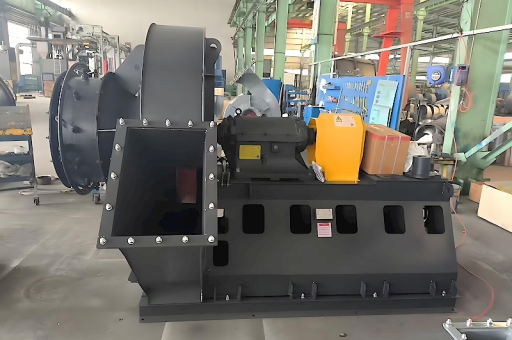
Industrial forging furnaces operate at the extreme edge of material science. Inside these massive structures, billets of steel, aluminum, or titanium are heated to plasticity—often exceeding 1200°C (2200°F). While the forging press steals the spotlight, the unsung hero of consistent, safe, and efficient operation is the Explosion Proof Motor Medium Pressure Forward Industrial Forging Furnace Secondary Air Blower Fan.
Why is this specific configuration so critical? In a forging furnace, primary air (for initial fuel combustion) and secondary air (for complete burn-out and temperature tuning) must be delivered with precision. Secondary air blower fans, driven by explosion-proof motors, ensure that unburned fuel gases (such as CO, H₂, or volatile hydrocarbons) do not accumulate and trigger a catastrophic explosion. According to data from the Occupational Safety and Health Administration (OSHA) and industry safety bulletins, nearly 40% of furnace-related incidents stem from improper air-to-fuel ratio management—a problem directly mitigated by a correctly specified secondary air fan.
This article dissects every element of this component: the motor’s explosion-proof housing, the medium-pressure forward-curved blade aerodynamics, and the rigorous safety standards governing its installation.
Understanding the Core Component – The Explosion Proof Motor
An explosion-proof motor is not one that is sealed against external explosions; rather, it is designed to contain an internal explosion and prevent it from igniting the surrounding flammable atmosphere.
How It Works:
- Flame Paths & Joints: The motor enclosure has long, narrow flame paths (typically 0.5–2mm gaps) at the shaft, terminal box, and housing joints. If flammable gas enters the motor and ignites, the expanding gases cool as they escape through these paths, extinguishing the flame before it can reach the external environment.
- Temperature Class (T-Rating): For forging furnace applications, the motor must have a T3 or T4 temperature class, meaning its maximum surface temperature stays below 200°C or 135°C respectively—preventing auto-ignition of dust or gas.
- Material Construction: The housing is made of cast iron or heavy-duty steel, resistant to deformation under internal pressure (usually designed to withstand 1.5x the maximum explosion pressure).
Key Specification for Forging: A medium-pressure fan motor for secondary air in a forging furnace typically requires 5–50 HP, with a service factor of 1.15 to handle intermittent overloads when furnace doors open.
Why Medium Pressure and Forward Curved Design Matter for Furnace Airflow
Not all fans are suited for industrial forging furnaces. The designation Medium Pressure Forward Curved is deliberate.
- Medium Pressure (500 – 1500 Pa / 2 – 6 in w.g.): Secondary air does not need to overcome the immense backpressure of a dirty combustion chamber (that is the job of forced draft fans). Instead, it must push air across burner ports and into the furnace cavity at a controlled velocity. Medium pressure provides the perfect balance: enough to mix secondary air thoroughly with combustion gases, but not so high that it creates flame instability or excessive noise.
- Forward Curved Blades: These blades curve in the direction of rotation. They are efficient for moving large volumes of air against low-to-medium resistance. In a forging furnace, this means the fan can quickly respond to changes in damper position or fuel valve adjustments, delivering stable airflow even when the furnace is cycling between soaking and heating phases.
- Performance Curve: Forward curved fans have a “rising” horsepower curve: as static pressure decreases, airflow increases dramatically. This characteristic is ideal for secondary air where the pressure demand fluctuates with furnace temperature and fuel flow.
Real-World Impact: A single mis-specified fan (e.g., backward curved or high-pressure) can cause unstable combustion, leading to hot spots that damage furnace refractory linings—a costly $50,000–$200,000 repair.
The Secondary Air Blower Fan: Engineering the Combustion Zone
The term secondary air blower fan refers to a specific airflow path. In a typical industrial forging furnace, fuel (natural gas, propane, or oil) is mixed with primary air inside the burner. This creates a fuel-rich flame core. The secondary air enters downstream of the primary combustion zone.
Functions of the Secondary Air Blower:
- Complete Combustion: It supplies oxygen to burn residual carbon monoxide and soot. Incomplete combustion not only wastes fuel (up to 15% efficiency loss) but also creates explosive unburned gas pockets.
- Temperature Uniformity: By adjusting secondary air flow, furnace operators can shape the flame length and temperature profile, preventing cold spots or localized overheating.
- Flame Stability: A forced draft secondary air stream prevents flame lift-off and maintains ignition continuity—critical when the furnace door opens and pressure drops.
Design Integration: The motor-fan assembly must be mounted in a location that minimizes intake of hot gases or radiant heat. Typically, a flexible coupling connects the explosion-proof motor to the fan impeller, mounted on a robust base with vibration dampeners. Inlet filters (mesh size 10–30) are mandatory to prevent scale and debris from damaging blades.
If you need further specification or a replacement unit, please consult your OEM manual or visit fan for a detailed performance chart.
Key Technical Specifications & Selection Criteria
| Parameter | Recommended Range | Reason |
|---|---|---|
| Motor Power | 5 – 37 kW (10 – 50 HP) | Matches typical secondary air volume (1000–5000 CFM) |
| Motor Speed | 1450 – 1750 RPM | Direct drive ensures reliability; belt drives allow speed tuning |
| Impeller Diameter | 350 – 600 mm | Forward curved, welded steel with post-balancing |
| Maximum Surface Temperature | ≤ T3 (200°C) or T4 (135°C) | Prevents ignition of methane, propane, or hydrogen |
| Ingress Protection | IP55 or higher | Protects against water spray and dust from furnace scale |
| Bearing Type | Sealed, regreasable (SKF or equivalent) | Long life in high ambient temperature (60–80°C) |
| Material of Housing | Cast Iron or Stainless Steel (304/316) | Corrosion resistance from sulfur in fuel |
Selection Formula:
- Required airflow (CFM) = Furnace volume (ft³) × 15–25 air changes per hour
- Static pressure (in w.g.) = Pressure drop across burner + duct losses + 20% safety margin
Always request a performance curve from the manufacturer to verify the operating point falls within the stable region (to the right of the peak pressure point).
Safety Compliance: ATEX, IECEx, and NEC Standards for Forging
Operating a fan in a forging furnace environment means it is located in a Zone 1 or Zone 2 hazardous area (according to IEC 60079-10-1), due to the potential presence of flammable gases like natural gas or carbon monoxide.
| Standard | Applicable Region | Key Requirement |
|---|---|---|
| ATEX (94/9/EC) | Europe | Must be labeled II 2 G Ex d IIB T3 for gas groups B and temperature class T3 |
| IECEx | International | Same as ATEX; requires certified flameproof enclosure (Ex d) |
| NEC 500/505 | North America | Class I, Division 1 or Division 2, Groups C & D, Temperature Code T3 |
Certification Verification:
- Look for the Ex d (flameproof enclosure) mark.
- Motor nameplate must include: operating temperature range, gas group, and year of certification.
- Conductors entering the motor must be through an explosion-proof conduit seal (within 18 inches of the enclosure in NEC jurisdictions).
Why This Matters: In 2022, an uncertified fan motor caused an explosion at a midwest forging plant, resulting in a 3-month shutdown, $2.5 million in property damage, and one serious injury. Compliance is not optional—it is a legal requirement.
Common Operational Challenges and Q&A
Q: Why does my secondary air blower fan vibrate excessively after 3 months of operation? A: This is usually caused by uneven buildup of furnace scale on the forward curved blades. Clean the impeller using a wire brush or abrasive wheel (with the motor disconnected and locked out). Rebalance the impeller after cleaning. If vibration persists, check the motor bearings—high ambient heat can degrade lubrication.
Q: Can I use a standard (non-Explosion Proof) motor with a remote-mounted fan? A: No. The fan shaft seal can leak flammable gases into the motor housing. Even if the motor is remote, any component in the gas path must be explosion-proof. A compliant installation always uses an explosion-proof motor—even for a belt-driven fan where the motor is several feet away—because the belt opening is a potential gas ingress point.
Q: How do I calculate the correct secondary air flow for my forging furnace? A: A practical rule: secondary air flow should be 20–30% of primary air flow at maximum firing rate. For high-hydrocarbon fuels (e.g., propane), secondary air may need to be 40% higher. Use a combustion analyzer (O₂ and CO readings) to fine-tune—target 3–5% excess O₂ in the flue gas.
Q: What is the lifespan of a forward-curved impeller in a forging furnace environment? A: With correct material (16-gauge carbon steel with weld overlay on leading edges) and regular cleaning, 3–5 years. Stainless steel impellers can last 7–10 years. The motor bearings typically require replacement at the 4-year mark.
Installation, Maintenance, and Lifecycle Optimization
Installation Checklist:
- Mount on a rigid steel base (channel or I-beam) with vibration isolator pads (natural rubber or neoprene, 60–80 Shore A hardness).
- Install an inlet screen (10-mesh stainless steel) and a weather hood if outdoors.
- Use explosion-proof flex conduits (Seal-tite with liquid-tight fittings) at the motor connection.
- Provide a purge damper for start-up: this allows the fan to bring in ambient air before fuel introduction.
Preventive Maintenance Schedule:
- Weekly: Inspect vibration levels using a handheld meter (< 0.15 in/sec RMS); listen for bearing noise; verify belt tension (if belt-driven).
- Monthly: Clean impeller blades; grease motor bearings (if regreasable) with high-temperature NLGI #2 grease.
- Quarterly: Check alignment of motor and fan shafts; inspect flexible coupling for wear.
- Annually: Replace filters; test flameproof enclosures for gap width (use a feeler gauge; max 0.006 inch for gas group B); perform megohm test on motor windings (minimum 20 MΩ @ 500V).
Lifecycle Cost Analysis:
- Initial fan + motor purchase: $8,000–$25,000
- Annual energy cost: $1,500–$5,000 (depending on power and operating hours)
- Annual maintenance: $600–$2,000
- Replacement interval: 8–12 years
By adhering to this schedule, you reduce unplanned downtime by 70% and extend total system life by 3–5 years.
Conclusion: Future-Proofing Your Forging Furnace with Reliable Fan Technology
The Explosion Proof Motor Medium Pressure Forward Industrial Forging Furnace Secondary Air Blower Fan is far more than a commodity component—it is a critical safety and efficiency device. Proper specification ensures that secondary air mixes thoroughly with combustion gases, achieving near-complete fuel burn (98%+ efficiency), low CO emissions (under 50 ppm), and stable temperature profiles throughout the furnace cycle.
When sourcing these fans, insist on certified explosion-proof motors (ATEX or NEC), forward-curved impellers made from corrosion-resistant steel, and a clear performance curve that matches your specific furnace dimensions. Partner with suppliers who understand forging furnace dynamics—not just fan mechanics.
To review product datasheets or consult a specialist for your exact furnace dimensions and fuel type, visit fan—no matter which manufacturer you choose, prioritize safety compliance and aerodynamics over cost reduction.
By investing in the correct secondary air blower fan today, you protect your forging plant’s most valuable assets: your people, your production uptime, and your bottom line.





