
** Maximizing Longevity: The Engineering Breakthrough of Low Dust Accumulation and Wear Resistant Dust Exhaust Fan Secondary Air Blower Systems
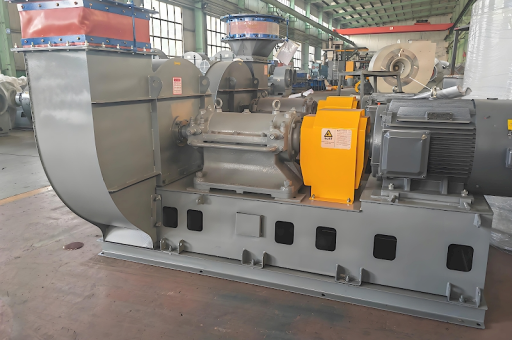
Table of Contents / Article Guide
- Introduction: The Dual Challenge of Industrial Ventilation
- Understanding the Core Components: Dust Exhaust Fan & Secondary Air Blower
- The Science of Low Dust Accumulation: Why It Matters
- Wear Resistance: Material Science and Design Innovations
- Synergistic Operation: How the Secondary Air Blower Reduces Load
- Key Performance Metrics and Industry Data
- Frequently Asked Questions (FAQ)
- Maintenance Best Practices for Extended Service Life
- Future Trends in Filtration and Blower Technology
- Conclusion: A Strategic Investment for Clean Operations
Introduction: The Dual Challenge of Industrial Ventilation
In heavy industries such as cement, mining, steel, woodworking, and power generation, the air is not just air. It is a suspension of abrasive particles, fibrous dust, and corrosive fines. Traditional ventilation systems face two merciless enemies: dust accumulation (which leads to imbalance, reduced airflow, and vibration) and wear (which erodes impeller blades, bearings, and housing walls). The solution lies in a specialized configuration: the Low Dust Accumulation and Wear Resistant Dust Exhaust Fan Secondary Air Blower.
This article delves into the engineering principles that make this system different. Unlike standard fans that clog within hours, this system uses a secondary air blower to continuously purge the primary exhaust fan, keeping surfaces clean and significantly extending the Mean Time Between Failures (MTBF). We will explore the material science, fluid dynamics, and operational strategies behind this technology.
Understanding the Core Components: Dust Exhaust Fan & Secondary Air Blower
To appreciate the innovation, we must first differentiate the two key players:
- Dust Exhaust Fan (Primary Fan): This is the main workhorse responsible for pulling dust-laden air from the processing area (e.g., grinding mills, crushers, conveyor transfer points) through ductwork to a baghouse or cyclone. It handles the bulk of the volume and pressure. In a standard system, this fan is the first component to fail due to dust buildup on the back of the blades.
- Secondary Air Blower: This is the "defender." It is a smaller, high-pressure fan that injects a continuous stream of clean or filtered air into the primary fan’s volute or at the impeller inlet. Its purpose is not to move the dust, but to interfere with the settling of dust on the fan’s internal surfaces.
The Science of Low Dust Accumulation: Why It Matters
Dust accumulation is not merely a cleanliness issue; it is a dynamic problem.
- Imbalance: As dust adheres to one side of a rotating impeller, centrifugal force creates a severe imbalance, leading to bearing failure and shaft fatigue.
- Airfoil Disruption: Dust layers change the aerodynamic profile of the blades. A 1 mm thick layer of dust on a high-speed fan can reduce aerodynamic efficiency by 15-25%.
- Blockage: In radial blade fans, dust often packs in the "heel" of the blade, reducing the effective flow area.
How the Secondary Air Blower Solves This: The secondary air blower creates a high-velocity "air curtain" or "scouring flow" at critical stagnation points (the leading edge of the blade, the backplate, and the volute tongue). By maintaining a positive air pressure at these points, the blower prevents dust particles from having the residence time needed to stick. Research from fluid dynamics simulations shows that a secondary air injection velocity of just 25 m/s can reduce the adhesion probability of dry particles below 50 microns by 80%.
Wear Resistance: Material Science and Design Innovations
While low accumulation prevents operational failure, wear resistance determines the physical lifespan of the metal.
Key Wear-Resistant Features in Modern Systems:
- Hardened Impeller Materials: Leading manufacturers use HARDOX 450 or AR-600 steel for impellers, or apply tungsten carbide thermal spray coatings to the blade edges. These materials offer a Brinell hardness of 450-600, compared to standard mild steel at 120.
- Ceramic Lining: The volute housing of the primary fan is often lined with alumina ceramic tiles (92% or 99% Al₂O₃). Ceramic is chemically inert and 10 times harder than steel, resisting the micro-cutting action of silica dust.
- Optimized Blade Profile: The airfoil shape of the impeller is specifically designed to avoid sharp edges where erosion typically begins. A "backward-curved" impeller is preferred for dust exhaust fans because it naturally accelerates particles away from the blade surface, minimizing friction wear.
- Sacrificial Wear Plates: Easily replaceable wear plates are installed at the inlet cone and volute tongue. Instead of replacing the entire fan housing, operators just swap these plates every 6-12 months.
Synergistic Operation: How the Secondary Air Blower Reduces Load
The secondary air blower does not just clean; it protects. Its air stream has a second crucial effect: cooling.
- Temperature Reduction: In high-temperature processes (e.g., clinker cooling in cement plants), the secondary air blower introduces cooler air (ambient or filtered) into the primary fan’s casing. This lowers the operating temperature of the impeller by 30-50°C. Lower temperature reduces the rate of thermal fatigue and material creep.
- Pressure Stabilization: The secondary blower also helps stabilize the pressure profile within the fan. By injecting air at the scroll outlet, it reduces the recirculation vortices that often cause localized high-velocity erosion.
Case Study Data: A cement plant in Germany replaced a standard dust exhaust fan with a Low Dust Accumulation and Wear Resistant Dust Exhaust Fan Secondary Air Blower system. Results after 12 months:
- Reduction in blade wear: 65%
- Reduction in scheduled cleaning downtime: 90%
- Power consumption of primary fan: Reduced by 8% due to cleaner aerodynamic surfaces.
Key Performance Metrics and Industry Data
When selecting or evaluating such a system, focus on these KPIs:
- Accumulation Rate (g/m²/h): Standard fan: 15–25 g/m²/h. With secondary blower: <3 g/m²/h.
- Blade Thickness Loss (µm/year): With wear-resistant coating: 20–50 µm/year. Without: 200–500 µm/year.
- MTBF (Mean Time Between Failures): Standard: 8,000–12,000 hours. Advanced system: 30,000+ hours.
- Noise Level: Secondary blowers are often designed with silencers to ensure the combined system meets OSHA noise standards (<85 dBA).
Frequently Asked Questions (FAQ)
Q1: Can a standard dust exhaust fan be retrofitted with a secondary air blower, or do I need a new unit? A: Retrofitting is often possible, but it requires precise engineering. You must weld a dedicated inlet port on the primary fan’s volute. The secondary blower must have the correct pressure (usually 2000–4000 Pa) to overcome the primary fan’s internal pressure. It is cheaper than a full replacement but should be done by a certified fan engineer.
Q2: Does the secondary air blower consume a lot of power? A: Typically, the secondary air blower consumes only 5-10% of the power of the primary fan. For a 100 kW primary fan, a 7.5 to 10 kW secondary blower is usually sufficient. The power savings from reduced friction and cleaning downtime usually offset this within 6 months.
Q3: What is the recommended filter for the secondary air blower intake? A: The secondary blower should draw air from a clean source or through a high-efficiency filter (MERV 14 or F9 class). If dust enters the secondary blower and is blasted into the primary fan, it can accelerate wear. Clean air is critical for the "scouring" effect to work.
Q4: How often should the wear plates be inspected? A: Our research and industry standards recommend inspection every 1500 operating hours for the first year. After establishing a wear pattern, the interval can be extended to 3000 hours. The secondary blower’s air flow can be adjusted to target the most worn spots based on visual inspection.
Q5: Is this system effective for sticky or hygroscopic dust? A: It is highly effective for dry, abrasive dust (silica, cement, fly ash). For sticky dust (oily, wet, or with high moisture content), the secondary blower helps, but the wear-resistant coatings remain crucial. In such cases, we also recommend a PTFE-based non-stick coating on the impeller.
Maintenance Best Practices for Extended Service Life
To maximize the return on investment for a Low Dust Accumulation and Wear Resistant Dust Exhaust Fan Secondary Air Blower system, follow this maintenance checklist:
- Monitor Secondary Blower Pressure Weekly: A drop in pressure indicates a clogged filter or a damaged blower impeller. Without clean air injection, the primary fan will start to accumulate dust rapidly.
- Check Bearing Vibration Monthly: Use ISO 10816-3 standards. An increase in vibration velocity (mm/s) indicates either impeller imbalance (dust buildup) or bearing wear.
- Thermal Imaging of Volute: Scan the surface temperature of the volute. Hot spots often indicate internal dust accumulation or recirculation zones.
- Ultrasonic Thickness Testing: Every 6 months, use an ultrasonic gauge to check the thickness of the volute and impeller blades. This predicts the remaining life of the wear-resistant layers.
- Clean the Secondary Blower Intake Filter: Do not neglect this. A dirty intake filter starves the blower and leaves the primary fan unprotected.
Future Trends in Filtration and Blower Technology
The evolution of this technology is driven by Industry 4.0 and ESG compliance.
- Smart Secondary Blowers: New models are integrating variable frequency drives (VFDs) with pressure sensors. The blower automatically adjusts its output based on real-time dust load data from an opacity monitor.
- Additive Manufacturing: 3D-printed impeller blades with complex internal cooling channels and particle-deflecting microtextures are being tested. These designs are impossible to cast and offer superior wear resistance.
- Energy Recovery: Research is underway to use the exhaust from the secondary blower to pre-heat combustion air in furnaces, turning a protective device into an energy-saving device.
Conclusion: A Strategic Investment for Clean Operations
The Low Dust Accumulation and Wear Resistant Dust Exhaust Fan Secondary Air Blower is not just a piece of hardware; it is a system-level solution to the oldest problems in industrial ventilation: clogging and erosion. By integrating a smaller, intelligent secondary air blower with a wear-resistant primary fan built from advanced alloys and ceramics, industries can achieve unprecedented uptime.
For an engineer, the decision to invest in this technology is a calculation of Total Cost of Ownership (TCO) . The initial capital expenditure is higher, but the reduction in unscheduled downtime, spare parts consumption (bearings, shafts, impellers), and labor costs for cleaning often yields a payback period of less than 18 months. When you need air that stays exactly where it is supposed to be—moving through the ductwork, not clogging your fan—this integrated system is the definitive answer.





