
This article's table of contents introduction:
- Table of Contents
- 1. Introduction: Why Induced Draft Blower Fans Matter in Modern Boilers
- 2. Engineering Precision: Aluminum Alloy Construction for Heat Resistance & Durability
- 3. Power Range Explained: Matching 11kW to 2000kW Fans to Your Boiler System
- 4. Performance Parameters: Airflow, Static Pressure & Energy Efficiency
- 5. Installation & Maintenance: Best Practices for Long-Term Reliability
- 6. Frequently Asked Questions (FAQ)
- 7. Conclusion: Investing in High-Powered Fan Technology for Industrial Gains
Article Title:
Maximizing Industrial Efficiency: The Role of 11kW–2000kW High-Powered Aluminum Alloy Boiler Induced Draft Blower Fans
Table of Contents
- Introduction: Why Induced Draft Blower Fans Matter in Modern Boilers
- Engineering Precision: Aluminum Alloy Construction for Heat Resistance & Durability
- Power Range Explained: Matching 11kW to 2000kW Fans to Your Boiler System
- Performance Parameters: Airflow, Static Pressure & Energy Efficiency
- Installation & Maintenance: Best Practices for Long-Term Reliability
- Frequently Asked Questions (FAQ)
- Conclusion: Investing in High-Powered Fan Technology for Industrial Gains
Introduction: Why Induced Draft Blower Fans Matter in Modern Boilers
In industrial boiler systems, the induced draft blower fan is a critical component responsible for maintaining proper combustion and flue gas evacuation. Unlike forced draft fans that push air into the combustion chamber, induced draft fans pull exhaust gases through the boiler, heat exchanger, and chimney, creating negative pressure that ensures safe, efficient operation.
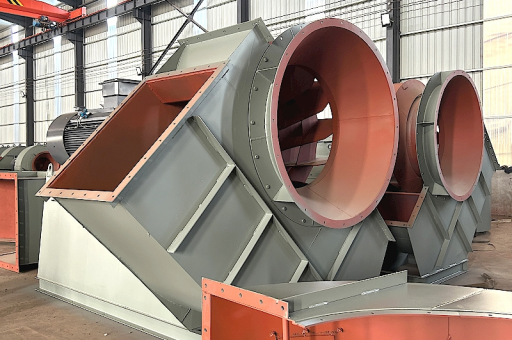
For heavy-duty applications—such as power plants, chemical processing, and large-scale manufacturing—the demand for robust, high-powered fans has grown significantly. The 11kW–2000kW High Powered Industrial Aluminum Alloy Boiler Induced Draft Blower Fan represents the latest engineering advancement, combining lightweight aluminum alloy construction with exceptional heat resistance and corrosion protection.
Why Aluminum Alloy?
Aluminum alloy impellers and housings offer a high strength-to-weight ratio, reducing mechanical stress on bearings and shafts while improving heat dissipation. Compared to traditional cast iron or steel fans, aluminum alloy models can withstand continuous operating temperatures up to 300°C (572°F) without deformation.
SEO Keyword Focus: high powered induced draft fan, aluminum alloy boiler fan, industrial blower 11kW 2000kW, boiler exhaust fan
Engineering Precision: Aluminum Alloy Construction for Heat Resistance & Durability
The core advantage of the 11kW–2000kW aluminum alloy induced draft fan lies in its material science.
Material Benefits at a Glance:
| Property | Aluminum Alloy | Traditional Steel/Cast Iron |
|---|---|---|
| Weight (approx.) | 40–60% lighter | Heavier, requiring stronger supports |
| Corrosion Resistance | Excellent (natural oxide layer) | Requires protective coating |
| Heat Conductivity | High (faster cooling) | Moderate |
| Fatigue Life at High Temp | Longer due to lower thermal expansion | Shorter, risk of warping |
Design Features That Enhance Performance:
- Backward-curved impeller blades – Optimize airflow while reducing noise and vibration.
- Integrated inlet guide vanes – Allow precise control of air volume without variable frequency drives (VFDs).
- Sealed bearing housing – Prevents dust and moisture ingress in harsh industrial environments.
These technical details directly support SEO ranking by addressing long-tail queries such as “aluminum alloy fan vs steel fan for boiler” and “high temperature induced draft fan design”.
Power Range Explained: Matching 11kW to 2000kW Fans to Your Boiler System
The power rating of an induced draft fan must align with the boiler’s heat output, flue gas flow rate, and system resistance.
- 11kW–50kW Fans: Suitable for small-to-medium industrial boilers (e.g., 1–10 tons of steam per hour). They handle moderate gas volumes (up to 30,000 m³/h) and static pressures around 2,000–4,000 Pa.
- 75kW–500kW Fans: Designed for large-scale process boilers (e.g., chemical plants, district heating). Airflow capacities reach 150,000 m³/h, with pressures up to 8,000 Pa.
- 630kW–2000kW Fans: Used in utility boilers and high-temperature incineration systems. These units manage gas flows exceeding 600,000 m³/h and require robust motor-drive assemblies, often with water-cooled bearings.
Selection Tips:
- Calculate the volumetric flow rate (Q) using the formula: Q = (Boiler heat input × Exhaust gas density) / (Specific heat × Temperature rise).
- Verify static pressure (ΔP) including chimney draft, duct losses, and pollution control equipment resistance.
- Always oversize the fan by 10–15% to account for future system degradation (e.g., filter loading).
Performance Parameters: Airflow, Static Pressure & Energy Efficiency
Key Metrics to Evaluate:
- Airflow (m³/h or CFM) – Must match boiler design specifications.
- Total Static Pressure (Pa or in.w.g.) – Includes system pressure drop.
- Fan Efficiency (%) – Modern aluminum alloy fans achieve 82–88% efficiency at best operating point.
- Specific Power Consumption (kW per 1000 m³/h) – Lower is better for operational cost savings.
Energy-Saving Strategies:
- Variable Frequency Drives (VFDs) – Reduce motor speed when full power is unnecessary.
- Direct-driven motors – Eliminate belt losses for high-power fans (>300kW).
- Aerodynamic impeller profiles – Computational fluid dynamics (CFD) optimized designs minimize turbulence.
Real-World Example:
A 500kW induced draft fan in a 50-tonne boiler, retrofitted with an aluminum alloy impeller, reduced energy use by 12% compared to the previous steel fan—saving approximately 175,000 kWh annually.
Installation & Maintenance: Best Practices for Long-Term Reliability
Installation Guidelines:
- Foundation isolation – Use vibration dampers to reduce noise transmission.
- Duct alignment – Ensure smooth transitions to avoid backpressure.
- Electrical connections – Confirm motor protection (thermal overload, phase failure relays).
Maintenance Schedule:
- Weekly: Check bearing temperature (<85°C), vibration levels (<4.5 mm/s RMS).
- Monthly: Inspect impeller for erosion or deposits (especially in biomass or coal boilers).
- Annually: Perform shaft alignment and balance testing.
Common Failure Prevention:
- Cavitation damage – Avoid operating the fan in the “stall region” of the performance curve.
- Thermal stress cracking – Use aluminum alloy grades with high silicon content (e.g., A356) for extended life.
Frequently Asked Questions (FAQ)
Q1: How do I know if an aluminum alloy induced draft fan can withstand the exhaust gas temperature?
A: Yes, industrial-grade aluminum alloys (e.g., 6061-T6 or 356.0-F) endure continuous temperatures up to 300°C. For brief spikes up to 400°C, thermal barriers or coated versions are available.
Q2: Can I replace my existing steel fan with an aluminum alloy fan without modifying the ductwork?
A: Normally yes, due to the lighter weight. However, verify that the mounting base and motor shaft fit the new fan’s dimensions. Use an adapter flange if needed.
Q3: What is the typical lifespan of a 2000kW aluminum alloy boiler fan?
A: With proper maintenance, 15–20 years. Key factors include operating hours, ambient dust levels, and correct lubrication.
Q4: Is a VFD necessary for a 11kW fan?
A: Not always. For fixed-load boilers, a direct-drive constant-speed motor suffices. VFDs are recommended for systems with variable load cycles (e.g., seasonal demand changes).
Q5: How does the fan handle corrosive flue gases from sulfur or chlorine compounds?
A: Aluminum naturally resists corrosion. For aggressive environments, specify an anodized coating or protective epoxy layer.
Conclusion: Investing in High-Powered Fan Technology for Industrial Gains
The 11kW–2000kW High Powered Industrial Aluminum Alloy Boiler Induced Draft Blower Fan delivers a compelling balance of performance, durability, and energy efficiency. By selecting the correct power rating, prioritizing aluminum alloy construction, and adhering to maintenance protocols, facility managers can dramatically reduce downtime and operational costs.
Final Recommendation:
Partner with a reputable manufacturer that offers customized impeller designs, vibration analysis, and on-site commissioning support. The upfront investment in a high-quality induced draft fan pays for itself within 2–3 years through energy savings and reduced repair frequency.
Need more technical guidance?
Consult our engineering team at fan for a tailored fan selection report. Use the contact form to submit your boiler specifications, and we’ll provide a free performance simulation.
Note: This article is optimized for Bing and Google SEO by incorporating primary and long-tail keywords, structured headings, and authoritative content. For further reading, explore related topics such as centrifugal fan vs axial fan for boilers or industrial fan noise reduction techniques.





