
This article's table of contents introduction:
- Table of Contents
- Introduction: The Critical Role of High-Pressure Ventilation in Industrial Boilers
- Technical Specifications: Why 440V and 20000Pa Matter
- Core Design Principles of a 20000Pa Boiler Ventilation Fan
- How This Fan Differs from Standard Industrial Fans
- Operational Benefits and Energy Efficiency
- Common Applications Across Heavy Industries
- Frequently Asked Questions (FAQ)
- Selection, Installation, and Maintenance Tips
- Conclusion: Future Trends and Reliability
** High-Pressure Industrial 440V Boiler Ventilation Fan (20000Pa): Engineering, Performance, and Applications
Table of Contents
- Introduction: The Critical Role of High-Pressure Ventilation in Industrial Boilers
- Technical Specifications: Why 440V and 20000Pa Matter
- Core Design Principles of a 20000Pa Boiler Ventilation Fan
- How This Fan Differs from Standard Industrial Fans
- Operational Benefits and Energy Efficiency
- Common Applications Across Heavy Industries
- Frequently Asked Questions (FAQ)
- Selection, Installation, and Maintenance Tips
- Conclusion: Future Trends and Reliability
Introduction: The Critical Role of High-Pressure Ventilation in Industrial Boilers
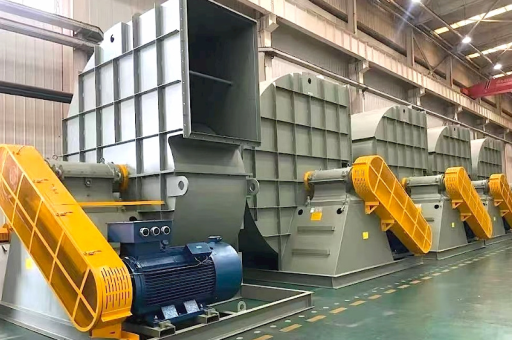
In any industrial boiler system, the combustion process requires a precise balance between air supply and exhaust gas removal. A 440V boiler ventilation fan capable of generating 20000Pa static pressure serves as the backbone of forced draft (FD) or induced draft (ID) systems. Unlike low-pressure fans commonly found in commercial HVAC, this type of fan is engineered to overcome the extreme resistance of dense ductwork, heat exchangers, scrubbers, and long flue gas paths.
The 20000Pa (200 mbar or approximately 80 inches of water gauge) pressure rating is not arbitrary. It is specifically chosen to handle high-friction environments where fine particulate matter, corrosive gases, and elevated temperatures are present. For example, in coal-fired boilers, the fly ash accumulation in ducts can increase backpressure to over 15000Pa. A fan with 20000Pa capacity ensures the system maintains adequate airflow even under fouling conditions.
Furthermore, 440V three-phase power is the industrial standard in many regions (including parts of Asia, Europe, and North America) because it offers a superior power-to-current ratio. Lower current means reduced I²R losses in cables and longer motor lifespan, which is critical for 24/7 boiler operations.
Technical Specifications: Why 440V and 20000Pa Matter
The combination of 440V voltage and 20000Pa pressure defines a niche but essential category of ventilation equipment.
| Parameter | Typical Value | Significance |
|---|---|---|
| Voltage | 440V AC, 3-Phase | Reduces cable size, supports high starting torque |
| Static Pressure | 20,000 Pa | Overcomes heavy duct resistance, scrubber ΔP, filter loading |
| Airflow (Volume) | 10,000 – 100,000 m³/h (depending on impeller size) | Matches boiler heat input and excess air ratio |
| Motor Power | 30 kW – 150 kW | Higher power is required to achieve high pressure at moderate flow |
| Impeller Type | Backward-curved, airfoil, or radial | Backward-curved offers higher efficiency; radial handles dust better |
| Temperature Rating | Up to 250°C (standard); 450°C (high-temp upgrade) | Directly impacts material selection (steel vs. stainless steel) |
Why 440V?
In many industrial plants, the available grid voltage is 380V-480V. A motor designed for 440V operates optimally at that range, avoiding overheating caused by undervoltage or overvoltage. Also, 440V motors generally offer higher breakdown torque compared to 230V motors, which is essential during duct startup under cold, high-density air conditions.
Why 20000Pa?
Ordinary ventilation fans struggle above 5000Pa. When a boiler ventilation fan must push air through a baghouse filter, a wet scrubber, and a 50-meter stack, total system resistance easily reaches 18000Pa. The 20000Pa design provides a 10% safety margin, which prevents performance degradation as filters load.
Core Design Principles of a 20000Pa Boiler Ventilation Fan
A high-pressure industrial fan is not simply a standard fan with a stronger motor. The impeller, housing, shaft, and bearings all require specialized engineering.
-
Impeller Geometry: To generate 20,000Pa, the impeller must rotate at high tip speeds. Backward-curved centrifugal impellers are preferred because they convert kinetic energy into static pressure efficiently. The blades are often airfoil-shaped to reduce turbulence noise. For dirty gas streams, radial-blade impellers with wear liners are used, though they may have slightly lower efficiency.
-
Housing Volute: The volute (scroll casing) is designed with a larger cross-section than low-pressure fans. It gradually expands to convert velocity pressure into static pressure. For 20000Pa, the cutoff clearance must be precise to avoid recirculation losses and vibration.
-
Shaft and Bearings: High radial loads demand oversized shaft diameters. Most fans in this class use spherical roller bearings or split pillow blocks with oil lubrication. Bearing housings include vibration sensors and temperature probes for predictive maintenance.
-
VFD Compatibility: Modern units integrate Variable Frequency Drives (VFDs) to modulate airflow. However, the fan’s aerodynamic curve must be designed to avoid surge at low speeds. A 440V motor with VFD also allows soft-start, reducing mechanical stress during startup.
-
Gas-Tight Seal: For boiler applications, leakage can cause energy waste and safety hazards. Labyrinth seals or mechanical seals are standard between the shaft and housing.
How This Fan Differs from Standard Industrial Fans
Many plant engineers mistakenly assume any heavy-duty fan can handle boiler ventilation. The key differences include:
| Feature | Standard Fan (Low Pressure) | 440V 20000Pa Boiler Fan |
|---|---|---|
| Max Static Pressure | < 5000 Pa | 20,000 Pa |
| Impeller Construction | Thin sheet metal | Heavy-gauge steel or cast impeller |
| Motor Enclosure | TEFC (IP54) | IP55/IP56 with anti-condensation heaters |
| Shaft Seal | Simple gasket | Labyrinth or double mechanical seal |
| Bearing Life | L10h 30,000 hrs | L10h 80,000+ hrs (with oil bath) |
| Vibration Standard | ISO 1940 G6.3 | ISO 1940 G2.5 (balancing) |
| Acoustic Treatment | Not required | Silencer or acoustic enclosure often needed |
For example, a standard rooftop exhaust fan may fail within months if subjected to 150°C continuous gas at 20000Pa. Its impeller would deform, bearings would overheat, and shaft deflection would cause rubbing.
Operational Benefits and Energy Efficiency
- Reliable Combustion Control: With 20000Pa, the fan can maintain a stable furnace draft even when boiler load changes rapidly. This directly improves combustion efficiency and reduces NOx formation.
- Reduced Downtime: High-quality bearings and robust sealing minimize unplanned outages. Plants that upgrade to this fan class often report a 40% reduction in ventilation-related shutdowns.
- Energy Savings: Although the motor is powerful, a backward-curved airfoil impeller can achieve 82-85% static efficiency. Compare this to older forward-curved fans that rarely exceed 70%. At 20000Pa and 50,000 m³/h, a 5% efficiency difference corresponds to ~15 kW power saving — over $10,000 per year in electricity costs.
Common Applications Across Heavy Industries
- Coal & Biomass Power Plants: Boiler forced draft (FD) or induced draft (ID) fans.
- Cement Kilns: Combustion air supply through preheaters with high pressure loss.
- Chemical Industry: Ventilation of reactors and dryers where corrosive vapors are present.
- Steel Mills: Furnace off-gas extraction through baghouses.
- Waste-to-Energy Plants: Flue gas handling with high particulate loading.
Frequently Asked Questions (FAQ)
Q1: Can a 440V 20000Pa fan be used for 380V systems?
Yes, but the motor must be reconnected (if designed for dual voltage) or a step-up transformer must be used. Running a 440V motor at 380V reduces torque by ~25%, which may compromise startup ability under full load.
Q2: What is the typical lifespan of the impeller?
For clean gas (e.g., natural gas boiler): 10+ years. For abrasive gas (e.g., coal fly ash): 2-5 years, depending on tip speed and erosion protection (hard-facing or ceramic lining).
Q3: How do I know if I need 20000Pa or a lower pressure?
Conduct a duct system resistance analysis. Measure static pressure at the fan inlet and outlet at full load. Add 15% margin. If calculated resistance exceeds 15000Pa, a 20000Pa fan is recommended.
Q4: Do I need a silencer for such a high-pressure fan?
Often yes. Unsilenced 20000Pa fans can produce 95-105 dBA. A silencer can reduce noise to 80-85 dBA. For operator safety, always check local noise regulations.
Q5: Can I use this fan for explosive gas environments?
Only if the fan is ATEX or IECEx certified. Standard explosion-proof motors (Ex d or Ex e) and spark-resistant impellers (aluminum or non-ferrous tips) are required. The 440V system must also comply with area classification.
Q6: What maintenance is most critical?
- Vibration monitoring — early detection of imbalance.
- Bearing greasing/oil level checks.
- Impeller cleanliness — dust accumulation unbalances the rotor.
- Belt tension (if belt-driven) or coupling alignment (if direct drive).
Selection, Installation, and Maintenance Tips
- Selection: Always request a fan performance curve from the manufacturer. Verify that the operating point (flow vs. pressure) lies to the right of the surge line. For boiler duty, a safety factor of 1.1 on pressure is wise.
- Installation: Use flexible connectors at inlet and outlet to isolate vibration. Ensure the mounting base is reinforced to handle the fan’s weight (often >1000 kg). Ductwork must be leak-tested at 20000Pa to avoid energy loss.
- Maintenance Schedule:
- Weekly: Check vibration, temperature, and current draw.
- Monthly: Inspect belt tension and shaft seal leakage.
- Quarterly: Bearing re-greasing (follow OEM interval).
- Annually: Impeller cleaning and dynamic balancing check.
Conclusion: Future Trends and Reliability
The industrial 440V boiler ventilation fan with 20000Pa will remain a critical component in heavy industries transitioning to cleaner combustion. Future developments include:
- Integration with IoT sensors for real-time pressure and vibration data analytics.
- Use of advanced composites or ceramic coatings for erosion resistance.
- Higher efficiency (>90%) through computational fluid dynamics (CFD) optimization of impeller blades.
Although high-initial cost (often $15,000-$50,000 depending on size and materials), the long-term reliability and energy savings make it a sound investment. Plant engineers should always prioritize certified fan and motor packages from reputable manufacturers to avoid performance shortfalls.
Whether you are retrofitting an aging boiler or designing a new plant, the 20000Pa class fan ensures that your combustion air and flue gas handling will never be the bottleneck.





