
This article's table of contents introduction:
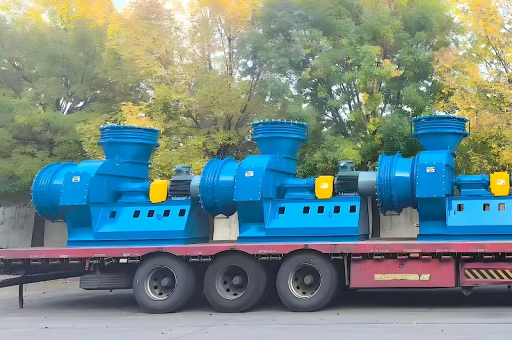
- Table of Contents
- Introduction: Why High Voltage Heavy Duty Centrifugal Fans Matter in Dust Collection
- Core Design Principles: Pressure, Airflow, and Motor Integration
- Key Performance Metrics: Static Pressure, Efficiency Curves, and Fan Speed
- Comparison with Standard Fans: When Heavy Duty Becomes Essential
- Powering the Fan: High Voltage Considerations (380V, 480V, 6kV, 10kV)
- Material Selection: Abrasion Resistance, Coatings, and Spark-Proof Options
- Installation, Safety, and Maintenance Best Practices
- Troubleshooting Common Operational Issues
- Frequently Asked Questions (FAQ) – Answered by Industry Standards
- Conclusion: How to Choose the Right Fan for Your Industrial Dust System
** High Voltage Heavy Duty Centrifugal Fans for Dust Collect: The Ultimate Guide to Performance & Selection
Table of Contents
- Introduction: Why High Voltage Heavy Duty Centrifugal Fans Matter in Dust Collection
- Core Design Principles: Pressure, Airflow, and Motor Integration
- Key Performance Metrics: Static Pressure, Efficiency Curves, and Fan Speed
- Comparison with Standard Fans: When Heavy Duty Becomes Essential
- Powering the Fan: High Voltage Considerations (380V, 480V, 6kV, 10kV)
- Material Selection: Abrasion Resistance, Coatings, and Spark-Proof Options
- Installation, Safety, and Maintenance Best Practices
- Troubleshooting Common Operational Issues
- Frequently Asked Questions (FAQ) – Answered by Industry Standards
- Conclusion: How to Choose the Right Fan for Your Industrial Dust System
Introduction: Why High Voltage Heavy Duty Centrifugal Fans Matter in Dust Collection
In industrial environments—cement plants, steel mills, woodworking facilities, and mining operations—dust is not just a cleanliness issue. It represents a serious health hazard, fire risk, and regulatory compliance burden. A dust collection system is only as effective as its prime mover: the fan. When dealing with large particulate loads, long duct runs, or high static pressure requirements, a standard low-voltage centrifugal fan fails to deliver.
Enter the High Voltage Heavy Duty Centrifugal Fan for Dust Collect. These fans are engineered for continuous 24/7 operation, handling abrasive dust streams at high static pressures (often exceeding 3000 Pa) while powered by high-voltage motors (typically 380V, 660V, 3kV, 6kV, or even 10kV). They reduce energy loss, lower cable costs over long distances, and offer superior mechanical reliability. This guide provides a comprehensive, data-supported overview for engineers and procurement specialists.
Core Design Principles: Pressure, Airflow, and Motor Integration
A heavy duty centrifugal fan operates on a simple principle: an impeller rotating inside a spiral housing accelerates air radially, converting kinetic energy into static pressure. For dust collection, three elements are critical:
- Impeller type: Backward-curved blades are preferred for high-pressure dust applications because they are non-overloading and self-limiting in power consumption. Forward-curved blades offer higher airflow at lower pressure but can overload motors and clog more easily.
- Housing design: Heavy gauge steel, reinforced welded seams, and access doors for cleaning are standard. The housing must withstand the erosive forces of dust particles traveling at 20–40 m/s.
- Direct drive vs. belt drive: For high voltage heavy duty systems, direct drive (shaft-mounted impeller) is common above 45 kW to eliminate belt maintenance and slippage. Belt drive offers flexibility in speed adjustment but may require additional safety guards.
Modern integrated design: Leading manufacturers now combine the fan wheel directly on the motor shaft, reducing footprint and alignment issues. This is especially beneficial in high-vibration environments like baghouse filter systems.
Key Performance Metrics: Static Pressure, Efficiency Curves, and Fan Speed
When selecting a high voltage heavy duty centrifugal fan for dust collect, you must evaluate the fan curve against your system resistance. Critical parameters include:
- Static Pressure (Ps) : Measured in Pascals (Pa) or inches of water gauge (inWG). Dust collectors often require 2000–6000 Pa (8–24 inWG). Heavy duty fans can reach 10,000 Pa in specialized designs.
- Airflow (Q) : Expressed in m³/h or CFM. A typical cement plant baghouse may require 50,000–200,000 m³/h.
- Fan Efficiency (η) : Look for peak efficiency > 80% at the operating point. Low efficiency leads to high energy costs over the fan's 10–15 year lifespan.
- Speed (RPM) : High voltage motors typically run at 1500 RPM (4-pole, 50 Hz) or 1800 RPM (4-pole, 60 Hz). For higher pressures, 3000 RPM (2-pole) is used but requires more robust bearings.
Important note: Always request a performance guarantee curve from the supplier, including test data under dust load conditions.
Comparison with Standard Fans: When Heavy Duty Becomes Essential
| Feature | Standard Centrifugal Fan | Heavy Duty High Voltage Fan |
|---|---|---|
| Motor Voltage | 220V–460V (low voltage) | 380V, 660V, 3kV–10kV (high voltage) |
| Max Static Pressure | ≤ 2000 Pa | 3000–10000 Pa+ |
| Impeller Material | Mild steel / galvanized | Abrasion-resistant steel (AR400) or stainless |
| Bearing Life (L10) | 20,000–40,000 hours | 50,000–100,000 hours (expansion bearings) |
| Duty Cycle | Intermittent to continuous | 24/7 continuous, harsh environment |
| Dust Handling | Light to moderate | Heavy, abrasive, sticky, or hot dust |
You should choose heavy duty when: (1) your dust contains silica, cement, or metal particles; (2) you operate in a corrosive or high-temperature environment; (3) system resistance is high due to long ductwork or small baghouse filters; or (4) you require > 100 kW motor power, where high voltage dramatically reduces current draw and cable costs.
Powering the Fan: High Voltage Considerations (380V, 480V, 6kV, 10kV)
Using a high voltage motor for your heavy duty centrifugal fan offers these advantages:
- Reduced current: A 500 kW fan at 380V draws ~950A, requiring massive cables. The same fan at 6kV draws only ~55A, allowing smaller, cheaper cables and switchgear.
- Energy efficiency: High voltage motors typically have higher efficiency (95–97%) compared to low voltage (90–93%), especially above 250 kW.
- Direct start capability: Many high voltage motors can handle across-the-line starting with reduced voltage (autotransformer or soft starter), simplifying control.
Selection tips: Verify the motor insulation class (Class F or H for high temperatures), IP rating (IP55 for outdoor dust environments), and bearing type (sleeve bearings for high speed, anti-friction for standard duty). Always include a VFD (Variable Frequency Drive) for energy savings and precise airflow control—this is becoming an industry standard in modern dust collection.
Material Selection: Abrasion Resistance, Coatings, and Spark-Proof Options
The dust stream chemistry determines your fan materials:
- Abrasive dust (cement, sand, glass): Impeller and housing must be lined with hard-faced steel (chrome carbide overlay) or use AR400 / 500 abrasion-resistant steel. Replaceable wear liners are highly recommended for serviceability.
- Corrosive dust (chemical plants, fertilizer): Stainless steel 304/316L or fiber-reinforced plastic (FRP) for the housing. Avoid galvanized steel in acidic environments—it fails quickly.
- Combustible dust (wood, coal, grain): Use spark-proof construction (non-ferrous impeller, aluminum or monel, and grounding of the fan shaft). Install an explosion relief panel on the housing per NFPA 68 standards. A high voltage fan in a combustible dust zone must also have ATEX or IECEx certification.
- High temperature dust (kilns, dryers): High temperature seals (PTFE or carbon), cooling wheels, and heat-sink motor adaptors. Material grade shifts to heat-resistant stainless (310S, Inconel).
Installation, Safety, and Maintenance Best Practices
Installation checklist:
- Foundation: Concrete base with vibration isolators (spring or rubber) to prevent transmission to structure.
- Ductwork: Smooth transitions, no sharp bends within 3 diameters of inlet to avoid turbulence.
- Electrical: High voltage cabling must be armored and properly grounded. Motor control center (MCC) with overload protection and lockout/tagout provisions.
- Alignment: Use laser alignment for shaft-to-motor coupling; misalignment causes premature bearing failure.
Safety:
- Always install a shroud or guard on rotating parts.
- High voltage terminals require interlock switches that disconnect power when access panels are opened.
- For dusty environments, fan motors should have IP56 or higher ingress protection.
Maintenance schedule:
- Weekly: Inspect for unusual noise, vibration, or temperature rise. Check belt tension (if applicable).
- Monthly: Clean impeller blades of dust buildup (unbalance causes rapid wear). Lubricate bearings per manufacturer.
- Quarterly: Measure motor current and compare with fan curve prediction; increasing current indicates system resistance change (e.g., clogged filters).
- Annually: Perform vibration analysis (ISO 10816-3 compliant) and replace worn wear liners.
Troubleshooting Common Operational Issues
| Issue | Possible Cause | Solution |
|---|---|---|
| Excessive vibration | Impeller imbalance due to dust buildup or erosion | Clean impeller; if erosion is severe, replace with harder material or apply wear coating |
| High motor temperature | Overloading beyond fan curve peak | Reduce fan speed via VFD or install a throttle damper on inlet |
| Low airflow | Duct blockage, collapsed filter bags, or loose belt drive | Inspect system; verify fan rotation direction (check with rotation arrow on housing) |
| Premature bearing failure | Misalignment, contaminated grease, or improper lubrication | Realign shaft; use high-temperature grease; consider sealed bearings for dusty service |
| Sparks or fire risk | Static discharge from dust accumulation | Ground fan housing and shaft; install grounding brushes; inspect for missing spark-proof components |
Frequently Asked Questions (FAQ) – Answered by Industry Standards
Q1: What is the difference between a high voltage heavy duty centrifugal fan and a standard fan?
A: High voltage fans operate at > 1000V (typically 3kV to 10kV), allowing lower current and smaller cables for large power. Heavy duty construction uses thicker steel, abrasion-resistant materials, and continuous-duty bearings to handle harsh dust streams.
Q2: Can I use a standard low voltage fan for dust collection?
A: For small shops with short ducts and light dust, yes. But for industrial baghouses, cyclones, or cartridge collectors with high static pressure, you need heavy duty high voltage fans to avoid frequent breakdowns and energy waste.
Q3: How do I calculate the required static pressure for my dust collection system?
A: Sum the pressure drops: ductwork at design airflow (ΔP per 100 ft), filter pressure drop (clean + dirty), cyclone entry loss, and any safety margin (10–15%). Use system resistance curve and match it with the fan curve at your operating flow.
Q4: What is the typical lifespan of a heavy duty fan in dust service?
A: With proper maintenance (including wear liner replacement), a heavy duty fan can last 15–20 years. Impeller replacement may be needed every 3–8 years depending on abrasion. High-voltage motor winding insulation generally lasts 20+ years if kept clean and dry.
Q5: Do I need an explosion-proof high voltage fan for combustible dust?
A: Yes, if your dust is combustible (wood, grain, aluminum, coal). The fan must meet ATEX (Europe) or NEC/NFPA (North America) standards. This includes spark-proof impeller material (non-ferrous), grounding of the fan assembly, and explosion venting.
Q6: Can I retrofit my existing dust collector with a high voltage fan?
A: Usually yes, but you must check the motor mounting, base rigidity, and electrical availability (transformers, switchgear). Retrofitting to high voltage often reduces cable costs and improves overall energy efficiency. Consult with a fan system engineer for a full audit.
Conclusion: How to Choose the Right Fan for Your Industrial Dust System
Selecting a High Voltage Heavy Duty Centrifugal Fan for Dust Collect is not a commodity purchase—it is a critical capital investment that affects your production uptime, energy bills, and regulatory compliance. Follow these steps:
- Define your system parameters: airflow, static pressure, dust type, temperature, and required certification.
- Request fan curves from at least two reputable manufacturers. Compare efficiency at the operating point.
- Select motor voltage based on power: above 200 kW, strongly consider 6kV or 10kV.
- Prioritize material durability: invest in wear liners and abrasive-resistant impellers up front; it pays back in reduced downtime.
- Ensure safety compliance for combustible or hazardous zones.
A well-chosen heavy duty centrifugal fan will operate quietly, efficiently, and reliably for decades.
For a detailed technical datasheet or a customized fan selection, contact our fan application engineers at [fan]. We have provided industrial ventilation solutions globally.





