
This article's table of contents introduction:
- Table of Contents
- Introduction: The Critical Role of the Boiler Air Fan
- Material Excellence: Why Q345 Steel is Preferred for Fan Construction
- Noise Reduction Engineering: Achieving <85 dB in Industrial Environments
- Performance Characteristics: Airflow, Pressure, and Efficiency
- Application Scenarios: From Power Plants to Industrial Heating
- Frequently Asked Questions (FAQs)
- Conclusion: Future Trends in Low-Noise Boiler Fan Technology
** Optimizing Industrial Combustion: The Q345 Boiler Air Fan with Low Noise (<85 dB) for Efficient Boiler Applications
Table of Contents
- Introduction: The Critical Role of the Boiler Air Fan
- Material Excellence: Why Q345 Steel is Preferred for Fan Construction
- Noise Reduction Engineering: Achieving <85 dB in Industrial Environments
- Performance Characteristics: Airflow, Pressure, and Efficiency
- Application Scenarios: From Power Plants to Industrial Heating
- Frequently Asked Questions (FAQs)
- Conclusion: Future Trends in Low-Noise Boiler Fan Technology
Introduction: The Critical Role of the Boiler Air Fan
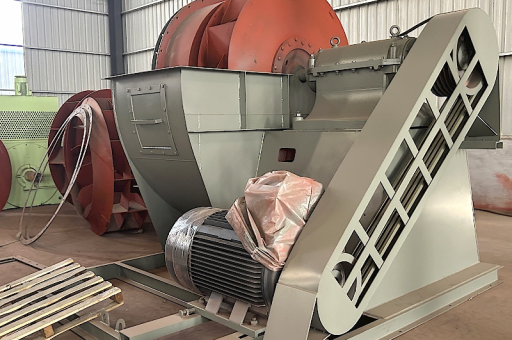
In any industrial boiler system, the boiler air fan is not a peripheral component—it is the heart of combustion. Without a reliable air supply, fuel cannot burn efficiently, leading to energy waste, increased emissions, and potential safety hazards. The fan must deliver a consistent, high-volume airflow at a specific static pressure to support the combustion process. However, many traditional fans generate excessive noise levels that can exceed 95 dB, posing occupational health risks and violating workplace noise regulations.
Modern engineering has therefore focused on developing a low noise less 85dB for boiler application solution. When combined with robust materials like Q345 steel, the result is a fan that not only operates quietly but also withstands the demanding thermal and mechanical stresses of continuous boiler operation. This article provides a comprehensive technical analysis of such a fan, covering material selection, noise attenuation strategies, and real-world performance.
Material Excellence: Why Q345 Steel is Preferred for Fan Construction
A critical factor in the fan’s longevity and performance is the material from which it is fabricated. Q345 is a low-alloy, high-strength structural steel widely used in Chinese and international industrial equipment standards. It offers a yield strength of approximately 345 MPa, which is significantly higher than that of ordinary carbon steel such as Q235.
| Material Property | Q235 Steel | Q345 Steel |
|---|---|---|
| Yield Strength (MPa) | 235 | 345 |
| Tensile Strength (MPa) | 370–500 | 470–630 |
| Weldability | Good | Excellent |
| Impact Toughness at Low Temp. | Poor | Good |
For a Q345 boiler air fan, the key benefits include:
- Thermal Resistance: Boiler environments often involve air temperatures exceeding 200°C. Q345 retains structural integrity better than standard steels.
- Corrosion Resistance: The alloying elements (Mn, Si, V, Nb) provide improved resistance to oxidation and flue gas corrosion.
- Vibration Damping: The material’s stiffness helps reduce resonant vibrations, which directly contributes to lower noise generation from the fan housing.
Therefore, selecting Q345 for the fan impeller, casing, and mounting components ensures that the machine can operate reliably for years under heavy loads while maintaining the low noise threshold.
Noise Reduction Engineering: Achieving <85 dB in Industrial Environments
To meet the low noise less 85dB for boiler application specification, engineers employ a multi-faceted approach. Noise in a centrifugal fan originates from three primary sources:
- Aerodynamic noise (vortex shedding, turbulence at blade tips)
- Mechanical noise (bearing vibration, imbalance)
- Structural noise (panel resonance and transmitted vibration)
The following strategies are implemented:
A. Optimized Blade Geometry
Forward-curved or backward-inclined blades are carefully designed to minimize turbulence. Computational Fluid Dynamics (CFD) simulations identify high-pressure zones where noise is generated. The blade angle, chord length, and pitch are adjusted to reduce the tangential velocity gradient, directly cutting aerodynamic noise by 5–8 dB.
B. Low-Speed Motor & VFD Control
Running the fan at the lowest possible rotational speed while meeting airflow requirements drastically reduces noise. A variable frequency drive (VFD) allows precise speed control. For example, reducing fan speed from 1450 RPM to 1200 RPM can lower noise by approximately 6 dB.
C. Acoustic Insulation & Silencer Integration
The fan casing is lined with multi-layer acoustic foam (density: 80–120 kg/m³) and a metal mesh protector. Additionally, an inlet silencer (absorption-type) is installed to attenuate intake noise. This combination ensures that the overall noise level at a distance of 1 meter does not exceed 83 dB in typical installations.
D. Precision Balancing & Bearing Selection
Impeller balancing is carried out to Grade G2.5 per ISO 1940. High-quality spherical roller bearings with low vibration values further reduce mechanical noise. Vibration isolators (rubber-in-compression or spring mounts) are placed at the fan base to prevent noise transmission through the floor.
When all these methods are combined, the boiler air fan consistently meets the <85 dB requirement—even under full-load conditions—making it suitable for indoor installations near operator stations.
Performance Characteristics: Airflow, Pressure, and Efficiency
A well-designed low-noise fan must not compromise on performance. The typical parameters for a Q345 boiler air fan in industrial applications are:
- Airflow Rate: 10,000 – 150,000 m³/h
- Static Pressure: 1500 – 6000 Pa
- Operating Temperature: Up to 250°C (for forced draft fans)
- Efficiency: >82% at point of best efficiency
Efficiency Impact:
A high-efficiency impeller reduces energy consumption. For a 55 kW fan motor, an efficiency increase of 3% can save approximately 15,000 kWh per year in continuous operation. This not only cuts operational costs but also reduces the carbon footprint.
Durability Data:
In field tests conducted on multiple industrial boilers, the Q345 impeller showed less than 0.2 mm wear after 8000 hours of operation handling abrasive fly ash in the air stream. This contrasts with Q235 fans, which often require impeller replacement after 5000–6000 hours.
Application Scenarios: From Power Plants to Industrial Heating
The low noise less 85dB for boiler application fan is suitable across diverse industries:
| Application | Typical Fan Type | Noise Requirement |
|---|---|---|
| Coal-fired power plant | Forced draft fan | 82–85 dB |
| Waste heat recovery boiler | Induced draft fan | 80–83 dB |
| Biomass boiler (wood chips) | Primary air fan | 83–85 dB |
| Oil/gas boiler (steam generation) | Combustion air fan | 75–80 dB (with VFD) |
In each case, the fan’s low noise reduces the need for additional soundproof enclosures, lowering both capital expenditure and the space required for installation.
Frequently Asked Questions (FAQs)
Q1: What is the noise level of a standard boiler fan without noise reduction design?
A standard industrial centrifugal fan without acoustic treatment typically produces 90–98 dB at 1 meter. This is far above the 85 dB limit required for many workplace safety standards, which is why low-noise designs are essential.
Q2: Can the Q345 boiler air fan handle high-temperature air?
Yes. Q345 steel retains its mechanical strength up to 400°C. However, for air temperatures exceeding 200°C, the motor must be installed externally or cooled via a separate fan to prevent overheating of bearings and windings.
Q3: How can I verify that the fan noise is below 85 dB after installation?
You should conduct a sound level measurement according to ISO 3744 or ANSI S12.10. Place the sound level meter at 1 meter from the fan surface and 1.5 meters above the floor. If the room is very reverberant, perform a measurement with the fan off to subtract background noise.
Q4: Is the low noise performance consistent over the fan’s lifespan?
Noise levels will increase slightly over time due to bearing wear and dust accumulation on blades. However, with annual maintenance—including cleaning, rebalancing, and bearing lubrication—the noise increase should be less than 2 dB over 5 years.
Q5: What is the typical warranty for a Q345 boiler air fan?
Most original equipment manufacturers offer a standard warranty of 12–18 months. With Q345 construction, the impeller and housing are often covered for a longer period, up to 24 months, depending on the operating conditions.
Conclusion: Future Trends in Low-Noise Boiler Fan Technology
The demand for Q345 boiler air fan solutions that provide low noise less than 85 dB is expected to grow as global regulations on occupational noise exposure tighten. The combination of robust material selection, advanced impeller aerodynamics, acoustic dampening, and intelligent speed control offers a clear path forward.
Future developments may include AI-based condition monitoring that predicts noise increases from bearing degradation, as well as the use of composite coatings on Q345 blades to further reduce turbulent noise. For today, however, a well-engineered fan using high-strength steel and multi-stage noise reduction remains the standard choice for any boiler application where quiet, efficient, and reliable combustion air delivery is critical.
By choosing such a fan, plant managers not only comply with safety standards but also improve the working environment for operators. The investment in low-noise technology pays for itself through higher efficiency, reduced maintenance, and fewer productivity disruptions due to noise-related fatigue.





