
This article's table of contents introduction:
- Why "Customer-Requested Size" Matters
- The Two Main Types of High-Efficiency Boiler Fans
- Specification Sheet: "Customer-Requested Size" Checklist
- Key Design Features for "High Efficiency"
- How the Custom Size is Achieved
- Cost Considerations for Custom Sizes
- Recommended Next Steps for Your Purchase
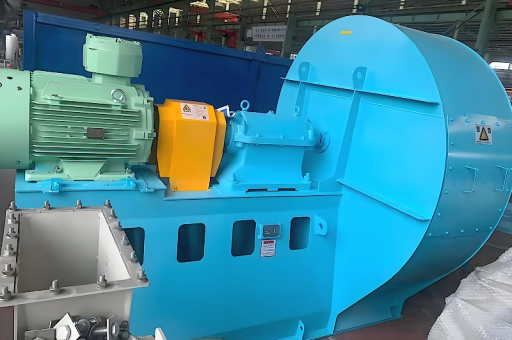
Here is a comprehensive guide to High Efficiency Steam Boiler Fans in Customer-Requested Sizes, covering the key engineering considerations, customization options, and benefits.
This is a complex product because the fan is the "lungs" of the boiler system. An inefficient or incorrectly sized fan wastes fuel and reduces steam output.
Why "Customer-Requested Size" Matters
Standard fans don't always fit existing infrastructure or meet specific performance curves. Requesting a custom size ensures:
- Perfect Fit: Matches existing ductwork, mounting flanges, and foundation dimensions without expensive adaptors.
- Optimized Performance: The fan's performance curve (pressure vs. flow) is perfectly matched to the boiler's "system curve" (draft loss).
- Retrofit Compatibility: Easily replaces an old, inefficient fan without major structural changes.
- Efficiency: Avoids the waste of "oversizing" (running an inefficiently throttled large fan) or "undersizing" (stalling a small fan).
The Two Main Types of High-Efficiency Boiler Fans
When ordering a custom size, you must specify the type.
Forced Draft (FD) Fans
- Function: Pushes air into the boiler furnace (provides combustion air).
- Location: Usually before the air heater or burner.
- Key Features:
- High static pressure.
- Handles ambient or pre-heated air (clean).
- High-Efficiency Design: Often uses backward-curved (BC) or airfoil (AF) centrifugal blades. These are the most efficient and will be the default for custom high-efficiency builds.
- Custom Size Focus: Inlet diameter (to match duct), outlet dimensions, and motor horsepower.
Induced Draft (ID) Fans
- Function: Sucks flue gas out of the boiler and creates negative pressure in the furnace.
- Location: After the boiler, often before the stack.
- Key Features:
- Handles hot, corrosive, and abrasive flue gas.
- Requires robust materials (e.g., Corten steel, stainless steel, or ceramic linings).
- High-Efficiency Design: Backward-curved blades (less prone to fouling) or Radial Tip designs for heavy dust loads.
- Custom Size Focus: High-temperature resistant components, larger shaft diameters, and heavy-duty bearings. The "size" is often defined by the wheel diameter and inlet box dimensions.
Specification Sheet: "Customer-Requested Size" Checklist
When requesting a custom fan, you MUST provide these details. Use a table like this to organize your inquiry to a manufacturer:
| Parameter | Your Specific Value | Notes for Efficiency |
|---|---|---|
| Fan Type | FD / ID | Determines material & aerodynamic design. |
| Air Flow (CFM / m³/hr) | e.g., 50,000 CFM | The exact required flow at full load. |
| Static Pressure (in. w.g. / Pa) | e.g., 15 in. w.g. | Total resistance the fan must overcome. |
| Gas Temperature (°F / °C) | e.g., 350°F (ID fan) | Critical for material selection and thermal expansion. |
| Gas Composition | e.g., Natural Gas / Coal / Biomass | Impacts corrosion/erosion allowance. |
| Mounting Type | Floor / Roof / Wall | Defines the base frame and structural support. |
| Drive Type | Direct Drive / Belt Drive | Direct is more efficient, belt allows speed changes. |
| Motor Voltage / Phase | e.g., 480V / 3-Phase | Standard industrial power. |
| Duct Connection | Flanged / Round / Square | Precise dimensions (e.g., 48" x 36" flange). |
| Rotation (CW/CCW) | e.g., CW from drive end | View from motor side. |
| Noise Limit | e.g., 85 dBA @ 1m | May require sound attenuation (silencer). |
| Efficiency Target | e.g., >85% static efficiency | Modern high-efficiency target. |
Key Design Features for "High Efficiency"
-
Blade Profile:
- Backward-Curved (BC) or Airfoil (AF): The gold standard. 85-90% static efficiency. Low noise. Non-overloading power curve (motor won't burn out if duct is blocked). Most common for custom high-efficiency orders.
- Backward-Inclined (BI): Lower cost than AF, still 80-85% efficiency.
- Radial (Paddlewheel): Robust but only 60-70% efficiency. Only for dirty, abrasive gas.
-
Variable Speed Drive (VFD): An absolute must for high efficiency in boilers. Instead of using dampers (which waste energy), a VFD adjusts the fan speed to exactly match the boiler load. A VFD-controlled fan can be 30-50% more efficient than a fixed-speed fan with a damper.
-
Inlet Dampers (Optional): Some high-efficiency designs use inlet guide vanes for precise airflow control, but VFDs are preferred.
-
Materials:
- FD Fans: Carbon steel (standard).
- ID Fans: High-tensile steel (for strength at high temp), with shaft coolers and heat slingers to protect bearings. For corrosive gas, use Corten steel or stainless steel (e.g., 304L, 316L).
How the Custom Size is Achieved
A manufacturer like New York Blower, Howden, Robinson Fans, or a specialized local fabricator will:
- Housing: Fabricated from steel plate (rolled or welded) to your exact dimensions.
- Wheel: A computer-designed and numerically machined backward-curved airfoil wheel is the centerpiece. The wheel diameter is the "size" (e.g., Size 30 = 30" wheel).
- Casing: Designed to match inlet/outlet dimensions and rotation.
- Drive Train: Shafts, bearings, and coupling are sized for the specific load and temperature.
Cost Considerations for Custom Sizes
- Engineering Fee: Expect a one-time NRE (Non-Recurring Engineering) charge for the initial design.
- Lead Time: 8-16 weeks (vs. 4-8 weeks for a standard size). Longer if special materials are needed.
- Minimum Order: Many manufacturers have a minimum order value (e.g., $5,000-$10,000) for custom builds.
- Premium for Efficiency: A high-efficiency (AF) wheel costs 10-20% more than a standard (BI) wheel, but the energy savings pay back in 1-3 years.
Recommended Next Steps for Your Purchase
- Do a System Audit: Measure the actual airflow and pressure drop in your boiler at full load and half load. Don't use nameplate data.
- Get a Fan Curve: Request a performance curve from the manufacturer at your specific conditions. The fan must operate in the "peak efficiency" zone at your normal operating point.
- Specify VFD-Ready: Even if you don't buy the VFD now, ensure the motor and fan are designed for variable speed operation.
- Get 3 Quotes: Talk to at least two specialized fan manufacturers (not just general HVAC suppliers).
- Ask for a Guarantee: Request a guaranteed static efficiency at the design point (e.g., "85% minimum at 50,000 CFM").
Example of an effective purchase request:
"We need a custom-sized, high-efficiency Induced Draft Fan for a natural gas steam boiler. Request a backward-curved airfoil wheel in Corten steel. Airflow: 45,000 CFM at 12 in. w.g. static pressure. Gas temp: 400°F. Inlet: 48" diameter. Outlet: 36" x 30" with a 150# flange. Direct drive with a VFD-capable 250 HP motor. Quote for an 85% minimum static efficiency."
By specifying the type, size, and efficiency target precisely, you will get a fan that maximizes your boiler's thermal efficiency and reduces operating costs.





