
This article's table of contents introduction:
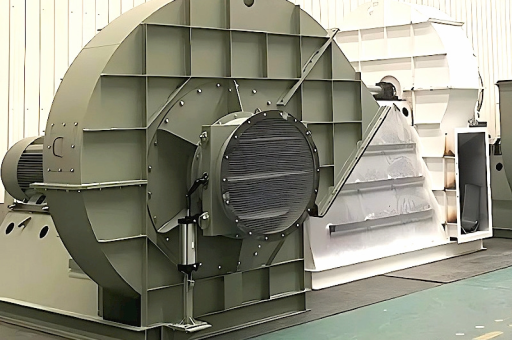
- Overview and Function
- Key Components
- How Oil Bath Lubrication Works (Step-by-Step)
- Advantages of Oil Bath Lubrication for Industrial Fans
- Disadvantages / Challenges
- Common Issues & Troubleshooting
- Best Practices for Maintenance
- Comparison: Oil Bath vs. Grease Lubrication
This is a very specific and industrial topic. Here is a comprehensive breakdown of the Centrifugal Exhaust Blower Fan with Oil Bath Lubrication as commonly found in industrial manufacturing plants, covering its function, components, operation, and maintenance.
Overview and Function
- What it is: A high-volume, medium-to-high-pressure air mover designed to extract contaminated, hot, or stale air from a manufacturing process or facility. The "centrifugal" design means air is drawn into the center of a rotating impeller and flung outward by centrifugal force, creating pressure.
- Why Oil Bath Lubrication? This is a traditional, robust, and reliable method for lubricating the bearings that support the fan shaft. Instead of grease or a circulating oil system, the bearings are partially submerged in a reservoir of oil. The rotation of the shaft or a specialized "slinger" ring picks up oil and distributes it to the bearing surfaces.
Key Components
- Housing (Volute/Scroll): A spiral-shaped casing that collects the high-velocity air from the impeller and converts its velocity into pressure.
- Impeller (Wheel/Fan Blade): A rotating assembly of blades (backward-curved, forward-curved, or radial) that does the work of moving the air.
- Shaft: The rotating axle that connects the impeller to the drive mechanism (motor via belt or direct drive).
- Bearings: The heart of the lubrication system. High-quality spherical roller bearings or ball bearings are typical.
- Oil Bath Housing (Bearing Housing/Pedestal): A sealed, cast-iron or steel enclosure that holds the bearings and the lubricating oil. This is the critical component.
- Oil Sight Glass / Level Indicator: A transparent window on the side of the oil housing showing the current oil level.
- Oil Fill Cap / Breather: A cap, often with a filtered breather, for adding oil and allowing pressure equalization.
- Oil Drain Plug: A plug at the bottom of the housing for draining old oil.
- Slinger Ring / Oil Flinger (Optional but common): A loose ring that sits on the shaft within the oil reservoir. As the shaft spins, this ring rotates, picking up oil and "slinging" it into the bearings.
How Oil Bath Lubrication Works (Step-by-Step)
- Reservoir Filled: The bearing housing is filled to a specific level (usually the center of the bottom bearing or a marked line on the sight glass). The oil does not fully submerge the bearings.
- Shaft Rotation:
- Option A (Oil Slinger Ring): The shaft rotates the loose slinger ring. The ring drags oil up from the reservoir and flings it off into the bearing housing, creating an oil mist that coats the bearings and shaft.
- Option B (Direct Splash): The bearing itself (often the lower portion) dips into the oil. As it rotates, it picks up oil and distributes it.
- Continuous Lubrication: As the shaft spins, a constant supply of oil is carried to the rolling elements (balls or rollers) and the raceways of the bearing. This creates a hydrodynamic oil film that prevents metal-to-metal contact.
- Heat Transfer: The oil also absorbs heat generated by friction and conducts it to the housing walls, where it dissipates to the ambient air.
- Return Flow: Gravity and oil flow ensure the oil returns to the sump reservoir to be recirculated.
Advantages of Oil Bath Lubrication for Industrial Fans
- Simple & Reliable: Very few moving parts in the lubrication system itself. No complex pumps, filters, or valves.
- High Load Capacity: Very effective at lubricating heavy-duty bearings used in high-power fans.
- Self-Contained: The oil reservoir provides a buffer, ensuring the bearings are always lubricated even during extended operation between maintenance intervals.
- Good Heat Dissipation: The oil mass acts as a heat sink for bearing heat.
- Contaminant Management: Debris/wear particles often settle to the bottom of the oil reservoir (out of the bearing's contact zone) until the oil is changed.
Disadvantages / Challenges
- Leakage: The primary failure point. If the shaft seals (lip seals or labyrinths) wear out, oil leaks out, creating a mess and a fire or slip hazard on the factory floor.
- Operating Angle: The fan must be mounted horizontally (or near horizontally). The oil level and slinger ring operation are sensitive to tilt.
- Startup Torque: Cold, viscous oil can create higher resistance at startup, requiring more motor power.
- Oil Oxidation / Contamination: Over time, moisture, dust, and heat break down the oil, requiring periodic changes.
- Messy Maintenance: Changing oil is inherently messier than adding grease.
Common Issues & Troubleshooting
| Symptom | Likely Cause | Solution |
|---|---|---|
| Bearing Overheating | Oil level too high (churning). Oil level too low (starvation). Wrong oil viscosity. Bearing failure. |
Drain to correct level. Add oil to correct level. Change to manufacturer-specified oil. Replace bearing and inspect housing. |
| Oil Leakage | Worn shaft seal. Clogged breather (pressure build-up). Overfilled reservoir. Leaking gasket. |
Replace seal. Clean or replace breather cap. Drain to correct level. Replace gasket/reseal. |
| Excessive Noise / Vibration | Bearing wear/damage (often lubrication-related). Unbalanced impeller (clogged with debris). |
Drain oil, inspect bearings, replace if necessary. Clean impeller and re-balance. |
| Oil Dark / Cloudy | Oxidation (high heat). Water contamination (from condensation). |
Change oil immediately. Investigate high-temperature cause. Change oil. Improve seal or operate at higher temp briefly to evaporate water. |
Best Practices for Maintenance
- Use the Correct Oil: Always use the manufacturer's recommended viscosity (e.g., ISO VG 32, 46, 68, or 100). High ambient temps require thicker oil. Never mix oils.
- Check Level Regularly: Look at the sight glass weekly. The level should be stable. A sudden drop indicates a leak. A sudden rise indicates water or debris contamination.
- Oil Change Schedule:
- Standard: Every 2,000-4,000 operating hours or 6-12 months, whichever comes first.
- Severe Duty (high temp, dust, humidity): Every 500-1,000 hours.
- Drain & Flush: Always drain the oil hot (immediately after shutdown) to allow contaminants in suspension to drain out. Flush with a light oil or kerosene if heavy sludge is present (then remove all traces of flush).
- Check Seals & Breather: Inspect the shaft seals for cracking or wear at every oil change. Ensure the breather is not clogged.
- Preventive Replacement: Consider replacing the bearings themselves every 3-5 years (or based on run hours) as a proactive measure, as bearing failure can lead to catastrophic fan damage.
Comparison: Oil Bath vs. Grease Lubrication
| Feature | Oil Bath | Grease Lubrication |
|---|---|---|
| Application | Large, heavy-duty, continuous-run fans | Smaller, intermittent-use, or vertical fans |
| Heat Dissipation | Excellent (oil carries heat away) | Poor (grease retains heat) |
| Speed Capability | Good to Excellent | Can be limited by grease breakdown at high speeds |
| Sealing | More prone to leaking | Better at keeping contaminants out |
| Maintenance | Requires careful level checks & oil changes | Requires re-greasing intervals (easier to mess up) |
| Cost (Initial) | Slightly higher (need housing, seals) | Lower (simple bearing housing) |
| Cost (Lifetime) | Higher if leaks occur; lower if maintained clean | Lower initial cost, but can be higher if over-greased |
Summary for a Plant Manager/Engineer: An oil bath lubricated centrifugal fan is a workhorse for demanding exhaust applications. It is inherently reliable but requires discipline. The #1 enemy is neglect (low oil, wrong oil, or old oil) and leaking seals. A good oil analysis program (checking viscosity, water content, and wear metals) can predict bearing failure months in advance for this type of equipment.





