
This article's table of contents introduction:
- What is it?
- Key Specifications & Design
- Common Applications
- Pros & Cons
- Sourcing & Pricing
- Frequently Asked Questions (for a buyer/operator)
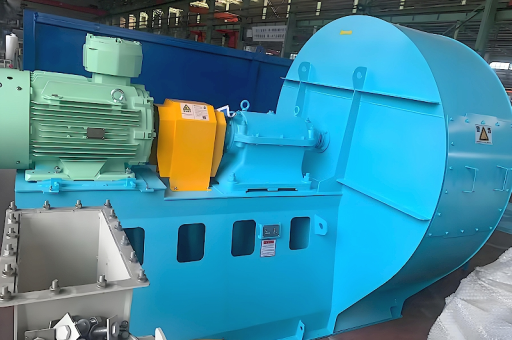
This is a specific piece of industrial equipment. Let's break down what a 20 Inch Industrial Boiler Primary Air Centrifugal Fan is, its function, typical specifications, and common applications.
What is it?
This is a centrifugal fan (also called a blower) designed to provide primary air for combustion in an industrial boiler.
- 20 Inch: This refers to the diameter of the fan's inlet or impeller (the rotating wheel inside). This is a medium-to-large industrial size.
- Industrial Boiler: The fan is part of a boiler system used to generate steam or hot water for industrial processes (power generation, manufacturing, heating large buildings, etc.).
- Primary Air: This is the air that enters the boiler burner first. Its job is to:
- Dry and transport fuel (especially in pulverized coal boilers or biomass boilers).
- Initiate combustion by mixing with the fuel before ignition.
- Note: This is different from Secondary Air (added later for complete burn) and Forced Draft (FD) Air (overall combustion air). A Primary Air fan often has higher pressure requirements than a standard FD fan.
Key Specifications & Design
When sourcing or specifying this fan, you would look for these parameters:
- Airflow (CFM or m³/hr): The volume of air moved. For a 20" fan, this could range from 15,000 to 40,000 CFM depending on the wheel design and speed.
- Static Pressure (in. w.g. or kPa): The resistance it must overcome. Primary air fans are high-pressure fans (often 30 to 80+ inches of water gauge) because they push air through narrow coal pipes, burners, and fuel mills.
- Impeller Type:
- Radial / Paddle Wheel: Best for harsh, dusty environments (e.g., coal dust). High pressure, self-cleaning, but less efficient.
- Backward Inclined / Airfoil: More efficient, lower noise, used for cleaner air or gas streams.
- Housing Material: Typically heavy-duty Carbon Steel for standard air. Abrasion-resistant steel (like AR400) or liners for coal/ash transport.
- Temperature: The fan handles pre-heated air (up to 200-400°F / 93-204°C) from an air preheater. Bearings and shaft seals must be rated for this.
Common Applications
This fan is not for home HVAC. You will find it in:
- Power Plants: Part of the boiler's pulverized coal system (mills).
- Biomass & Waste-to-Energy Boilers: Feeding and burning wood chips, sawdust, or refuse-derived fuel.
- Large Industrial Boilers: In cement plants, refineries, paper mills, and chemical plants.
- Fluidized Bed Boilers (CFB/BFB): Fluidizing the bed material and fuel.
Pros & Cons
Pros:
- High Pressure: Essential for transporting dense fuel streams.
- Durability: Built to handle hot, abrasive particles.
- Controllability: Can be paired with a Variable Frequency Drive (VFD) to precisely control the air-to-fuel ratio for efficient combustion.
Cons:
- High Energy Consumption: The largest single user of electricity in a combustion system (often 2-5% of total plant power).
- Maintenance: Bearings and impellers wear out due to dust and heat. Requires periodic balancing.
- Noise: Very loud. Requires robust silencers and enclosures.
Sourcing & Pricing
If you are looking to buy one:
- OEMs: Chicago Blower, New York Blower, Robinson Fans, Howden, Chengdu Shunyuan.
- Used Market: Check Surplus Record, GoIndustry DoveBid, or local industrial auction houses.
- Price Range: A new 20" industrial primary air fan with a motor can cost $8,000 - $25,000+ depending on material (stainless vs. carbon steel) and motor horsepower (typically 75-200 HP for a 20" unit).
Used units are often $1,500 - $6,000.
Frequently Asked Questions (for a buyer/operator)
- "Does it come with a motor and VFD?" (Most do, but specify RPM and voltage - 480V/3Ph is standard in North America).
- "Is the shaft seal suitable for hot air?" (A standard fan might use a labyrinth seal; a boiler fan needs a carbon ring or air purge seal).
- "What is the wheel orientation?" (Arrangement 1, 4, or 8? This determines whether the motor is directly coupled or belt-driven and the footprint).
Need a specific dimension? The "20 inch" refers to the inlet. The overall footprint (including housing) for a 20" radial centrifugal fan is typically about 5-6 feet long by 4-5 feet wide and 4-5 feet tall (excluding ductwork and motor).





