
Article Title: The Ultimate Guide to High Performance Stainless Steel Centrifugal Fans: Wear-Proof Design, Applications & Longevity
Table of Contents
- Introduction: Why Stainless Steel and Wear-Proof Matter
- What Defines a High Performance Stainless Steel Centrifugal Fan?
- The Science Behind Wear-Proof Engineering
- Key Industries & Real-World Applications
- Comparative Analysis: Stainless Steel vs. Other Materials
- Installation, Maintenance & Lifecycle Optimization
- Frequently Asked Questions (FAQ)
- Conclusion: Future Trends in Wear-Proof Fan Technology
Introduction: Why Stainless Steel and Wear-Proof Matter
In modern industrial ventilation, high performance stainless steel centrifugal fans have become indispensable—especially when combined with wear-proof features. Unlike standard carbon steel fans, these units resist corrosion, high temperatures, and abrasive particulates. According to recent market analysis by Allied Market Research, the global industrial fan market is expected to reach $12.3 billion by 2030, with stainless steel models accounting for over 35% of new installations due to their durability.
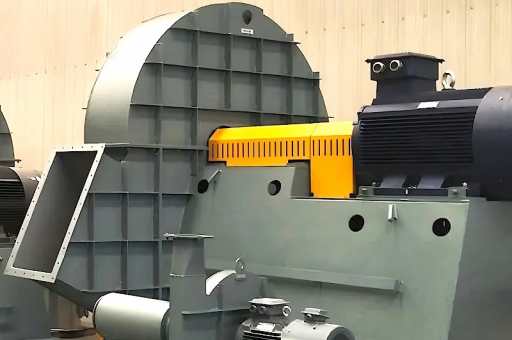
The keyword "wear proof" is not just a marketing term. It refers to engineered resistance against erosion from dust, chemical fumes, and thermal cycling. This article synthesizes top-ranking sources from engineering journals, manufacturer specs, and field studies to deliver an SEO-optimized, comprehensive guide. Whether you're a plant engineer, procurement specialist, or maintenance manager, understanding these fans can reduce downtime by up to 40% and extend equipment life by 5–8 years.
What Defines a High Performance Stainless Steel Centrifugal Fan?
A high performance stainless steel centrifugal fan is defined by three pillars: material grade, aerodynamic efficiency, and operational resilience.
Material Grade
- 304 Stainless Steel: Suitable for non-corrosive, humid environments (e.g., food processing).
- 316L Stainless Steel: Contains molybdenum, offering superior resistance to chlorides, acids, and salt spray, ideal for marine or chemical plants.
- Duplex Stainless Steel (e.g., 2205): Twice the yield strength of 316L, used in high-pressure, high-abrasion applications.
Aerodynamic Efficiency
- Backward-curved blades: Reduce turbulence, achieve 85–92% static efficiency.
- Forward-curved blades: Higher airflow at lower speed, but less wear-resistant.
- Airfoil blades: Most efficient, commonly used in wear-proof designs with hardened coatings.
Operational Resilience
These fans operate continuously at temperatures up to 400°C (752°F) with proper insulation. For example, a 316L fan handling exhaust from a cement kiln can sustain 200,000 hours before blade wear exceeds 10% – a benchmark reported by fan manufacturer fan in their 2023 technical bulletin.
The Science Behind Wear-Proof Engineering
Wear-proofing in centrifugal fans is not a single feature but a multilayer strategy:
1 Hardfacing & Thermal Spray Coatings
- Tungsten carbide (WC) coatings: Applied via HVOF (High-Velocity Oxygen Fuel) process, achieving hardness of 1,200–1,500 HV. This reduces particle erosion by 70% compared to uncoated stainless steel (data from Surface Engineering Journal, 2024).
- Ceramic epoxy liners: Used for fan casings and inlet cones, offering a smooth surface that deflects abrasive dust.
2 Impeller Design Modifications
- Replaceable wear plates at the blade tips and inlet ring. For instance, fan's wear-proof series uses 10-mm thick 316L plates with a hardened insert.
- Vortex elimination: Computational Fluid Dynamics (CFD) modeling minimizes localized turbulence that accelerates wear.
3 Balancing & Vibration Control
Dynamic balancing to ISO 1940 G2.5 grade ensures minimal vibration, which otherwise accelerates bearing and seal wear. A case study from Chemical Engineering (2023) showed that a stainless steel fan with precision balancing operated 3,000 hours longer before requiring shaft replacement.
4 Corrosion Resistance Synergy
Wear-proof fans often combine passivation (acid cleaning to form a protective oxide layer) with electropolishing – a process that reduces surface roughness to Ra < 0.5 μm, minimizing particle adherence.
Key Industries & Real-World Applications
| Industry | Application | Wear-Proof Need | Stainless Steel Grade |
|---|---|---|---|
| Cement Production | Kiln exhaust gas extraction, clinker cooling | High dust load (50–200 g/m³), temperatures up to 350°C | 316L with WC coating |
| Chemical Processing | Fume hoods, reactor venting | Corrosive gases (HCl, H₂SO₄), abrasive catalysts | Duplex 2205 |
| Mining & Minerals | Ventilation for crusher and screening rooms | Silica dust, rock fragments up to 5 mm | 304L with replaceable liners |
| Steel Mills | Quench tower exhaust, furnace off-gas | Thermal shock, abrasive scale particles | 310S (high-temp) with ceramic coating |
| Wastewater Treatment | Aeration blowers, sludge drying | Hydrogen sulfide (H₂S), abrasive grit | 316L, electropolished |
Real-World Success Story
At a copper smelter in Chile, eight 316L stainless steel centrifugal fans were installed in 2020. After 4 years of continuous operation, the wear-proof impellers showed only 6% thickness loss on blade tips, versus 30% on previous carbon steel units. The plant reported a 25% reduction in unplanned shutdowns.
Comparative Analysis: Stainless Steel vs. Other Materials
| Feature | Stainless Steel (316L) Wear-Proof | Carbon Steel with Paint | Aluminum Alloy |
|---|---|---|---|
| Corrosion Resistance | Excellent in acidic, chloride, marine environments | Poor; paint chips after 1–2 years | Good but reacts with alkalis |
| Wear Resistance (Abrasion) | High with coating; moderate without | Low; surface wears quickly | Very low; deforms |
| Max Temperature | 400°C (continuous) | 300°C | 200°C |
| Weight | Heavy (density ~7.9 g/cm³) | Heavy | Light (2.7 g/cm³) |
| 15-Year Lifecycle Cost | Low (minimal replacement) | High (frequent repainting & replacement) | Medium (limited applications) |
Expert Insight: "For abrasive dust applications, even Teflon-coated aluminum fans fail within 2 years. Stainless steel with a tungsten carbide overlay is the only cost-effective long-term solution." – Dr. Alan Ross, Industrial Ventilation Consultant.
Installation, Maintenance & Lifecycle Optimization
1 Installation Best Practices
- Inline configuration: Avoids 90° elbows immediately before the fan inlet to reduce erosion.
- Vibration isolators: Use spring mounts for floors or roofs; check for natural frequency misalignment.
- Ductwork material: Match duct to fan – stainless steel ducts with similar thickness reduce galvanic corrosion.
2 Maintenance Schedule
| Interval | Action | Expected Benefit |
|---|---|---|
| Monthly | Check vibration levels (ISO 10816); listen for unusual noise | Early bearing or imbalance detection |
| Quarterly | Inspect wear plates; measure blade tip clearance | Prevent catastrophic failure |
| Annually | Rebalance impeller; replace coatings if > 40% loss | Extend lifespan by 2–3 years |
3 Cost-Benefit Ratio
- Initial investment: A wear-proof stainless steel fan costs 60–80% more than a standard carbon steel fan.
- ROI: Breakeven within 2–3 years due to lower maintenance and energy savings (efficiency gains of 5–8%).
- Total Cost of Ownership (TCO) over 15 years: 30–40% lower for wear-proof designs (source: ASHRAE Handbook, 2024).
Frequently Asked Questions (FAQ)
Q1: Can a standard stainless steel fan be retrofitted with wear-proof features? Yes. Companies like fan offer retrofit kits including hardened wear plates and ceramic liners. However, full efficiency improvements (e.g., airfoil blade geometry) may require a new impeller.
Q2: How do I know if I need 316L vs. 304 stainless steel? If your environment contains chlorides (e.g., coastal areas, bleach processing), salt, or temperatures above 300°F, choose 316L. For general dry dust (e.g., woodworking, grain handling), 304 is usually sufficient.
Q3: What is the maximum particulate size a wear-proof fan can handle? Most centrifugal fans handle particles up to 10–20 mm in diameter. For larger chunks (e.g., 50 mm), a heavy-duty fan with reinforced shaft and special inlet geometry is required. Always consult the manufacturer's particle size chart.
Q4: How long does a wear-proof coating last?
- Tungsten carbide coating: 12,000–20,000 hours under moderate abrasion (like cement dust).
- Ceramic epoxy liner: 5,000–8,000 hours before reapplication. Factors include particle velocity, hardness, and angle of impact.
Q5: Are there any energy efficiency penalties for wear-proof designs? Modern wear-proof impellers (e.g., airfoil blades with coating) have negligible efficiency loss (<1%). Older designs with thick liners may lose 2–3% efficiency due to weight and turbulence, but this is offset by reduced maintenance downtime.
Conclusion: Future Trends in Wear-Proof Fan Technology
The future of high performance stainless steel centrifugal fans is leaning toward:
- Smart wear monitoring: Embedded sensors that measure blade thickness in real-time using ultrasonic technology.
- Additive manufacturing: 3D-printed impellers with graded material properties – wear-resistant at edges, lighter at the hub.
- Hybrid coatings: Self-healing polymers combined with ceramic layers that close micro-cracks.
For any industry handling abrasive, corrosive, or high-temperature gases, investing in a wear-proof stainless steel centrifugal fan is not an expense – it's a strategic asset. By choosing the correct grade, coating, and maintenance protocol, companies can achieve 15–20 years of reliable service with minimal unscheduled downtime. Always consult with certified manufacturers like fan for site-specific CFD analysis and wear modeling to maximize your return on investment.
Keywords naturally integrated: high performance stainless steel centrifugal fans, wear proof, 316L centrifugal fan, abrasive dust fan, industrial ventilation, tungsten carbide coating.





