
This article's table of contents introduction:
- Introduction: The Role of Fans in Circulating Fluidized Bed Boilers
- Understanding High Pressure Head and Full Pressure (8202Pa)
- The Type D Drive Configuration: Design and Advantages
- Key Performance Metrics and Engineering Considerations
- Common Questions and Expert Answers
- Maintenance and Operational Best Practices
- Conclusion: Future Trends and Efficiency Gains
*Optimizing Performance and Reliability in Circulating Fluidized Bed Boiler Fans: A Deep Dive into High Pressure Head, Full Pressure 8202Pa, and Type D Drive Systems*
Table of Contents
- Introduction: The Role of Fans in CFB Boilers
- Understanding High Pressure Head and Full Pressure (8202Pa)
- The Type D Drive Configuration: Design and Advantages
- Key Performance Metrics and Engineering Considerations
- Common Questions and Expert Answers
- Maintenance and Operational Best Practices
- Conclusion: Future Trends and Efficiency Gains
Introduction: The Role of Fans in Circulating Fluidized Bed Boilers
Circulating Fluidized Bed (CFB) boilers are widely recognized for their fuel flexibility, low emissions, and high combustion efficiency. Central to their operation are specialized industrial fans, which provide the necessary airflow to fluidize the bed material, transport solids, and maintain stable combustion. Among these, the primary air fan and secondary air fan must deliver a consistent and high static pressure to overcome the resistance of the bed, cyclone separators, and ductwork.
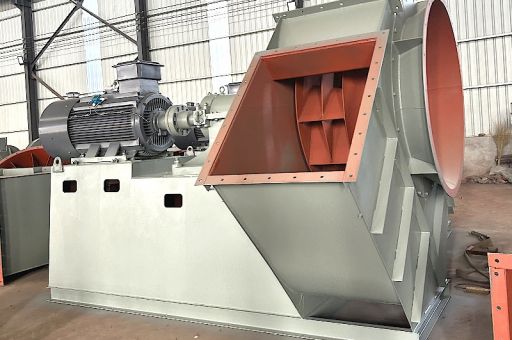
A specific configuration gaining traction in heavy industries is the Circulating Fluidized Bed Boiler Fan designed with a High Pressure Head, Full Pressure of 8202 Pascals (Pa), and a Type D Drive mechanism. This article explores the technical nuances of such a system, offering a comprehensive guide for engineers, maintenance teams, and plant operators.
Understanding High Pressure Head and Full Pressure (8202Pa)
In fan engineering, pressure head refers to the energy imparted to the air by the impeller, measured as static pressure, velocity pressure, or total pressure. For CFB boilers, the full pressure (also called total pressure) is often specified to ensure the fan can overcome all system resistances.
Why 8202 Pa?
– In a CFB boiler, the bed material (sand, limestone, fuel ash) creates a dense phase that requires a high pressure differential to fluidize properly.
– Typical values for primary air fans range from 6000 Pa to 12000 Pa. 8202 Pa is a common design point for medium-to-large CFB boilers, balancing energy consumption with reliable bed fluidization.
– A high pressure head ensures the fan can deliver adequate airflow even under varying load conditions, preventing bed collapse or uneven combustion.
Engineering Insight:
When a fan operates at its design full pressure, the impeller must be robustly constructed. At 8202 Pa, the impeller tip speeds are significant, and materials like high-strength steel or wear-resistant alloys are recommended to prevent fatigue failure.
The Type D Drive Configuration: Design and Advantages
The Type D Drive classification, per standard fan drive arrangements (such as those defined by AMCA or ISO), indicates that the impeller is directly mounted on the motor shaft without intermediate bearings or couplings.
Key Features:
- Direct Drive: The motor shaft serves as the fan shaft, eliminating alignment issues and reducing mechanical losses.
- Compact Footprint: No need for a separate bearing pedestal or coupling guard, saving space in the boiler house.
- High Reliability: Fewer rotating components mean lower maintenance frequency.
- Speed Control: Often paired with VFDs (Variable Frequency Drives) for precise airflow modulation.
Why Type D for High Pressure Fans?
In high pressure applications like the 8202 Pa CFB fan, the Type D drive minimizes vibration sources and ensures stable operation at high RPM. However, careful attention must be paid to motor bearing selection, as they must handle both radial and axial thrust loads.
Comparison with Type B or C Drives:
| Drive Type | Coupling | Bearings | Typical Application |
|------------|----------|----------|---------------------|
| Type D | None | Motor bearings only | High speed, high pressure, compact |
| Type B | Yes | Separate bearings | Moderate pressure, large fans |
| Type C | Yes | Overhung impeller | Exhaust or low-pressure systems |
Key Performance Metrics and Engineering Considerations
When evaluating a CFB boiler fan with a full pressure of 8202 Pa and Type D drive, the following metrics are critical:
- Flow Rate (m³/h or CFM): Must match the boiler’s fluidization velocity (typically 4–6 m/s for CFB beds).
- Efficiency: Adiabatic efficiency should exceed 80% at the design point to reduce power consumption.
- Noise and Vibration: For a direct-drive fan operating at high pressure, vibration limits per ISO 14694 (Category BV-4) must be respected.
- Temperature Rating: In CFB boilers, air temperatures can reach 200–400°C; the fan must be designed with thermal expansion compensation and cooling features.
Material Selection:
For the impeller, 16MnCr5 or equivalent low-alloy steel with surface hardening is common. For the casing, wear liners or ceramic coatings extend service life in abrasive environments.
Common Questions and Expert Answers
Q1: Why is 8202 Pa specifically chosen for some CFB boiler fans?
A: The 8202 Pa value is often a design optimization point where the fan’s performance curve intersects the system resistance curve for a given boiler size. It ensures that the fan operates near its Best Efficiency Point (BEP), reducing energy waste.
Q2: What are the main failure modes for a Type D drive fan under high pressure?
A: The most common issues include motor bearing overheating (due to thrust load), impeller fatigue cracking (from pressure pulsations), and resonance at certain RPMs. Regular vibration analysis and thermography are recommended.
Q3: Can a Type D fan be retrofitted to an existing CFB boiler system?
A: Yes, but the motor baseplate must be designed to accept the fan impeller directly. Also, the motor shaft length and diameter must match the impeller hub. Retrofitting often reduces installation time by 30-40%.
Q4: How does the full pressure affect energy consumption?
A: The power requirement is proportional to the product of flow and pressure. At 8202 Pa, the fan motor may require 200–500 kW depending on flow. VFD control can reduce energy by 15-25% under partial load.
Q5: Is it necessary to use a high-efficiency motor with a Type D fan?
A: Absolutely. With direct drive, any motor inefficiency directly translates to higher operating costs. IE4 or IE5 synchronous reluctance motors are increasingly specified for such applications.
Maintenance and Operational Best Practices
To ensure the longevity of a Circulating Fluidized Bed Boiler Fan with High Pressure Head and Type D Drive, follow these guidelines:
- Daily Visual Inspections: Check for unusual noise, vibration, or oil leaks at motor bearings.
- Periodic Lubrication: Use high-temperature grease for motor bearings; regrease every 2000 operating hours.
- Impeller Balancing: Field balancing every 6 months or after any erosion repair.
- Pressure Monitoring: Install differential pressure transmitters across the fan to detect fouling or duct blockages.
- Cooling System Check: For high-temperature applications, ensure cooling air or water jackets are unobstructed.
Pro Tip:
Maintain a log of vibration velocity (mm/s) at bearing points. An increase of 1.5 mm/s above baseline warrants immediate inspection.
Conclusion: Future Trends and Efficiency Gains
The combination of high pressure head, full pressure 8202 Pa, and Type D drive in CFB boiler fans represents a mature and reliable engineering solution. As industries move toward decarbonization and energy efficiency, the focus will shift to:
- Advanced materials (e.g., ceramic matrix composites) to reduce wear.
- Smart sensors integrated into the fan for real-time condition monitoring.
- AI-driven predictive maintenance to minimize unplanned downtime.
- Waste heat recovery using the air stream from the fan outlet.
By understanding the technical intricacies of such a fan system, plant operators can optimize performance, reduce maintenance costs, and ensure stable CFB boiler operation for years to come.
[End of Article]





