
This article's table of contents introduction:
- The Specific Wear Challenges in a Lime Kiln Fan
- Failure Points & Typical Damage Patterns
- Wear-Resistant Solutions (Ranked by Effectiveness)
- Design Modifications to Minimize Wear
- Recommended Materials & Specifications
- Maintenance & Inspection Checklist
- Summary: Which Solution is Best for Your Lime Kiln?
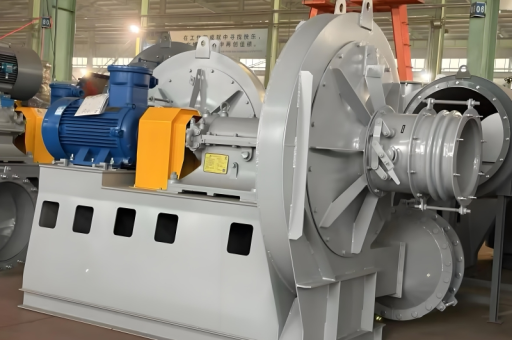
The wear of a Lime Rotary Kiln High Pressure Centrifugal Fan is a critical issue because these fans handle hot, abrasive, and corrosive gases containing lime dust (CaO), raw meal, and coal ash.
Here is a comprehensive breakdown of the wear mechanisms, the specific challenges of the lime kiln environment, and the optimal wear-resistant solutions.
The Specific Wear Challenges in a Lime Kiln Fan
Unlike a standard industrial fan, the lime kiln fan faces a "trifecta" of destructive forces:
- Abrasion (Erosive Wear): The primary killer. Gas velocities are high (often >30 m/s). The gas carries hard, sharp particles like:
- Lime Dust (CaO): Highly alkaline and sharp-edged.
- Limestone Fines (CaCO3): From raw material feed.
- Coke/Coal Ash: Harder than lime dust.
- Dust Clusters: Agglomerates that break apart on impact.
- High Temperature: Gas temperatures at the fan inlet can range from 150°C to 350°C (depending on if it's a primary air fan, ID fan, or kiln exhaust fan). This reduces the hardness of standard carbon steel.
- Corrosion: The combination of moisture, SO2/SO3 (from fuel), and CaO can form corrosive calcium sulfate/sulfite deposits, especially in the exhaust fan (downstream of the kiln).
- Chemical Reaction: CaO is hygroscopic. If the fan stops and cools, ambient moisture can turn the dust into Calcium Hydroxide (Ca(OH)2) , which forms a hard, concrete-like scale on the blades, leading to severe imbalance.
Failure Points & Typical Damage Patterns
| Area | Failure Mode | Effect |
|---|---|---|
| Blade Leading Edge | Cutting wear (like a knife). | Reduces fan efficiency, increases vibration. |
| Blade Trailing Edge | Erosion from recirculating flow. | Thinning of blade, eventual hole. |
| Blade Pressure Side | Glancing angle abrasion from heavy particles. | Grooves and pitting. |
| Blade Root (Housing) | 90-degree impact wear + vortex erosion. | Catastrophic failure if not reinforced. |
| Volute Casing (Cut-off/Tongue) | High-velocity particle impact. | Hole formation, loss of pressure. |
| Impeller Hub | Wear from cascading dust falling into the inlet. | Unbalance and reduced life. |
Wear-Resistant Solutions (Ranked by Effectiveness)
A. Surface Hardfacing (Best ROI) This is the most common and effective method for new or rebuilt fans. A weld overlay of a high-chrome, hard-facing alloy is applied to the wear zones.
- Material: Typically EWC® (Electric Welded Chromium) or equivalent high-chrome iron (e.g., 15/3, 20/3, or 27% Chrome).
- Hardness: 550 - 700 BHN (Brinell Hardness).
- Application:
- Blades: Apply a 3mm to 6mm layer on the leading edge and pressure side.
- Cut-off / Tongue: Full overlay of 6-10mm thick.
- Pros: Affordable, easily repairable, increases life by 3-5x.
- Cons: Cannot be applied to very thin blades without distortion.
B. Ceramic-Lined Blades (Highest Wear Resistance) For extreme conditions (e.g., high dust load, very abrasive lime), ceramic tiles or coatings are applied.
- Type:
- Ceramic Tiles (Alumina 92% or Zirconia): Bonded with high-temperature epoxy or welded studs.
- Ceramic Coatings (HVOF or Plasma Spray): Applied as a thin, dense layer.
- Hardness: > 1400 HV (Vickers).
- Location: Leading edges, pressure side of blades, and the volute cut-off.
- Pros: Exceptional life (8-10x steel), low wear rate.
- Cons: Expensive, can spall if bond fails, difficult to repair, adds weight.
C. "Sacrificial" Wear Plates (Easiest Maintenance) Replaceable steel plates bolted or welded to the critical wear zones.
- Material: AR400, AR500, or Hardox 500 steel.
- Application: Bolt-on liners on the volute casing; weld-on strips on blade leading edges.
- Pros: Quick replacement, no downtime for welding on site.
- Cons: Reduces aerodynamic efficiency slightly (due to bolts/profile), plates can fall off if bolts loosen.
D. Weld Buildup + Cladding (For Rebuilt Fans) When an existing fan is heavily worn, it is rebuilt using:
- Base Metal: A206 steel (low carbon for weldability).
- Buildup Layer: A hard but tough steel (e.g., 300 BHN) to restore profile.
- Hardfacing Layer: High-chrome or tungsten carbide overlay.
Design Modifications to Minimize Wear
- Airfoil (Backward Curved) Blades: Modern fans use backward-curved airfoil blades. These have a lower dust deposition rate and higher efficiency compared to the old radial or paddle wheel designs.
- Inlet Cone Design: A properly designed, wear-resistant inlet cone prevents dust from cascading onto the impeller hub.
- Wear Strip (Labyrinth Seal): Install a replaceable wear strip on the shaft seal to prevent dust from locking the shaft.
- Velocity Reduction: Sometimes the fan is oversized. Reducing tip speed (by changing pulley ratio or VFD) reduces wear rate exponentially (wear ∝ V^3). Balanced against pressure needs.
Recommended Materials & Specifications
For a Lime Rotary Kiln ID Fan (Exhaust):
| Component | Recommended Material | Specification |
|---|---|---|
| Impeller (Base) | ASTM A36 / Corten Steel (if hot) | Thickness 8-16mm |
| Hardfacing Alloy | EWC or Stellite-like | 40-50 HRC, Chromium Carbide |
| Ceramic Tiles | Alumina (Al2O3) | 92% purity, 10-12mm thick |
| Volute Liner | AR500 (Brinell 470-500) | Bolt-on, 12-16mm |
| Shaft / Hub | 4140 or 1045 Steel | Hardened/ground for seal fit |
Maintenance & Inspection Checklist
To maximize wear life, you must monitor:
- Vibration Analysis: A sudden increase in 1X RPM is often a sign of uneven wear or dust build-up. A drop in efficiency (pressure/flow) indicates erosion.
- Visual (Borescope): Weekly inspection of leading edges through access doors. Look for "fish mouth" or "honeycomb" patterns (high erosion).
- Dust Loading: If dust count > 10 g/Nm³, consider a pre-separator (cyclone or baghouse) upstream of the fan.
- Temperature Control: Ensure the fan isn't running too hot. High temperature + CaO dust = accelerated chemical corrosion.
- Cleaning Schedule: If the fan stops for >2 hours, consider using a cleaning lance to blow off moist, caked-on lime dust before it hardens.
Summary: Which Solution is Best for Your Lime Kiln?
- For a New Fan: Specify EWC hardfaced backward-curved blades with AR500 replaceable volute liners. This is the gold standard for cost/life.
- For a High-Wear (Dusty) Condition: Add ceramic tiles to the first 1/3 of the blade leading edge.
- For a Rebuilt Fan: Use weld overlay (15/3 Chrome) on the existing worn blades.
- For a Corrosive Environment (SOx/Moisture): Consider 316L SS or Duplex for the base metal, then hardface with a nickel-based alloy (e.g., C276) to fight both acid and wear.
Final Warning: Never let a lime kiln fan sit idle with moist CaO dust on it. You will have a concrete-hard imbalance that will destroy the bearings and shaft within minutes of restart.





