
This article's table of contents introduction:
- Introduction to Low Pressure Heavy Duty Centrifugal Fans
- Key Design Features: Backward Curved Blades
- Gas Delivery Performance and Efficiency
- Industrial Applications and Use Cases
- Comparison with Other Fan Types
- Maintenance and Longevity Considerations
- Frequently Asked Questions
- Conclusion
Optimizing Industrial Gas Delivery: The Role of Low Pressure Heavy Duty Centrifugal Fans with Backward Curved Blades**
Table of Contents
- Introduction to Low Pressure Heavy Duty Centrifugal Fans
- Key Design Features: Backward Curved Blades
- Gas Delivery Performance and Efficiency
- Industrial Applications and Use Cases
- Comparison with Other Fan Types
- Maintenance and Longevity Considerations
- Frequently Asked Questions
- Conclusion
Introduction to Low Pressure Heavy Duty Centrifugal Fans
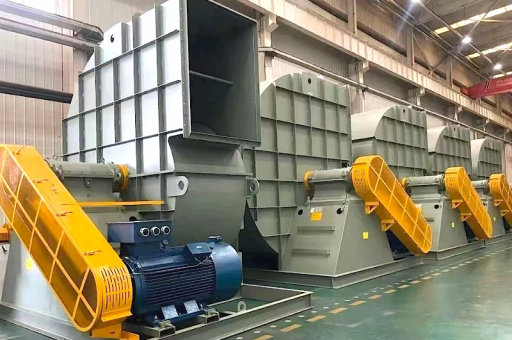
In industrial environments where consistent, high-volume gas movement is required under low static pressure conditions, Low Pressure Heavy Duty Centrifugal Fans have become a cornerstone technology. These fans are engineered to handle large airflow rates—often exceeding 100,000 CFM—while operating at relatively low pressure differentials, typically below 10 inches of water gauge. Their robust construction allows them to function reliably in demanding settings such as chemical processing, power generation, mining, and HVAC systems for large facilities.
What distinguishes these fans from standard centrifugal models is their ability to maintain aerodynamic stability across a wide operating range. They are particularly well-suited for gas delivery systems where the medium may contain particulates, moisture, or corrosive elements. By integrating heavy-duty materials such as carbon steel, stainless steel, or specialized coatings, manufacturers ensure long service life and resistance to wear.
The term “heavy duty” in this context refers not only to the physical durability of the fan housing and impeller but also to the motor and bearing systems designed for continuous operation under load. When paired with backward curved blades, these fans achieve a unique combination of efficiency, low noise, and stable pressure-flow characteristics.
Key Design Features: Backward Curved Blades
The blade geometry of a centrifugal fan is the single most critical factor influencing its performance. In low pressure heavy duty centrifugal fans, backward curved blades are the preferred configuration. Unlike forward curved blades, which rely on high tip speeds to generate pressure, backward curved blades operate with lower dynamic losses and higher static efficiency.
How Backward Curved Blades Work:
Air enters the impeller axially and is accelerated radially outward. Because the blades curve away from the direction of rotation, the air exits at a lower absolute velocity relative to the impeller tip. This reduces turbulence and recirculation, resulting in a flatter pressure curve and a non-overloading power characteristic. In practical terms, this means that even if the system resistance drops unexpectedly (e.g., due to a duct rupture), the motor will not draw excessive current or stall.
Key Advantages:
- High Static Efficiency: Typically 10–15% higher than forward curved designs at design point.
- Non-Overloading Power Curve: Motor protection is inherent; power consumption peaks near the best efficiency point (BEP) and declines at higher flows.
- Lower Noise Levels: Reduced turbulence leads to quieter operation, often critical in occupied facilities.
- Wide Operating Range: Stable performance from surge to wide-open flow without flow instability.
Heavy-duty variants often feature reinforced blade attachments, thicker gauge steel, and balanced impellers to withstand vibration and thermal cycling. Backward curved impellers are also less susceptible to dust buildup because the blade angle promotes self-cleaning.
Gas Delivery Performance and Efficiency
The primary function of these fans is gas delivery—moving air, fumes, process gases, or ventilation air from point A to point B. In low pressure systems, the emphasis is on volume rather than overcoming high resistance. Efficiency therefore becomes a direct driver of operational cost.
Performance Characteristics:
- Flow Rate (Q): Typically ranges from 5,000 to 250,000 m³/h, depending on fan size.
- Static Pressure (Ps): Usually below 2.5 kPa (10 in wg).
- Operating Temperature: Can handle up to 200°C with standard carbon steel; higher with specialty alloys.
Efficiency Metrics:
Modern backward curved fans achieve static efficiencies of 75% to 85% at BEP. In contrast, older forward curved designs average 55–65%. This difference translates to significant energy savings. For a fan operating 8,000 hours per year, a 10% efficiency gain can reduce electricity costs by thousands of dollars annually.
Gas Delivery System Considerations:
- System Curve Matching: The fan must be selected to operate near its BEP for the given ductwork resistance.
- Variable Speed Drives (VFDs): Pairing with VFDs allows precise flow control and further energy savings at partial loads.
- Leakage and Pressure Drops: Proper duct design minimizes losses; backward curved fans respond gracefully to changes in system pressure.
Industrial Applications and Use Cases
Low pressure heavy duty centrifugal fans with backward curved blades are deployed across diverse sectors where reliability and efficiency are paramount.
- Cement and Mining: Conveying cement dust, limestone fines, and ventilation air in crushing plants. The self-cleaning blade design reduces maintenance.
- Chemical Processing: Moving corrosive gases (e.g., chlorine, hydrogen chloride) where fan housings are lined with rubber or fiberglass-reinforced plastic.
- Power Generation: Induced draft and forced draft applications in coal-fired or biomass plants, handling flue gases at moderate temperatures.
- Wastewater Treatment: Aeration blowers in activated sludge basins; backward curved fans provide stable airflow against varying submergence depths.
- General Industrial Ventilation: Warehouses, factories, and assembly plants requiring high air turnover with low static pressure.
One notable case study involved a petrochemical refinery in the Gulf region. They replaced 12 forward curved fans with backward curved units in their flare gas recovery system. The result was a 22% reduction in energy consumption and a 15 dB drop in noise levels, while maintaining the required 80,000 m³/h gas delivery.
Comparison with Other Fan Types
Understanding the differences between fan types helps in selecting the right equipment for low pressure heavy duty gas delivery.
| Feature | Backward Curved | Forward Curved | Radial (Paddle) |
|---|---|---|---|
| Efficiency | High (75–85%) | Moderate (55–65%) | Low (40–55%) |
| Pressure Capability | Low to Medium | Low | High |
| Power Curve | Non-overloading | Overloading | Flat |
| Noise | Low | Moderate | High |
| Dust Handling | Good | Poor | Excellent |
| Cost | Moderate | Low | High |
Key Insight: For clean gas delivery at low pressure, backward curved fans are the clear winner in efficiency and noise. For heavily dust-laden gases (e.g., in hammer mills), radial blade fans may be chosen despite lower efficiency, because they are easier to clean and less prone to erosion. However, backward curved designs with wear-resistant coatings (e.g., chrome carbide overlay) are increasingly bridging this gap.
Maintenance and Longevity Considerations
Heavy duty fans are designed for years of operation, but maintenance practices directly affect lifespan.
Critical Maintenance Points:
- Bearing Lubrication: Grease or oil bath must be serviced per manufacturer schedule; over-lubrication causes overheating.
- Impeller Inspection: Cracks, corrosion, or erosion can cause imbalance and catastrophic failure. Use a borescope if necessary.
- Belt Tension (if belt-driven): Check alignment monthly; improper tension reduces belt and bearing life.
- Vibration Monitoring: Install accelerometers for predictive maintenance; a 10% increase in vibration often signals the need for rebalancing.
- Casing Integrity: Check gaskets and sealants to prevent gas leaks, especially in toxic or explosive environments.
Expected Lifespan:
With proper maintenance, backward curved heavy duty fans commonly operate 15–20 years. In corrosive environments, using 316L stainless steel or coated fan models extends service life significantly.
Common Failure Modes:
- Blade Fatigue: Due to resonance at off-design speeds—avoid running at critical speeds.
- Bearing Failure: Often caused by misalignment or contaminated lubricant.
- Shaft Wear: Resulting from chronic seal leakage.
Frequently Asked Questions
Q1: What is the difference between backward curved and backward inclined blades?
A: The terms are often used interchangeably. Strictly speaking, backward inclined blades are flat and exit at an angle less than 90° to the radial direction. Backward curved blades are aerofoil-shaped or curved. Both exhibit similar performance, but curved blades offer slightly higher efficiency due to reduced turbulence.
Q2: Can these fans handle explosive or flammable gases?
A: Yes, provided they are constructed according to ATEX or IECEx standards. Non-sparking materials (e.g., aluminum impellers, bronze rings) and explosion-proof motors are required. The backward curved design’s non-overloading power curve adds safety because motor overload is prevented.
Q3: How do I select the correct fan size?
A: Start with the required flow rate (Q) and system static pressure (Ps). Use the fan manufacturer’s selection software to plot the system curve against performance curves. Choose a fan whose Best Efficiency Point (BEP) is within 10–15% of the design operating point. Oversizing leads to inefficiency and higher capital cost.
Q4: Are backward curved fans suitable for variable speed operation?
A: Yes. Their flat power curve makes them ideal for VFD control. However, avoid running them below 20% of rated speed for extended periods, as bearing lubrication may become inadequate.
Q5: What is the typical noise level?
A: In low pressure applications (below 1.5 kPa), sound pressure levels at 1 meter range from 75–85 dBA. Adding an inlet silencer or acoustic enclosure reduces noise by 10–20 dBA.
Conclusion
Low pressure heavy duty centrifugal fans with backward curved blades represent a mature yet evolving technology for industrial gas delivery. Their combination of high efficiency, stable performance, and rugged construction makes them indispensable in sectors ranging from cement to chemical processing. By prioritizing blade design—specifically the backward curved geometry—engineers can achieve substantial energy savings, lower maintenance costs, and compliance with increasing environmental noise regulations.
When selecting a fan for your gas delivery system, consider not only the initial purchase price but also the total cost of ownership over a 15-year horizon. In most cases, the higher upfront cost of a backward curved heavy duty fan is recouped within 1–3 years through reduced electricity consumption and less downtime. For gas delivery systems that demand reliability, efficiency, and longevity, this fan type remains the industry benchmark.
For further technical guidance or to request a detailed selection sheet specific to your application, contact your local fan manufacturer or visit their online configuration tool. Always verify that the chosen fan meets your local safety codes and environmental standards.
End of Article





