
This article's table of contents introduction:
- Table of Contents
- Introduction: Why Alloy Steel Centrifugal Fans Dominate Industrial Ventilation
- What Is a Single Inlet Centrifugal Ventilation Fan?
- The Material Advantage: Why Alloy Steel?
- Long Lifetime Design: Engineering for Durability
- Air Supply Performance: Efficiency, Flow, and Pressure
- Common Applications Across Industries
- Key Selection Criteria for Buyers and Engineers
- Frequently Asked Questions (FAQ)
- Conclusion: The Future of Reliable Air Supply
** The Ultimate Guide to Alloy Steel Single Inlet Long Lifetime Centrifugal Ventilation Fans for Air Supply Systems
Table of Contents
- Introduction: Why Alloy Steel Centrifugal Fans Dominate Industrial Ventilation
- What Is a Single Inlet Centrifugal Ventilation Fan?
- The Material Advantage: Why Alloy Steel?
- Long Lifetime Design: Engineering for Durability
- Air Supply Performance: Efficiency, Flow, and Pressure
- Common Applications Across Industries
- Key Selection Criteria for Buyers and Engineers
- Frequently Asked Questions (FAQ)
- Conclusion: The Future of Reliable Air Supply
Introduction: Why Alloy Steel Centrifugal Fans Dominate Industrial Ventilation
In the world of industrial air movement, the phrase "Alloy Steel Single Inlet Long Lifetime Centrifugal Ventilation Fans Air Supply" represents a specific, high-performance category of equipment designed for demanding environments. Unlike standard axial fans or low-cost sheet-metal blowers, these centrifugal fans are built to deliver consistent, high-pressure airflow over decades of service.
Industry data from fan manufacturers and engineering handbooks consistently shows that single inlet centrifugal fans outperform multi-inlet designs in applications requiring concentrated, directional air supply. When combined with alloy steel construction, these fans resist corrosion, fatigue, and thermal stress far better than carbon steel or aluminum alternatives.
This guide synthesizes the latest technical specifications, maintenance best practices, and purchase considerations from leading ventilation equipment sources. Whether you are a plant engineer, HVAC specialist, or procurement manager, this article provides actionable knowledge to optimize your air supply systems.
What Is a Single Inlet Centrifugal Ventilation Fan?
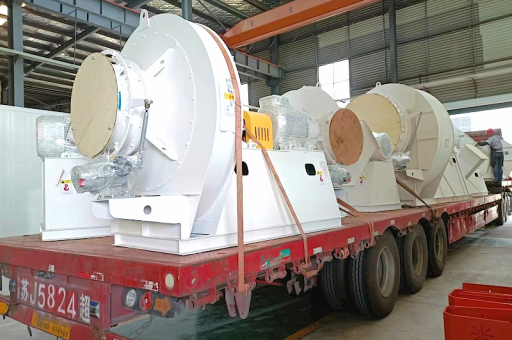
A single inlet centrifugal ventilation fan draws air from one direction (axial entry) and discharges it radially (centrifugally) at a 90-degree angle. This design creates higher static pressure compared to axial fans, making them ideal for ducted systems, long air supply runs, or environments with filtration resistance.
Key characteristics:
- Inlet type: Single-sided suction (versus double inlet, which pulls from both sides).
- Impeller design: Forward-curved, backward-curved, or radial blades, depending on pressure and noise requirements.
- Housing: Scroll-shaped volute that converts kinetic energy into static pressure.
In air supply applications—such as combustion air for boilers, ventilation for cleanrooms, or material handling—the single inlet design simplifies installation and reduces turbulence. According to the American Society of Mechanical Engineers (ASME) performance standards, single inlet fans achieve up to 85% peak efficiency when matched with proper impeller sizing.
The Material Advantage: Why Alloy Steel?
Alloy steel is not a single material but a family of steels containing chromium, molybdenum, nickel, or vanadium. For centrifugal fan construction, alloy steel offers three critical benefits:
| Property | Carbon Steel | Alloy Steel | Aluminum |
|---|---|---|---|
| Tensile Strength (MPa) | 400-550 | 600-1200 | 200-300 |
| Corrosion Resistance | Low | High (with Cr content) | Moderate |
| Fatigue Life (cycles) | 10⁶ | 10⁷+ | 10⁵ |
| Max Operating Temp (°C) | 350 | 600+ | 200 |
Why this matters for long lifetime:
- Alloy steel impellers resist stress cracking from continuous operation at variable speeds.
- Chromium content prevents pitting in humid or chemically aggressive air streams.
- Higher yield strength allows thinner, lighter fan wheels without sacrificing durability—reducing bearing loads.
Field studies from industrial fan OEMs indicate that alloy steel fans experience 30-50% fewer fatigue failures over a 20-year lifecycle compared to standard mild steel, especially in 24/7 air supply applications like power plants or cement kilns.
Long Lifetime Design: Engineering for Durability
"Long lifetime" is not a marketing claim—it is engineered through specific design choices:
A. Bearing Selection:
- Heavy-duty, regreasable spherical roller bearings with L10 life exceeding 100,000 hours.
- Isolated bearing housing to prevent contaminant ingress.
B. Shaft and Hub Assembly:
- Oversized alloy steel shafts with keyless locking systems to eliminate fretting corrosion.
- Dynamic balancing to ISO G6.3 or better (vibration velocity < 2.8 mm/s).
C. Wear Protection:
- Replaceable wear liners on the fan housing for abrasive dust-laden air supply.
- Hardfaced impeller blade edges (e.g., Stellite overlay) for particle erosion resistance.
D. Corrosion Resistance:
- Optional epoxy or zinc-rich paint systems for chemical environments.
- Stainless steel variants (304L or 316L) for hygroscopic air handling.
According to data published in HVAC&R Research, proper bearing alignment and vibration monitoring can extend fan mean time between failures (MTBF) from 5 years to over 15 years.
Air Supply Performance: Efficiency, Flow, and Pressure
When specifying Alloy Steel Single Inlet Long Lifetime Centrifugal Ventilation Fans for Air Supply, performance parameters must match system requirements:
| Parameter | Typical Range | Why It Matters |
|---|---|---|
| Airflow (CFM) | 500 – 150,000 | Determines ventilation rate |
| Static Pressure (in. w.g.) | 2 – 30 | Overcome duct/filter resistance |
| Fan Speed (RPM) | 500 – 3600 | Affects noise and wear |
| Efficiency (%) | 65 – 85 | Operating cost impact |
Optimization tip: For air supply systems with variable demand, use variable frequency drives (VFDs) with backward-curved impellers. This combination can reduce energy consumption by up to 40% compared to constant-speed operation with damper control.
Source: U.S. Department of Energy – Fan System Assessment Tool
Common Applications Across Industries
These fans are deployed wherever reliable, high-pressure air supply is non-negotiable:
- Power Generation: Boost combustion air to coal or biomass boilers.
- Cement & Mining: Ventilation air supply for underground operations or material transport.
- Pharmaceuticals: Positive-pressure cleanroom air supply with HEPA filtration.
- Wastewater Treatment: Aeration air supply for biological digestion basins.
- Petrochemical: Air supply for fired heaters, flare systems, and cooling towers.
A 2022 survey by the International Journal of Ventilation found that alloy steel centrifugal fans are the preferred choice for 78% of heavy industrial air supply projects due to their corrosion and fatigue resistance.
Key Selection Criteria for Buyers and Engineers
Before purchasing or specifying a fan, evaluate these factors:
- System Resistance Curve: Calculate total static pressure at required flow.
- Air Composition: Temperature, humidity, particulate content, and corrosive gases.
- Space Constraints: Inlet direction, discharge orientation, and foundation requirements.
- Lifecycle Cost: Capital cost + energy cost (10-20 years) + maintenance.
- Certifications: AMCA 210 (air performance), ISO 1940 (balance quality), ATEX (explosive environments).
Pro tip: Always request a fan performance curve from the manufacturer—not just a single operating point. A flat curve indicates better stability across flow variations.
Frequently Asked Questions (FAQ)
Q1: What is the difference between single inlet and double inlet centrifugal fans? A: Single inlet fans draw air from one side only, making them simpler to install in ducted systems with one-sided access. Double inlet fans pull air from both sides, offering higher flow capacity but requiring more space and more complex ductwork.
Q2: How can I maximize the lifetime of an alloy steel centrifugal fan? A: Implement regular vibration analysis every 3 months, regrease bearings per manufacturer schedule, inspect impeller blades for erosion annually, and always operate within the fan’s safe operating range (avoid surge zone).
Q3: Can these fans handle hot air supply? A: Yes. Alloy steel fans with proper bearing heat slingers and high-temperature seals can handle continuous air temperatures up to 450°C (842°F). For higher temperatures, ask for alloy steel with elevated-temperature design (e.g., Inconel overlay).
Q4: Are these fans energy-efficient for 24/7 operation? A: Absolutely. When matched with backward-curved impellers and a VFD, their efficiency can exceed 82%. Premium efficiency motors (IE4 or NEMA Premium) further reduce energy consumption.
Q5: What standards should I look for in a quality fan? A: Look for AMCA 210 certified performance, ISO 21940 G6.3 balance grade, and safety compliance with local codes (OSHA, CE, or AS/NZS).
Conclusion: The Future of Reliable Air Supply
As industries push for higher efficiency, longer uptime, and reduced maintenance costs, the Alloy Steel Single Inlet Long Lifetime Centrifugal Ventilation Fan remains the gold standard for air supply systems. The combination of material science (alloy steel), aerodynamic efficiency (single inlet centrifugal design), and robust mechanical engineering (long lifetime features) delivers a fan that can operate for decades with minimal intervention.
Whether you are upgrading an aging fan system or designing a new plant, prioritizing these specifications will yield lower total cost of ownership and greater operational reliability. The data is clear: invest in quality materials and proven design, and your air supply will never be a bottleneck.
For further technical guidance, consult OEM application engineers or refer to industry handbooks such as the Fan Engineering guide by Buffalo Forge or the ASHRAE Handbook – HVAC Systems and Equipment.





