
This article's table of contents introduction:
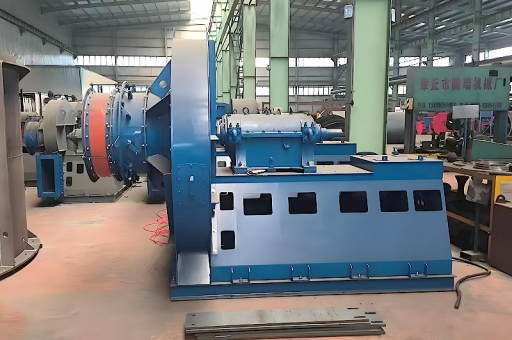
- "Single Inlet"
- "Forward" (Forward Curved)
- "Material Handling"
- "Explosionproof"
- Summary & Common Applications
This is a highly specific piece of industrial equipment. Let's break down what each term means and what is implied when you combine them into a "Single Inlet Forward Material Handling Blower Explosionproof."
This description is typically for a heavy-duty centrifugal fan designed to move materials (like dust, chips, or granular products) and is specifically built to operate safely in environments with flammable gases, vapors, or combustible dust.
Here is a detailed breakdown:
"Single Inlet"
- Meaning: Air enters the blower from one side only (one intake opening).
- Visual: The impeller (wheel) is mounted directly on the motor shaft or a bearing set, and air is drawn in from one side of the housing. The opposite side is a solid plate.
- vs. Double Inlet: A double inlet fan has intakes on both sides of the housing, typically for moving very high volumes of air at lower pressure. A single inlet is more common for higher-pressure applications like material conveying.
"Forward" (Forward Curved)
- Meaning: The blades of the impeller curve in the direction of rotation (the blade tips point forward into the airflow).
- Characteristics:
- High Volume, Low to Medium Pressure: They move a large volume of air relative to their size, but cannot generate very high static pressure. This makes them ideal for moving materials suspended in an air stream over shorter distances or against lower resistance.
- Speed/Power Curve: They have a "rising horsepower" curve. As airflow increases (the system resistance decreases), the motor requires more power. This is a critical safety/engineering point – you must run them at the designed system resistance to avoid overloading the motor.
- Quieter Operation: Generally quieter than paddle-wheel or radial-blade fans at the same air volume.
"Material Handling"
- Meaning: This blower is designed to handle an air stream that contains solid particulate matter (sawdust, wood chips, plastic pellets, grain dust, metal shavings, etc.).
- Key Design Differences from a standard HVAC blower:
- Wear Protection: The housing and impeller are typically made of thicker steel to resist abrasion.
- Wider Clearances: The gap between the spinning impeller and the housing is larger. This prevents clogging and allows small pieces to pass through without jamming or causing sparks.
- Paddle-Wheel or Radial Design (Often): While "forward curved" can be used for light material handling (like fine dust) at low pressure, most heavy-duty material handling uses paddle-wheel or radial blade designs. A forward-curved wheel is more prone to clogging with sticky or stringy materials. If the description includes both "Forward" and "Material Handling," it is likely for light, non-sticky, fine materials (e.g., light dust from a woodworking sander or a plastic granulator).
"Explosionproof"
- Meaning: This is the most critical and legally regulated aspect. It means the entire assembly is designed and certified to contain an internal explosion and prevent it from igniting the surrounding flammable atmosphere.
- Requirements (per NEC/CEC/ATEX):
- Spark-Resistant Construction (AMCA Type A, B, C, or D):
- The impeller and housing are typically made of non-ferrous material (aluminum, bronze) or steel with a non-ferrous nose cone and shroud. This prevents steel-on-steel contact that could create a spark.
- A brass or aluminum rubbing ring is often installed on the shaft to prevent a spark if the impeller rubs against the inlet cone.
- Motor: Must be a TEFC (Totally Enclosed Fan Cooled) motor with a specific class and group rating (e.g., Class I, Div 1, Group D for gases; Class II, Div 1, Groups G for combustible dust). The motor's external surface temperature must be below the ignition temperature of the surrounding material.
- Electrical Connections: All wiring, conduits, and junction boxes must be sealed and explosionproof-rated.
- Grounding: The entire unit must be properly grounded to prevent static electricity buildup.
- Certification Labels: The unit will have a prominent label (e.g., UL, CSA, ATEX) stating the specific hazardous location classification for which it is approved.
- Spark-Resistant Construction (AMCA Type A, B, C, or D):
Summary & Common Applications
A "Single Inlet Forward Material Handling Blower Explosionproof" is a specialized fan used in hazardous locations where a relatively large volume of light, air-borne material needs to be moved, and the material or the surrounding environment is flammable or explosive.
Typical Applications:
- Chemical & Pharmaceutical: Conveying fine powders (e.g., plastic resin, pharmaceutical ingredients) in a solvent-vapor environment.
- Woodworking (with explosionproof rating): Moving fine dust from sanders in a facility where there is a risk of a dust explosion (e.g., a plant handling fine dust from MDF or certain hardwoods).
- Food Processing: Conveying grain dust or sugar in a potentially explosive atmosphere.
- Printing & Coating: Moving paper trim or fumes from solvent-based inks.
Key Takeaway for Procurement or Selection:
- Verify the Wheel: Ensure the "Forward Curved" wheel is genuinely suitable for the type of material (fine, non-sticky). For standard wood chips or heavy scrap, a Radial Blade or Paddle Wheel is the standard choice for material handling.
- Check the Hazard Classification: Confirm the specific Class, Division/Zone, and Group (e.g., Class II, Div 2, Group G) matches your facility's requirements.
- Confirm Spark Resistance: Ask for the AMCA Spark Resistance Construction Type (A, B, C, or D) to ensure it meets your fire code.
- Material of Construction: For abrasive materials, specify AR (Abrasion Resistant) steel housing, even if the impeller is non-ferrous.





