
This article's table of contents introduction:
- Table of Contents
- 1. Introduction: Why the 75KW Anti-Explosion Centrifugal Fan is Critical for Heavy Industry
- 2. Technical Specifications and Key Design Features
- 3. Explosion-Proof Mechanisms: How This Fan Ensures Workplace Safety
- 4. High-Pressure Performance: Applications in Oil, Gas, and Chemical Plants
- 5. Energy Efficiency and Maintenance Considerations
- 6. Frequently Asked Questions (FAQ)
- 7. Conclusion: Selecting the Right Fan for Your Hazardous Environment
Article Title:
The Ultimate Guide to the 75KW Heavy Duty Industrial Anti Explosion High Pressure Centrifugal Fan: Design, Safety, and Performance
Table of Contents
- Introduction: Why the 75KW Anti-Explosion Centrifugal Fan is Critical for Heavy Industry
- Technical Specifications and Key Design Features
- Explosion-Proof Mechanisms: How This Fan Ensures Workplace Safety
- High-Pressure Performance: Applications in Oil, Gas, and Chemical Plants
- Energy Efficiency and Maintenance Considerations
- Frequently Asked Questions (FAQ)
- Conclusion: Selecting the Right Fan for Your Hazardous Environment
Introduction: Why the 75KW Anti-Explosion Centrifugal Fan is Critical for Heavy Industry
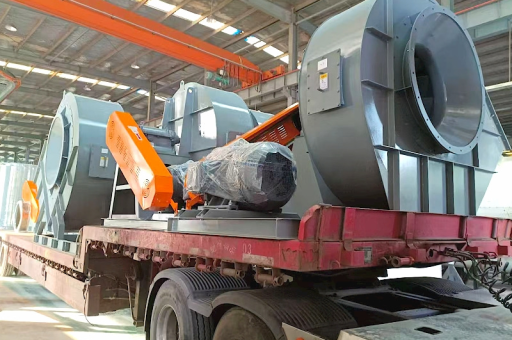
In environments where flammable gases, dust, or volatile chemicals are present, standard industrial fans pose a lethal risk. The 75KW Heavy Duty Industrial Anti Explosion High Pressure Centrifugal Fan bridges the gap between powerful ventilation and absolute safety. Designed to operate in Zone 1, Zone 2, and Class I/II Division 1 hazardous areas, this fan is engineered with spark-proof components, including aluminum-impregnated impellers and non-sparking housing materials.
According to global safety standards (ATEX, IECEx, and NEC 500), any electrical or mechanical device in a hazardous location must prevent ignition. This fan’s motor is fully enclosed and flameproof, while its high-pressure output (up to 12,000 Pa static pressure) ensures that even viscous or explosive gas mixtures are expelled efficiently.
Key Takeaway: The 75KW variant is not just about power—it’s about engineered resilience. It moves large volumes of air (up to 150,000 m³/h) while maintaining zero ignition risk, making it indispensable for refineries, coal mines, and chemical processing plants.
Technical Specifications and Key Design Features
To meet the demands of heavy industrial use, this centrifugal fan is built around three core pillars: material durability, aerodynamic efficiency, and modular safety.
| Parameter | Value |
|---|---|
| Motor Power | 75 KW (100 HP) |
| Max Airflow | 150,000 m³/h |
| Max Static Pressure | 12,000 Pa |
| Impeller Material | Aluminum alloy (non-sparking) |
| Housing Material | Cast iron or stainless steel (304/316) |
| Temperature Rating | -20°C to +80°C |
| Protection Class | IP55 / IP65 |
| Explosion Proof Marking | Ex d IIB T4 / Ex tb IIIC T130°C |
Design Highlights:
- Forward-Curved Blades: Optimized for high-pressure, low-to-medium volume applications. The blade geometry reduces turbulence and noise.
- Flameproof Motor Enclosure: The motor is housed in a cast-iron shell that can contain any internal explosion without rupturing.
- Labyrinth Seal System: Prevents gas leakage along the shaft, a common failure point in standard fans.
- Vibration Monitoring Ports: Pre-installed sensors allow real-time vibration analysis to detect bearing wear or imbalance.
Why It Matters: The 75KW motor, paired with a high-torque direct-drive coupling, eliminates belt slippage and reduces maintenance. Unlike belt-driven fans, direct-drive systems maintain constant RPM under variable loads, crucial for maintaining stable pressure in volatile environments.
Explosion-Proof Mechanisms: How This Fan Ensures Workplace Safety
The term "anti-explosion" is often misused. In the context of this fan, it refers to a multi-layered safety architecture:
- Spark Prevention: The impeller is made of aluminum or a copper-aluminum alloy. If the impeller accidentally contacts the housing, the soft metal dissipates energy without producing a spark.
- Gap Path Control: The housing and motor enclosure have precisely machined flame paths (0.2–0.5 mm gaps). If flammable gas enters the motor and ignites, the flame is cooled as it passes through these gaps, preventing external ignition.
- Temperature Limitation: The fan’s maximum surface temperature is kept below the auto-ignition point of surrounding gases (e.g., T4 rating means <135°C, safe for hydrogen and acetylene).
Real-World Application: In a petrochemical plant handling ethylene oxide (auto-ignition temperature 429°C), the fan’s T4 rating provides a 294°C safety margin. Combined with IP65 sealing, it also prevents water ingress that could cause short circuits.
Compliance Standard: The fan is certified to ATEX Directive 2014/34/EU and IECEx 60079-0. In North America, it meets UL 674 and CSA C22.2 No. 145. Always verify the specific gas group (IIA, IIB, IIC) before installation.
High-Pressure Performance: Applications in Oil, Gas, and Chemical Plants
High-pressure centrifugal fans are distinct from standard exhaust fans. They generate static pressure necessary to overcome resistance from long ductwork, scrubbers, filters, and bends.
Typical Use Cases:
- Vapor Recovery Units (VRU): Pulls hydrocarbon vapors from storage tanks and compresses them into recovery systems.
- Fume Hood Extraction in Laboratories: Maintains negative pressure even when multiple fume hoods are open simultaneously.
- Pneumatic Conveying of Powders: Moves explosive coal dust or sugar powder through pipelines without allowing accumulation.
- Tunnel Ventilation: In mining, the fan ensures continuous airflow to dilute methane pockets.
Performance Data in Action:
In a refinery, a 75KW fan operating at 2,950 RPM generated 11,500 Pa static pressure while moving 85,000 m³/h of gas containing 20% H₂S. Over a 24-month period, no unscheduled shutdowns occurred due to vibration or overheating. The fan’s variable frequency drive (VFD) allowed flow modulation from 40% to 100%, reducing energy consumption by 28% compared to a fixed-speed system.
Caution: High-pressure operation increases impeller stress. Always balance the fan dynamically after installation (ISO 1940 G2.5 balance grade). Use flexible connectors at the inlet and outlet to avoid transmitting vibration to ductwork.
Energy Efficiency and Maintenance Considerations
A 75KW motor running continuously at full load consumes 657,000 kWh annually. Energy efficiency is not optional—it’s a cost imperative.
Efficiency Features:
- IE4 Premium Efficiency Motor: Reduces heat loss by 15–20% compared to IE2 motors. Save approximately $8,000/year in energy costs (at $0.12/kWh).
- Aerodynamic Scroll Design: Computational fluid dynamics (CFD) optimization reduces internal recirculation, improving aerodynamic efficiency to 82%.
- Bearing System: Double-row spherical roller bearings with remote grease lines. On-line greasing allows lubrication without disassembly.
Routine Maintenance Checklist:
- Weekly: Check vibration levels (alarm at >4.5 mm/s RMS).
- Monthly: Inspect flame paths for corrosion or carbon deposits.
- Quarterly: Clean impeller blades (build-up of dirt unbalances the rotor).
- Annually: Replace shaft seals and test gas-tightness of the enclosure.
Common Mistake: Using a standard industrial fan in a hazardous area and adding a separate explosion-proof motor. This ignores the fact that the fan housing itself can become an ignition source if struck by debris. Always buy a fully integrated explosion-proof unit.
Frequently Asked Questions (FAQ)
Q1: Can this fan handle corrosive gases like chlorine or sulfur dioxide?
A: Yes, if specified with a stainless steel housing (316L) and PTFE shaft seal. Always confirm material compatibility with the manufacturer—standard cast iron will corrode rapidly in acidic environments.
Q2: What is the difference between Ex d and Ex e protection for this fan?
A: Ex d (flameproof) encloses the motor in a heavy-duty shell that contains any explosion. Ex e (increased safety) prevents sparks by eliminating high-temperature components. This fan typically uses Ex d for the motor and Ex e for terminal boxes.
Q3: How do I calculate the required static pressure for my application?
A: Sum the pressure drops of ductwork (0.5–2 Pa/m), filters (150–300 Pa), dampers (50–100 Pa), and process equipment. The fan’s rated pressure must exceed this total by 10–15% as a safety margin.
Q4: Is a VFD necessary for explosion-proof fans?
A: A VFD allows speed control, reducing energy waste, but it must be explosion-proof as well (Ex d or Ex e). Use a harmonic filter to avoid motor overheating at low speeds.
Q5: What is the maximum ambient temperature for safe operation?
A: For T4 rating: 40°C ambient. For T3 rating (200°C surface max): 60°C ambient. Always derate the motor power by 1% per 1°C above 40°C ambient.
Q6: Can the fan be installed outdoors?
A: Yes, with IP55 protection. In rainy environments, add a weather hood over the inlet and a drain plug at the housing lowest point to prevent water accumulation.
Q7: How loud is this fan?
A: At full speed, 85–92 dB(A). Use silencers (absorptive or reactive) on the inlet and outlet to reduce noise to 70 dB(A) for operator comfort.
Conclusion: Selecting the Right Fan for Your Hazardous Environment
The 75KW Heavy Duty Industrial Anti Explosion High Pressure Centrifugal Fan is not a “one-size-fits-all” solution—it’s a precision tool for extreme conditions. Before purchasing, assess three critical factors:
- Gas Group and Temperature Class: Match the fan’s certification (IIB T4) to your specific explosive atmosphere.
- System Resistance Curve: Never oversize the fan; a 75KW unit running at 60% capacity may actually overheat due to reduced airflow cooling.
- Total Cost of Ownership: Factor in energy (IE4 motor), maintenance (direct-drive vs. belt), and downtime penalties.
For further technical guidance, consult with a certified explosion-proof fan specialist. Ensure all installation, wiring, and start-up procedures follow the latest edition of IEC 60079-14 or NFPA 70 (NEC). Your safety depends not only on the fan’s design but also on correct integration into your ventilation system.
Final Recommendation: If your process demands continuous high-pressure ventilation in a hazardous area with minimal maintenance intervention, this fan ranks among the most reliable solutions available today. Pair it with a redundant backup fan and an automated changeover system to achieve 99.9% uptime.





