
This article's table of contents introduction:
- What this specification means
- Typical Applications for a 2900 RPM ID Fan
- Why 2900 RPM? Pros and Cons
- Key Specifications to Verify (Checklist)
- Potential Suppliers (European / Global)
- Safety & Operational Notes
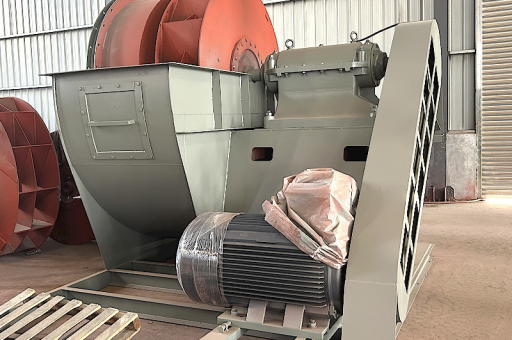
It appears you are looking for a Boiler Induced Draft (ID) Fan with a specific speed rating of 2900 RPM.
Here is a breakdown of what this specification means, typical applications, and considerations for sourcing or using this fan.
What this specification means
- Purpose (ID Fan): This fan is located at the "exit" of the boiler system. It pulls flue gases (exhaust) through the boiler, creating negative pressure (draft) in the furnace. This is critical for safety (preventing backflow) and efficiency.
- Speed (2900 RPM):
- This is a high speed for a large industrial fan.
- This speed strongly suggests the fan is Directly Coupled to a 4-pole induction motor (nominal speed ~1500 RPM at 50Hz or ~1800 RPM at 60Hz) running via a Variable Frequency Drive (VFD) or, more likely, a 2-pole motor (nominal speed ~3000 RPM at 50Hz or ~3600 RPM at 60Hz).
- Crucial Check: A 2900 RPM speed is standard for a 50Hz (European/Asian standard) 2-pole motor running under load (synchronous speed 3000 RPM minus slip). If you are in a 60Hz (North American) region, a 2-pole motor runs at ~3500-3600 RPM, meaning 2900 RPM would require a VFD. Verify your supply frequency.
- "CE" : This is a mandatory Conformité Européenne mark. It indicates the fan complies with EU health, safety, and environmental protection standards (e.g., Machinery Directive, Low Voltage Directive, EMC). This is a legal requirement for sale in the European Economic Area.
Typical Applications for a 2900 RPM ID Fan
- Industrial Boilers: Medium to large fire-tube or water-tube boilers for process steam or power generation.
- Waste Heat Recovery Units (WHRU).
- Power Plants: Coal, biomass, or oil-fired units (though larger utility fans are often slower).
- Cement & Steel Plants: For their industrial boilers or process heaters.
Why 2900 RPM? Pros and Cons
| Pros | Cons |
|---|---|
| High Pressure: Can overcome significant resistance from economizers, scrubbers, or ductwork. | Higher Wear: Bearings, impeller, and shaft seals are under more stress. |
| Compact Size: A smaller impeller can achieve the required pressure at high speed, saving space. | Noise: Operates at a higher noise level; requires silencers. |
| Direct Drive Efficiency: No belt losses if directly coupled. | Motor Cost: Requires a larger or high-speed motor (2-pole). |
| Lower initial capital cost (smaller fan casing). | Vibration Sensitivity: High-speed fans are more sensitive to imbalance. Dynamic balancing is critical. |
Key Specifications to Verify (Checklist)
Before purchasing or installing, you must confirm these parameters with the manufacturer or existing data sheet:
| Parameter | Typical Industrial Range | Your Check |
|---|---|---|
| Flow Rate | m³/hr or CFM | ? |
| Static Pressure | mmWC (mm water column) / Pa / "WC | ? (This drives the power) |
| Gas Temperature | °C (e.g., 120°C, 200°C, 400°C) | Critical - affects material selection (carbon steel vs. stainless vs. chrome-alloy). |
| Gas Composition | Clean, dusty, corrosive, wet? | Critical - affects impeller design (radial, backward curved, etc.) and material. |
| Motor Power | kW or HP | ? (P = Q x P / η) |
| Motor Type | 2-pole (2900 RPM) + VFD? | ? (Direct on-line start at 2900 RPM is very hard on the motor and fan). |
| Duty Cycle | Continuous (S1) or intermittent? | ? |
| Mounting | Baseplate, overhung, or in-duct? | ? |
| Lubrication | Grease or Oil bath? | ? |
| Impeller Type | Backward curved, forward curved, radial (paddlewheel)? | ? (High speed ID fans often use backward curved or radial for dust handling). |
| Damper/Control | Inlet vanes, discharge damper, VFD? | ? |
Potential Suppliers (European / Global)
Since you specified "CE", you might be looking for European suppliers. Common brands for industrial ID fans at this speed include:
- FläktGroup (Germany/Sweden)
- Systemair (Sweden)
- Robuschi / Gardner Denver (Italy)
- Ventilatorenfabrik Oelde (Germany)
- Korfmann (Germany)
- Ventmeca (France)
- Howden (UK/Global)
Safety & Operational Notes
- Vibration Monitoring: At 2900 RPM, a high-frequency vibration sensor is recommended. ISO 14694 Grade BV-3 or BV-4 balancing is typical.
- VFD Requirement: Running a 2900 RPM fan at start-up without a VFD will cause very high inrush current and mechanical shock. A soft-start or VFD is highly recommended.
- Critical Speed Analysis: The fan rotor must be designed to have its first critical speed well above 2900 RPM (Stiff Shaft design) or well below (Flexible Shaft, but less common for this class).
- CE Declaration: Verify the manufacturer provides a CE Declaration of Conformity (DoC) listing the specific EU directives (e.g., 2006/42/EC) and harmonized standards (e.g., EN ISO 12100, EN 60204-1). This is your legal proof of compliance in the EU.
If you can provide the exact flow rate (m³/hr) and static pressure (Pa), I can help you estimate the required motor power.





