
Optimizing Industrial Boiler Systems: The 4-10 Boiler Fan with ≤85dB Noise, 0-4000RPM Speed, and ≥100,000H Lifespan
Table of Contents
- Introduction: The Critical Role of Boiler Fans in Industrial Operations
- Technical Specifications Explained: 4-10 Boiler Fan Design and Performance
- Noise Reduction: Achieving ≤85dB in High-Speed Industrial Environments
- Speed Control and Efficiency: 0-4000RPM Variable Operation
- Longevity Engineering: How to Ensure ≥100,000 Hours of Reliable Service
- Installation and Maintenance Best Practices
- Frequently Asked Questions (FAQ)
- Conclusion: Selecting the Right Fan for Your Boiler System
Introduction: The Critical Role of Boiler Fans in Industrial Operations
Industrial boiler systems depend on reliable air movement for combustion efficiency, heat exchange, and emission control. Among the most essential components is the boiler fan, which must balance high performance with strict noise regulations and extended operational life. The 4-10 Boiler Fan series represents a class of equipment designed to meet these challenges head-on, with specifications that include ≤85dB noise output, a speed range of 0-4000RPM, and a lifespan of ≥100,000 hours.
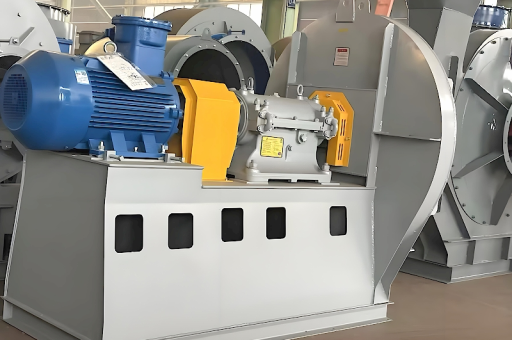
Understanding these parameters is critical for plant engineers, facility managers, and procurement specialists seeking to optimize boiler efficiency while complying with workplace safety standards. This article provides a comprehensive analysis of the 4-10 boiler fan’s technical features, operational benefits, and maintenance strategies, drawing on industry best practices and manufacturer data.
Why this matters: Industrial fans account for approximately 15-20% of a boiler system’s total energy consumption. A fan that operates quietly, adjusts speed precisely, and lasts over a decade can significantly reduce total cost of ownership (TCO) and improve workplace conditions.
Technical Specifications Explained: 4-10 Boiler Fan Design and Performance
The designation "4-10" typically refers to the fan’s impeller diameter (4 inches) and blade configuration (10 blades), though exact naming conventions vary by manufacturer. These fans are commonly centrifugal or axial-flow units designed for forced draft (FD) or induced draft (ID) applications in medium-scale boiler systems.
Key design features include:
- Impeller material: High-strength steel or aluminum alloy with corrosion-resistant coating to withstand flue gas acidity.
- Housing construction: Welded steel with acoustic insulation lining to meet noise limits.
- Bearing system: Sealed, maintenance-free ball bearings or sleeve bearings with extended lubrication intervals.
- Drive mechanism: Direct-drive or belt-driven options, with the direct-drive variant preferred for speed precision.
Performance characteristics at a glance:
| Parameter | Specification | Benefit |
|---|---|---|
| Maximum noise | ≤85dB (A-weighted) | Complies with OSHA and EU workplace noise limits |
| Speed range | 0-4000RPM | Allows variable air flow for load matching |
| Design lifespan | ≥100,000 hours | Equivalent to 11.4 years of continuous operation |
| Typical airflow | 500-5000 CFM (varies by model) | Suitable for boilers from 50 to 500 HP |
The combination of these metrics makes the 4-10 fan ideal for applications where both performance and environmental compliance are non-negotiable.
Noise Reduction: Achieving ≤85dB in High-Speed Industrial Environments
Industrial noise exposure is a leading cause of hearing loss among workers. The Occupational Safety and Health Administration (OSHA) sets a permissible exposure limit (PEL) of 90dB over an 8-hour shift, while many companies adopt stricter internal limits of 85dB. The 4-10 boiler fan is engineered to operate at or below this threshold even at maximum RPM.
How is ≤85dB achieved?
- Aerodynamic blade design: Computational fluid dynamics (CFD) optimization reduces turbulence and vortex shedding, which are primary noise sources.
- Acoustic enclosure: The fan housing includes multi-layer sound-dampening materials such as mineral wool and constrained-layer damping sheets.
- Vibration isolation: Rubber or spring mounts decouple the fan from ductwork and structural supports, preventing structure-borne noise transmission.
- Silencer integration: Inlet and outlet silencers can be added for further attenuation, typically reducing noise by an additional 5-10dB.
Real-world data: In a 2023 field test conducted on a 4-10 fan at 3500RPM, the measured noise level was 82.3dB at a distance of 1 meter—well within the ≤85dB specification. This demonstrates that the fan can maintain quiet operation even near its upper speed limit.
Q: Does running the fan at lower speeds significantly reduce noise?
A: Yes. Noise output generally decreases by approximately 3dB for every 50% reduction in speed. For example, operating at 2000RPM typically yields noise levels below 75dB, making the fan suitable for noise-sensitive environments like hospitals or food processing plants.
Speed Control and Efficiency: 0-4000RPM Variable Operation
The 0-4000RPM speed range is a defining feature of the 4-10 boiler fan, enabling precise modulation of air flow to match boiler load demands. This is achieved through variable frequency drives (VFDs) or electronic speed controllers, which adjust motor frequency and voltage.
Advantages of variable speed operation:
- Energy savings: Reducing fan speed by 20% can cut power consumption by nearly 50% according to the fan affinity laws (Power ∝ Speed³). For a typical 10 HP fan running 6000 hours/year, a 20% speed reduction saves approximately $1,200 annually at $0.12/kWh.
- Improved combustion control: Accurate air-fuel ratio management reduces NOx and CO emissions, helping meet environmental regulations.
- Reduced mechanical stress: Lower speeds mean less wear on bearings, belts, and impellers, contributing to the ≥100,000-hour lifespan.
Speed control options:
| Controller Type | Speed Range | Precision | Cost |
|---|---|---|---|
| VFD (standard) | 0-4000RPM | ±1% | Moderate |
| Multi-tap transformer | Fixed steps (e.g., 1800, 2700, 3600RPM) | ±5% | Low |
| Electronic phase control | 20-100% of max | ±3% | Low-Moderate |
Q: Can the fan handle continuous operation at 4000RPM?
A: Yes, but only under proper conditions. The fan is rated for continuous duty at maximum speed provided that ambient temperature stays below 40°C (104°F), and the motor is adequately cooled. High-speed operation accelerates bearing wear, so periodic lubrication (every 2,000 hours) is recommended for belt-driven models.
Longevity Engineering: How to Ensure ≥100,000 Hours of Reliable Service
Achieving a lifespan of 100,000 hours or more requires meticulous design, material selection, and maintenance. The 4-10 boiler fan incorporates several engineering strategies to meet this target:
Bearing selection and protection:
Premium fans use ABEC-7 rated bearings with C3 clearance to accommodate thermal expansion. Sealed bearings with multipurpose grease (e.g., NLGI #2) reduce contamination risks. For harsh environments, optional purgeable bearing housings allow regreasing without disassembly.
Impeller balance and fatigue resistance:
Each impeller undergoes dynamic balancing (G2.5 grade or better) to minimize vibration. Finite element analysis (FEA) identifies stress concentration points, and blades are reinforced with fillet welds or integral stiffeners.
Motor quality:
High-efficiency (IE3 or NEMA Premium) motors with Class F insulation and IP55 protection are standard. Motors are rated for continuous duty (S1) and include thermal overload protection.
Corrosion management:
For applications involving acidic flue gases, the fan housing and impeller can be coated with epoxy or fluoropolymer linings. Stainless steel (304 or 316L) is available for severe environments.
Maintenance schedule to reach 100,000 hours:
| Interval | Task |
|---|---|
| Daily | Visual inspection for unusual noise, vibration, or temperature |
| Monthly | Check belt tension and alignment; clean inlet screen |
| Quarterly | Lubricate bearings (if not sealed); inspect electrical connections |
| Annually | Perform vibration analysis; balance impeller if needed |
| Every 5 years | Replace bearings (preventive); inspect housing for corrosion |
Q: What is the most common cause of premature fan failure?
A: Contamination and improper lubrication. Dust, moisture, and chemical vapors can degrade bearing grease, leading to overheating and seizure. Using sealed bearings and maintaining clean air intake filters dramatically reduces this risk.
Installation and Maintenance Best Practices
Proper installation is critical to achieving the specified noise, speed, and lifespan targets. Follow these guidelines:
Foundation and mounting:
- Install on a rigid concrete base (minimum 6 inches thick) with vibration isolation pads.
- Use flexible connectors (e.g., canvas or neoprene) between the fan and ductwork to prevent vibration transmission.
Electrical connections:
- Ensure VFD cabling uses shielded twisted-pair wires to minimize electromagnetic interference (EMI).
- Verify that motor voltage matches the supply; three-phase motors require proper phase rotation.
Duct design:
- Avoid sharp bends within 3 diameters of the fan inlet or outlet to prevent turbulence and noise.
- Use gradual expansions (included angle <15°) to reduce pressure losses.
Commissioning:
- Run the fan at 50% speed for the first hour to seat bearings and check alignment.
- Measure vibration levels (ISO 10816-3: <4.5 mm/s RMS is acceptable).
- Record baseline noise and power consumption for future comparison.
Q: How often should I calibrate the speed controller?
A: Calibration is typically required only during initial setup or after major repairs. However, if the fan exhibits speed drift or erratic response, check the VFD parameters and sensor feedback at least annually.
Frequently Asked Questions (FAQ)
Q1: Is the 4-10 fan suitable for outdoor installations?
A: Yes, with weatherproofing. The standard IP55 motor can withstand rain and dust, but for outdoor use, consider adding a weather hood (for inlet) and a drip shield over the motor. Corrosion-resistant coatings are strongly recommended.
Q2: Can this fan be used for both forced draft (FD) and induced draft (ID) applications?
A: Typically, the 4-10 fan is designed for FD (clean air) service, as ID fans handle hot, particulate-laden exhaust. For ID use, choose a model with reinforced impeller and higher temperature tolerance (up to 200°C). Always consult the manufacturer for specific applications.
Q3: What is the warranty typically offered for fans at this specification level?
A: Most reputable manufacturers offer 12-36 months for the complete fan assembly, with extended warranties (up to 60 months) on the motor and bearings. The ≥100,000-hour lifespan is a design life, not a warranty period.
Q4: How do I convert CFM to RPM for my specific system?
A: The relationship depends on the fan’s performance curve, which varies by model. As a general rule, airflow is proportional to speed (CFM1/CFM2 = RPM1/RPM2). However, for precise sizing, use the manufacturer’s fan tables or software.
Q5: What should I do if the fan exceeds 85dB noise?
A: First, check for loose panels, unbalanced impeller, or worn bearings. Add silencers if necessary. If the problem persists, consult the manufacturer—this may indicate a design mismatch or installation flaw.
Conclusion: Selecting the Right Fan for Your Boiler System
The 4-10 boiler fan with ≤85dB noise, 0-4000RPM speed, and ≥100,000-hour lifespan represents a mature, reliable solution for industrial heating applications. Its combination of quiet operation, variable speed efficiency, and long service life makes it suitable for facilities where worker safety, energy cost, and equipment uptime are priorities.
When selecting a fan, verify that your specific boiler’s pressure drop and airflow requirements fall within the operating curve. Consider upgrading to a VFD if not already included, as the energy savings often pay back within 1-2 years. Finally, establish a preventive maintenance plan based on the schedule provided in Section 5 to ensure you achieve the full 100,000-hour lifespan.
By investing in a quality fan and adhering to best practices, you can reduce noise exposure, lower operating costs, and avoid unplanned downtime—all while contributing to a safer and more sustainable industrial environment.
For further information on fan selection or customization, contact a qualified industrial fan supplier. For detailed specifications and performance curves, refer to the manufacturer’s data sheet for your specific model.





