
This article's table of contents introduction:
- Table of Contents
- Executive Overview: Why Material and Pressure Matter in Cleanrooms
- The Critical Role of High Pressure in Cleanroom HVAC Systems
- Why Stainless Steel is Non-Negotiable for Industrial Grade Cleanroom Fans
- Key Engineering Specifications and Design Features
- Common Applications Across ISO Classes (ISO 5 to ISO 8)
- Frequently Asked Questions (FAQ)
- Selection Checklist and Industry Best Practices
- Conclusion: Investing in Long-Term Air Purity
** The Definitive Guide to Industrial Grade High Pressure Fans Stainless Steel For Cleanroom Environments: Performance, Compliance, and Selection
Table of Contents
- Executive Overview: Why Material and Pressure Matter in Cleanrooms
- The Critical Role of High Pressure in Cleanroom HVAC Systems
- Why Stainless Steel is Non-Negotiable for Industrial Grade Cleanroom Fans
- Key Engineering Specifications and Design Features
- Common Applications Across ISO Classes (ISO 5 to ISO 8)
- Frequently Asked Questions (FAQ)
- Selection Checklist and Industry Best Practices
- Conclusion: Investing in Long-Term Air Purity
Executive Overview: Why Material and Pressure Matter in Cleanrooms
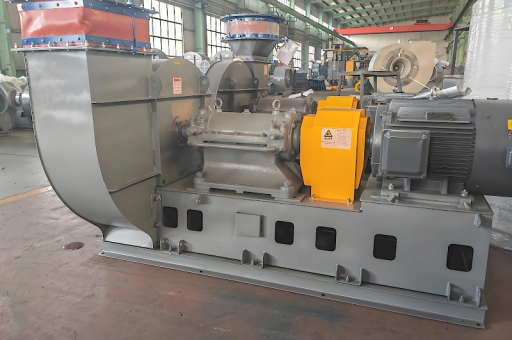
In controlled environments such as pharmaceutical labs, semiconductor fabrication plants, and biotechnology facilities, air purity is not a luxury—it is a regulatory mandate. The mechanical heart of any cleanroom’s filtration system is the fan unit. While many standard fans exist, industrial grade high pressure fans stainless steel for cleanroom environments represent a specialized category engineered to overcome high static resistance from HEPA/ULPA filters, maintain strict airflow laminarity, and resist corrosion.
This article provides a comprehensive technical breakdown of these fans, covering why stainless steel (specifically SS304 and SS316L) is the preferred material, how high-pressure capability ensures filter performance, and what engineers should look for when sourcing these critical components. We will also address common misconceptions and provide a practical selection checklist.
The Critical Role of High Pressure in Cleanroom HVAC Systems
Cleanrooms rely on positive or negative pressure differentials to prevent contamination. To achieve this, air handling units must push air through dense filter media, which creates significant static pressure drop.
- Standard Ventilation Fans (typically less than 2 inches w.g.) cannot overcome the 2–5 inches w.g. resistance of a clean HEPA filter, let alone the added resistance of ductwork and terminal units.
- Industrial Grade High Pressure Fans are designed to operate efficiently in the 5–15 inches w.g. range, ensuring that the required air changes per hour (ACH)—often 60 to 600+ for ISO 5 cleanrooms—are maintained.
Without adequate pressure, filter bypass occurs, leading to particle re-entrainment and potential certification failure. Therefore, the fan must be matched to the system curve of the cleanroom network.
Why Stainless Steel is Non-Negotiable for Industrial Grade Cleanroom Fans
Aluminum and painted steel fans might work in general industry, but they fail in cleanroom contexts. Here is why stainless steel (SS) is the only viable choice:
- Corrosion Resistance: Cleanrooms often use aggressive chemical disinfectants (VHP, hydrogen peroxide, bleach). SS304, and especially SS316L, are resistant to pitting and surface degradation. Rust particles from painted steel would directly contaminate the airstream.
- Non-Particulating Surface: Stainless steel does not shed paint chips or surface oxides. It can be electrophished to a surface roughness of < 0.5 µm Ra, reducing particle adhesion and making cleaning efficient.
- Weld Integrity: High pressure fan impellers must withstand centrifugal stress. SS316L maintains structural integrity under high RPMs without embrittlement, unlike zinc-plated carbon steel.
- Thermal Stability: In cleanrooms running at elevated temperatures (e.g., after sterilization cycles), stainless steel retains its mechanical properties better than alloys with lower melting points.
Key Engineering Specifications and Design Features
When evaluating industrial grade high pressure fans stainless steel for cleanroom environments, look for the following technical criteria:
| Specification | Recommended Value | Why It Matters |
|---|---|---|
| Material Grade | SS316L (SS304 for dry, non-corrosive environments) | Chemical resistance; long service life |
| Impeller Type | Backward-curved or airfoil blades | Higher efficiency and non-overloading power curve |
| Static Pressure | Range: 6 – 15 inches w.g. (1.5 – 3.7 kPa) | Overcomes filter and duct resistance |
| Airflow (CFM) | 500 – 10,000+ CFM (per unit) | Matches cleanroom size and ACH requirements |
| Motor Type | EC (electronically commutated) or IE4 efficiency class | Reduced heat load (less thermal burden on HVAC) |
| Surface Finish | Electropolished (Ra < 0.8 µm) or passivated | Prevents particle shedding, easy to validate |
| Sealing | Direct-drive with double-lip shaft seals OR BISSC-certified | Prevents oil/grease leakage into airstream |
Additionally, look for fans that comply with ISO 14644-3 for cleanroom equipment testing. Many top-tier manufacturers now offer ATEX or EX (explosion-proof) variants of stainless steel pressure fans for handling volatile solvents in cleanrooms.
Common Applications Across ISO Classes (ISO 5 to ISO 8)
Industrial grade high pressure fans stainless steel for cleanroom environments are deployed in three primary HVAC configurations:
- Make-up Air Units (MAU): Fresh air intake fans that condition and filter outside air. Stainless steel casing prevents corrosion from outdoor pollutants.
- Recirculating Air Handling Units (AHU): Maintain ACH by circulating air through HEPA banks. High pressure is essential for the high static drop at terminal filters.
- Fan Filter Units (FFU): Modular, in-ceiling units that combine a stainless steel fan with a HEPA filter. These require compact, high-pressure, backward-curved impellers.
Example: A Class 10 (ISO 4) semiconductor cleanroom requires 500+ ACH. A single stainless steel centrifugal fan operating at 12 inches w.g. can power a network of 8–12 FFUs, maintaining uniform laminar flow.
Frequently Asked Questions (FAQ)
Q1: Can I use a standard aluminum industrial fan in a cleanroom if I paint it?
A: No. Paint flakes, reacts with VHP sterilization, and adds particulate contamination. Stainless steel (unpainted, electropolished) is the only safe material for direct contact with cleanroom airstreams.
Q2: What is the service life difference between SS304 and SS316L fans?
A: In dry cleanrooms, SS304 lasts 15–20+ years. In humid or chemically active environments, SS316L lasts 20–25+ years. Standard painted steel may fail within 2–3 years due to rust.
Q3: Do I need a VFD (Variable Frequency Drive) with my high pressure fan?
A: Yes. Cleanroom HVAC loads fluctuate based on filter loading and occupancy. VFD control allows precise static pressure setpoints (e.g., 2.5 inches w.g. at the filter bank), reducing energy waste and extending filter life.
Q4: Are these fans loud?
A: Properly designed high pressure fans with backward-curved blades and dynamic balancing produce noise levels between 55–75 dB(A). Acoustic enclosures with stainless steel liners can further reduce noise without shedding particles.
Q5: How do I verify a fan’s material is industrial grade stainless steel?
A: Request a material test certificate (EN 10204 / ASTM A240) from the manufacturer. A simple magnet test (SS304 is magnetic after cold work; SS316L is usually non-magnetic) offers a preliminary check, but the certificate is the legal proof.
Selection Checklist and Industry Best Practices
Before purchasing industrial grade high pressure fans stainless steel for cleanroom environments, complete this checklist:
- [ ] Confirm ISO Class: Determine if you need ISO 5 (100) or ISO 8 (100,000) – this defines CFM and static pressure.
- [ ] Map System Curve: Measure or calculate total static pressure (filters + duct + terminals). Do not guess.
- [ ] Specify Material: For food/pharma, default to SS316L. For electronic dry rooms, SS304 is sufficient.
- [ ] Weld Type: Require orbital TIG welds with full penetration. No spot welds on impeller blades.
- [ ] Motor Efficiency: Prefer EC motors for variable speed and lower heat rejection (0.5 kW–5 kW range).
- [ ] Testing Protocol: Request factory run test at 1.15x rated speed with vibration data (ISO 1940 G2.5 balance grade).
- [ ] Certifications: Check for CE, UL, or ISO 9001 compliance. For certain pharma cleanrooms, also ask for FDA 21 CFR Part 11 electronic signature validation support.
Conclusion: Investing in Long-Term Air Purity
Selecting the correct industrial grade high pressure fans stainless steel for cleanroom environments is not merely a technical exercise—it is a regulatory and operational necessity. The combination of high static pressure capability (to overcome HEPA resistance) and stainless steel material (for corrosion resistance and particle control) creates a foundation for consistent cleanroom certification.
While the upfront cost of a fully welded SS316L fan with an EC motor and VFD is higher than a generic centrifugal blower, the total cost of ownership (TCO) is dramatically lower: fewer filter changes, zero rust-related downtime, and lower energy consumption. Engineers and facility managers should prioritize fans from vendors who offer documented material traceability, performance curves, and third-party balance reports.
For your next cleanroom project, demand industrial grade, stainless steel, high pressure rated—your validation engineer and your auditor will thank you. Visit your trusted distributor or OEM website (such as fan or your local HVAC specialist) to verify specs and request a quote.





