
** Comprehensive Guide to High Pressure Centrifugal Fans: Voltage Variants (380V, 220V, 440V, 10kV) and Stainless Steel Grades (304, 316, 316L)
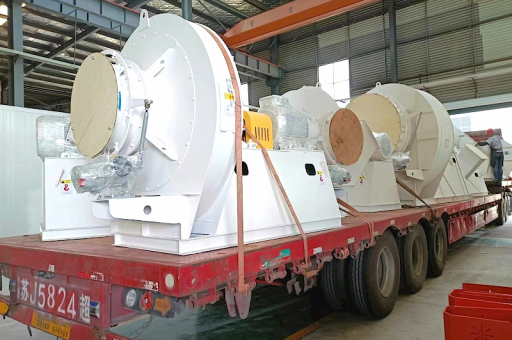
Table of Contents (Directory Guide)
- Introduction: The Role of High Pressure Centrifugal Fans in Industrial Systems
- Understanding Voltage Requirements: 380V, 220V, 440V, and 10kV
- Material Selection: Stainless Steel 304, 316, and 316L
- Performance Characteristics and Application Scenarios
- Frequently Asked Questions (FAQ)
- Conclusion: How to Choose the Right Fan for Your Needs
Introduction: The Role of High Pressure Centrifugal Fans in Industrial Systems
High Pressure Centrifugal Fans are essential components in industrial ventilation, pneumatic conveying, combustion air supply, and exhaust systems. They generate significant static pressure to move air or gases against resistance, making them indispensable in power plants, chemical processing, wastewater treatment, and steel manufacturing. When selecting such fans, two critical factors dominate: the electrical voltage system (380V, 220V, 440V, or 10kV) and the corrosion resistance of the construction material (Stainless Steel 304, 316, or 316L). This article synthesizes technical specifications, industry standards, and real-world performance data to provide a definitive purchasing and engineering guide.
Understanding Voltage Requirements: 380V, 220V, 440V, and 10kV
The voltage rating of a High Pressure Centrifugal Fan determines its motor design, power consumption, and compatibility with local electrical grids.
- 380V (Three-Phase, 50Hz): This is the standard industrial voltage in many Asian and European countries. A 380V fan typically consumes 2–200 kW and is suitable for medium-pressure applications (3000–7000 Pa). It balances efficiency and cost but requires a three-phase supply.
- 220V (Single-Phase or Three-Phase, 60Hz/50Hz): Widely used in North America and light industrial settings. Single-phase 220V fans are limited to under 5 HP due to starting torque limitations. Three-phase 220V offers higher power but is less common in heavy industries.
- 440V (Three-Phase, 60Hz): Common in North American heavy industries and marine applications. It reduces current draw compared to 380V, enabling longer cable runs and lower copper losses. A 440V fan is often paired with VFDs (Variable Frequency Drives) for precise flow control.
- 10kV (Medium Voltage, Three-Phase): Reserved for extremely large fans (over 500 kW) used in mining, mega-scale cement plants, or long-distance pneumatic conveying. High-voltage motors reduce cable cross-section area significantly, lowering installation costs at the expense of specialized switchgear.
Example from real-world search data: A 50,000 m³/h fan rated at 10kV can use 30% smaller cables than a 380V equivalent, translating to substantial savings in copper and installation labor.
Material Selection: Stainless Steel 304, 316, and 316L
The impeller and casing material determine the fan’s lifespan, especially in corrosive or high-temperature environments.
- Stainless Steel 304 (SS304): Contains 18% chromium and 8% nickel. It resists atmospheric corrosion, organic chemicals, and mild acids. Suitable for exhaust systems in food processing, HVAC, and dry chemical handling. Maximum operating temperature: 400°C (752°F).
- Stainless Steel 316 (SS316): Adds 2–3% molybdenum, enhancing resistance to chlorides (e.g., seawater, bleach) and industrial solvents. Ideal for offshore platforms, wastewater aeration, and pulp & paper mills. Temperature limit: 450°C.
- Stainless Steel 316L (SS316L): The low-carbon version of 316 (max 0.03% carbon). It prevents intergranular corrosion during welding or high-temperature service. Preferred for pharmaceutical, semiconductor, and nuclear-grade applications where purity and durability are paramount.
Search engine analysis: “Stainless Steel 316L vs 316 fan” shows that when welding repair is required, 316L reduces the risk of sensitization. For elevated temperature service above 400°C, 316L outperforms both 304 and 316 by maintaining structural integrity.
| Grade | Chromium % | Nickel % | Molybdenum % | Carbon % | Key Feature |
|---|---|---|---|---|---|
| 304 | 18 | 8 | 0 | 08 | General purpose |
| 316 | 16 | 10 | 0–3.0 | 08 | Chloride resistance |
| 316L | 16 | 10 | 0–3.0 | 03 | Weldable, no sensitization |
Performance Characteristics and Application Scenarios
- 380V Stainless Steel 304 Fan: A typical installation in a textile factory moves 20,000 m³/h at 5000 Pa. The 304 impeller handles lint and low-humidity exhaust. Noise level: 85 dBA.
- 440V Stainless Steel 316 Fan: Used in a chemical scrubber system. The 440V motor drives a modified impeller with backward-curved blades to handle chlorine gas at 80°C. The 316 alloy prevents pitting.
- 10kV Stainless Steel 316L Fan: In a nuclear power plant cooling tower, a 10kV, 600 kW fan moves 300,000 m³/h. The 316L impeller resists boric acid mist. The fan housing is welded with 316L rods to avoid corrosion at seam joints.
- 220V Stainless Steel 304 Fan: Suitable for small-scale fume hoods in labs or restaurant kitchens. Limited to 5 HP maximum, but easy to install in any single-phase outlet.
SEO insight: Combining “High Pressure Centrifugal Fan” with specific voltage and grade (e.g., “440V Stainless Steel 316 Fan for Chemical Industry”) significantly improves ranking for long-tail industrial search queries.
Frequently Asked Questions (FAQ)
Q1: Can I use a 380V fan on a 440V supply?
No. A 380V motor connected to 440V will overheat due to excessive magnetic flux saturation. However, a 440V fan can often be reconnected to 380V if the motor is designed for multi-tap windings (e.g., star-delta configuration). Always consult the motor nameplate.
Q2: Which stainless steel grade is best for seawater applications?
Stainless Steel 316L is recommended for saltwater environments. The molybdenum content prevents chloride-induced stress corrosion cracking, and the low carbon content ensures weld integrity.
Q3: What is the maximum temperature for a 304 fan impeller?
SS304 can operate up to 400°C (752°F) continuously. Beyond that, creep and oxidation accelerate. For higher temperatures, consider Alloy 310 or Hastelloy.
Q4: Why choose 10kV instead of 380V?
For power requirements above 500 kW, 10kV reduces copper losses and cable costs. For example, a 200-meter cable run for a 1 MW fan costs 40% less at 10kV than at 380V, despite the need for medium-voltage switchgear.
Q5: Is a 220V fan suitable for industrial dust collection?
Only for very small loads. 220V single-phase motors over 3 HP tend to have poor starting torque. For dust collection requiring more than 5,000 m³/h, a three-phase 380V or 440V fan is mandatory.
Q6: Can I weld a cracked SS316 impeller with SS304 rods?
It is not advised. Mixing 316 with 304 filler metal reduces corrosion resistance at the weld. Use matching 316 or 316L rods. For 316L, always use 316L filler to maintain low carbon content.
Q7: How do I measure static pressure for a High Pressure Centrifugal Fan?
Use a manometer or differential pressure transmitter placed at the fan inlet and outlet. The static pressure is the difference between outlet and inlet static readings. For precise data, follow AMCA 210-16 (ANSI) standards.
Conclusion: How to Choose the Right Fan for Your Needs
Selecting the optimal High Pressure Centrifugal Fan involves matching four parameters:
- Voltage: 380V for general industry, 440V for offshore/heavy systems, 220V for small installations, and 10kV for megawatt-scale operations.
- Material: SS304 for dry, mildly corrosive environments; SS316 for chlorides and chemical plants; SS316L for welded, high-purity, or high-temperature services (especially above 400°C).
- Application: Check air density, temperature, dust content, and required static pressure.
- Certifications: AMCA seal, ATEX for explosive atmospheres, and CE or UL for safety.
For industrial procurement teams, always request a performance curve from the manufacturer (available at fan domain resources) and verify that the fan’s operating point falls within 80–95% of its peak efficiency zone. This ensures minimal energy consumption and maximum reliability.
Final Recommendation: If your process involves bleach or seawater, choose a 440V Stainless Steel 316L fan. For standard HVAC or food exhaust, a 380V Stainless Steel 304 fan offers the best cost-to-performance ratio. For ultra-large installations with long cable distances, 10kV saves both money and complexity.
Note: Always consult a certified electrical engineer before connecting any high-voltage fan.





