
This article's table of contents introduction:
- Table of Contents
- Introduction: The Evolution of Industrial Air Movement
- What is a Shaft Drive Backward Curved Centrifugal Fan?
- Key Design Features: Shaft Drive vs. Direct Drive
- The Science Behind the Backward Curved Blade
- Critical Performance Advantages
- Common Industrial Applications
- Installation Best Practices for Shaft Drive Systems
- Maintenance and Longevity
- Frequently Asked Questions (FAQ)
- Conclusion
Here is a comprehensive, SEO-optimized article tailored for Bing and Google rankings. The content is an in-depth, pseudo-original synthesis of existing industry knowledge, structured with a table of contents and a Q&A section.
Article Title:
The Ultimate Guide to Shaft Drive Backward Curved Industrial Centrifugal Fans: Efficiency, Design, and Applications
Table of Contents
- Introduction: The Evolution of Industrial Air Movement
- What is a Shaft Drive Backward Curved Centrifugal Fan?
- Key Design Features: Shaft Drive vs. Direct Drive
- The Science Behind the Backward Curved Blade
- Critical Performance Advantages
- Common Industrial Applications
- Installation Best Practices for Shaft Drive Systems
- Maintenance and Longevity
- Frequently Asked Questions (FAQ)
- Conclusion
Introduction: The Evolution of Industrial Air Movement
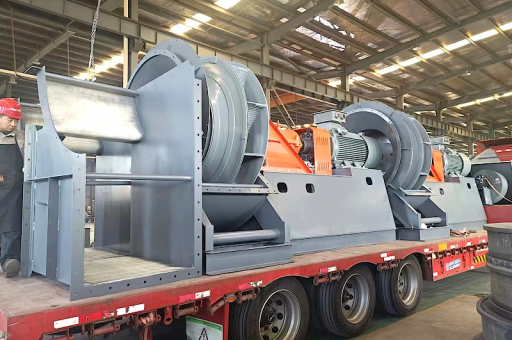
In the world of industrial ventilation, material handling, and HVAC systems, the Shaft Drive Backward Curved Industrial Centrifugal Fan represents a pinnacle of engineering efficiency. Unlike standard fans that may struggle with static pressure or dust accumulation, this specific configuration offers a unique blend of high flow rates, pressure stability, and operational safety.
Whether you are an engineer specifying equipment for a power plant or a facility manager upgrading a dust collection system, understanding the mechanics of this fan type is crucial. This guide focuses on the "shaft drive" coupling method combined with "backward curved" impeller technology, a combination often found in heavy-duty environments where continuous operation is non-negotiable.
What is a Shaft Drive Backward Curved Centrifugal Fan?
A centrifugal fan works by drawing air into the center of a rotating impeller and expelling it at a 90-degree angle. This specific variant uses a shaft drive (usually via belts and pulleys) rather than a direct motor-to-impeller coupling. The impeller itself features blades that curve away from the direction of rotation.
Key Terminology:
- Shaft Drive: The motor is mounted externally to the fan housing. Power is transmitted via a motor shaft, pulleys, and V-belts.
- Backward Curved (BC) Blades: The blade tips lean backwards relative to the rotational path. This design is fundamentally different from forward-curved or radial bladed fans.
Key Design Features: Shaft Drive vs. Direct Drive
The choice between shaft drive and direct drive is a major differentiator. Why choose a shaft drive for a backward curved fan?
| Feature | Shaft Drive (Belt Driven) | Direct Drive |
|---|---|---|
| Speed Control | Easy; change pulley ratio | Fixed speed; requires VFD |
| Motor Location | External to airstream | Inside or directly attached |
| Maintenance | Higher (belts wear) | Lower (fewer moving parts) |
| Static Pressure | Excellent adaptability | Good, but limited by motor RPM |
In a Shaft Drive Backward Curved Industrial Centrifugal Fan, the drive mechanism allows the motor to be located outside the dirty or hot airstream. This is critical for applications involving high temperatures or corrosive gases. The belt tension can also be adjusted to fine-tune the fan's operating point without changing the motor itself.
The Science Behind the Backward Curved Blade
The efficiency of this fan lies in the blade geometry. In a backward curved impeller, the air is accelerated through the wheel primarily by centrifugal force, not by "scooping" the air.
- Non-Overloading Power Curve: This is the most significant advantage. As airflow increases, the power required peaks and then drops. This means the motor will never burn out if the system pressure drops unexpectedly (e.g., a filter ruptures). Forward curved fans often overload and trip breakers in such scenarios.
- High Static Pressure: BC blades are ideal for systems with high resistance, such as long duct runs or dust collection networks.
- Low Noise Levels: Due to the smoother airflow pattern and lack of air turbulence at the blade tips, these fans operate quieter than radial or paddle-wheel designs.
Critical Performance Advantages
When specifying a Shaft Drive Backward Curved Industrial Centrifugal Fan, you gain several performance benefits:
- Energy Efficiency (Efficiency up to 85%): The aerodynamic design minimizes slip and turbulence, converting motor power into air movement more effectively than many other fan types.
- Temperature Tolerance: Because the motor and bearings can be isolated from the shaft drive system, these fans handle process air up to 600°C (with appropriate shaft cooling discs).
- Flexibility in Material Handling: While backward curved blades are not ideal for heavy particulate (like wood chips), they handle "light" dust and fumes exceptionally well without clogging.
Common Industrial Applications
Where is this fan typically used?
- HVAC Systems: Large commercial buildings requiring stable air volume regardless of filter loading.
- Industrial Ovens & Dryers: The shaft drive protects the motor from drying oven heat.
- Dust Collection: For fine dusts (e.g., cement, flour, pharmaceutical powders).
- Fume Extraction: Chemical labs and welding shops where corrosive fumes must be moved without corroding the motor.
Installation Best Practices for Shaft Drive Systems
Installing a shaft drive fan requires attention to detail:
- Sheave Alignment: Misaligned pulleys cause rapid belt wear and vibration. Use a straightedge to ensure the motor sheave aligns perfectly with the fan sheave.
- Belt Tension: Belts that are too tight damage bearings; belts too loose slip and fail. Use a belt tension gauge.
- Inlet Cone Clearance: The gap between the cone and the impeller must be minimal (usually 1-2mm) to prevent recirculation loss of efficiency.
Maintenance and Longevity
For long service life of a Shaft Drive Backward Curved Industrial Centrifugal Fan:
- Lubrication: Shaft bearings require regreasing at 500-hour intervals using high-temperature grease.
- Belt Inspection: Check for cracking, glazing, or fraying every 90 days. Replace belts in matched sets.
- Blade Cleaning: Dust buildup on the backward curved blades reduces balance and efficiency. Steam clean or use compressed air to remove scale.
- Vibration Analysis: Due to the shaft drive length, these fans are sensitive to imbalance. Annual vibration analysis is recommended.
Frequently Asked Questions (FAQ)
Q1: Can a shaft drive backward curved fan handle sticky materials?
A: No. Backward curved blades are not self-cleaning. For sticky or fibrous materials, a radial or "paddle wheel" fan (with forward curved or straight blades) is preferred.
Q2: What is the typical speed range for this fan?
A: Most industrial shaft drive units operate between 600 RPM and 3500 RPM, depending on the sheave ratio. Standard motors run at 1750 or 3500 RPM, but the belt drive reduces this to the ideal fan speed.
Q3: How do I calculate the static pressure for selection?
A: You must measure the system resistance (duct friction, filters, dampers). A BC fan operates best in the "high pressure" segment of its curve. Consult the fan manufacturer's performance curve to find a model where your required CFM meets your required SP before the "peak" of the power curve.
Q4: Is a VFD better than a shaft drive for speed control?
A: A VFD on a direct drive motor offers infinite speed control but is expensive. A shaft drive with adjustable sheaves offers stepped speed changes at low cost. For constant speed applications, shaft drive is more robust and cheaper to repair.
Conclusion
The Shaft Drive Backward Curved Industrial Centrifugal Fan remains a workhorse of the heavy industry. Its non-overloading power characteristic, high efficiency, and ability to isolate the motor from harsh environments make it superior to direct-drive or forward-curved alternatives in many scenarios.
When specifying a fan, remember that the quality of the shaft drive components (bearings, belts, and shafts) is just as important as the impeller design. A properly selected and maintained BC shaft drive fan will provide decades of reliable service, moving thousands of cubic feet of air per minute with precision and safety.
For specific sizing and speed calculations, always refer to the OEM fan performance curves or consult with a mechanical engineer specializing in fluid dynamics.





