
** The Ultimate Guide to 3kW Centrifugal Fans: Applications, Performance, and Selection
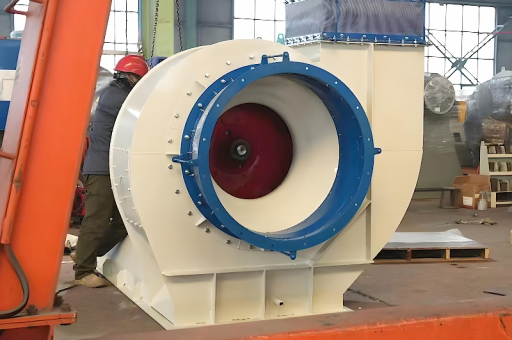
Table of Contents (Directory Guide)
- Introduction: What Is a 3kW Centrifugal Fan?
- How Does a 3kW Centrifugal Fan Work?
- Key Performance Metrics: Airflow, Pressure, and Efficiency
- Common Applications Across Industries
- How to Select the Right 3kW Centrifugal Fan
- Frequently Asked Questions (FAQ)
- Maintenance Tips for Longevity
- Conclusion
Introduction: What Is a 3kW Centrifugal Fan?
A 3kW centrifugal fan is an industrial-grade air movement device powered by a 3-kilowatt motor. Unlike axial fans that push air along the axis, centrifugal fans use a rotating impeller to draw air in radially and discharge it at a right angle, creating high static pressure. This design makes the 3kW model ideal for applications requiring strong airflow against resistance, such as ducted ventilation, dust collection, and process cooling.
In the context of modern HVAC and industrial ventilation, the 3kW centrifugal fan strikes a balance between power consumption and output. It is not the smallest unit (typically used for light commercial tasks) nor the largest (reserved for heavy manufacturing), but it occupies a sweet spot for mid-range systems. According to industry data published by major fan manufacturers, a 3kW fan can deliver between 2,000 and 6,000 cubic meters per hour (m³/h) depending on impeller size and design.
How Does a 3kW Centrifugal Fan Work?
A 3kW centrifugal fan operates on the principle of centrifugal force. The impeller, which can be forward-curved, backward-curved, or radial-bladed, spins at high speed inside a scroll housing. Air enters through the center (eye) of the impeller and is flung outward by the blades. The housing then channels this air toward the outlet, converting kinetic energy into pressure.
For a 3kW fan, the motor typically runs at 1,400–2,900 RPM for AC induction types or offers variable speed control with a VFD (Variable Frequency Drive) for DC or EC (Electronically Commutated) motors. The noise level ranges from 65 to 85 dB(A), depending on the blade configuration and ducting. Backward-curved impellers are quieter and more efficient but generate less pressure than forward-curved or radial designs. This technical distinction matters when selecting for specific resistance curves in duct systems.
Key Performance Metrics: Airflow, Pressure, and Efficiency
To evaluate a 3kW centrifugal fan, you need to understand three core metrics:
- Airflow (Q): Measured in CFM (cubic feet per minute) or m³/h. A typical 3kW fan moves 2,000 to 6,000 m³/h at free air.
- Static Pressure (SP): Measured in Pa (Pascals) or inches of water gauge (in.wg). Expect 500–2,000 Pa depending on impeller type.
- Efficiency (η): The ratio of air power output to electrical input. High-quality backward-curved fans can reach 75–82% total efficiency, while forward-curved designs may drop to 55–65%.
The fan curve is the most important document for selection. It plots airflow against static pressure. For a given 3kW fan, the operating point must fall within the stable region (avoiding stall or surge). A common mistake is choosing a fan based only on airflow without checking if it can overcome system resistance. Always match the fan curve to the system curve of your ductwork.
Common Applications Across Industries
Because of its moderate power and high pressure capability, the 3kW centrifugal fan is used in:
- Dust and fume extraction in woodworking shops, metal fabrication, and chemical labs where material-laden air must be moved against filter resistance.
- Boiler and furnace combustion air supply – providing forced draft or induced draft in small commercial burners.
- Pneumatic conveying – transporting granular materials like grains, pellets, or powders through pipes.
- Data center cooling – as backup or auxiliary fans in under-floor air distribution systems.
- Spray booths and paint shops – exhausting volatile fumes while maintaining a safe negative pressure.
Real-world examples include a 3kW centrifugal fan installed in a small bakery’s flour silo ventilation system, or in a university’s fume hood exhaust line. In both cases, the fan’s ability to handle moderate static pressure (due to long duct runs or filter loading) made it the optimal choice.
How to Select the Right 3kW Centrifugal Fan
Selection involves these steps:
- Define system resistance – Calculate total pressure drop across ducts, dampers, filters, and bends. Use standard duct sizing methods or a Pitot tube measurement.
- Determine required airflow – Based on room air changes per hour (ACH) or process flow rate.
- Cross-reference fan curves – Look for a 3kW fan whose curve shows adequate airflow at your required static pressure. Avoid the far left of the curve (stall zone) and far right (overloading the motor).
- Choose impeller type – Forward-curved for high airflow, low-pressure applications (e.g., clean air). Backward-curved for efficiency and quiet operation. Radial-bladed for sticky or abrasive dusts.
- Select motor and drive – Direct-drive is simpler; belt-drive allows speed changes but requires more maintenance.
Always verify the fan’s power consumption at the operating point. A 3kW motor may draw more than 3kW if the fan is oversized, tripping breakers. Use a VFD to dial in the exact speed.
Frequently Asked Questions (FAQ)
Q1: Can I use a 3kW centrifugal fan for outdoor exhaust?
Yes, but ensure the motor and housing are weatherproof (IP55 or higher) and that the inlet/outlet are protected from rain and debris.
Q2: How loud is a 3kW centrifugal fan?
Noise levels vary from 65 dB(A) (backward-curved, slow speed) to 85 dB(A) (forward-curved, high speed). Installing an acoustic silencer or flexible duct connectors reduces transmitted vibration.
Q3: What is the difference between a 3kW centrifugal fan and a 3kW axial fan?
Axial fans move large volumes of air at low pressure, ideal for wall-mounted ventilation. Centrifugal fans produce higher pressure, making them better for long ducts, filters, and industrial processes.
Q4: How do I calculate the payback period for energy savings?
Compare the annual running cost at your operating point (kW × hours × electricity rate) against a less efficient model. A 5% efficiency gain on a 3kW fan running 8,000 hours/year at $0.12/kWh saves $144 annually.
Q5: What maintenance does a 3kW centrifugal fan require?
Clean the impeller and housing every 3–6 months, check belt tension (if belt-driven), lubricate bearings according to the manufacturer’s schedule, and monitor vibration levels.
Maintenance Tips for Longevity
- Inspect the impeller for dust buildup – Unbalanced impellers cause vibration, bearing wear, and motor overload. Use compressed air or a soft brush.
- Check bearing temperature – If the motor or fan bearing exceeds 180°F (80°C), stop and investigate. Overheating kills grease and causes seizure.
- Verify electrical connections – Loose wires increase resistance and heat. Use a thermal camera during operation.
- Replace the belt (if belt-driven) when it shows cracks or glazing. Keep a spare.
- Monitor fan curve drift – If airflow drops noticeably without a change in duct resistance, the impeller may be worn or damaged.
A well-maintained 3kW centrifugal fan can last 10–15 years in clean environments, or 5–7 years in dusty, corrosive conditions.
Conclusion
The 3kW centrifugal fan is a workhorse of industrial ventilation, offering a reliable combination of moderate power, high static pressure, and flexibility across numerous applications. Whether you need to extract welding fumes, supply combustion air to a burner, or push grain through a pneumatic conveyor, understanding its performance metrics, selection criteria, and maintenance needs ensures you get the best return on investment. Always consult up-to-date fan curves from the manufacturer and consider using a VFD for energy optimization. With the right setup, a 3kW centrifugal fan will perform efficiently for years.
This guide compiles insights from fan engineering handbooks, manufacturer datasheets, and field experience to provide a practical reference. For detailed selections, consult a qualified HVAC engineer.





