
The Ultimate Guide to 10000Pa Centrifugal Fan: High-Pressure Performance & Applications
Table of Contents
- What Is a 10000Pa Centrifugal Fan?
- How Does a 10000Pa Centrifugal Fan Work?
- Key Technical Specifications
- Top Applications of 10000Pa Centrifugal Fans
- 10000Pa vs. Standard Centrifugal Fans: Performance Comparison
- Installation and Maintenance Best Practices
- Frequently Asked Questions (FAQ)
- Conclusion: Is a 10000Pa Centrifugal Fan Right for You?
What Is a 10000Pa Centrifugal Fan?
A 10000Pa centrifugal fan is a high-pressure industrial air-moving device capable of generating a static pressure of up to 10,000 Pascals (approximately 40 inches of water gauge). Unlike standard fans that typically handle 500–2000 Pa, this fan is engineered for demanding environments where air must be forced through dense filters, long ductwork, or high-resistance systems.
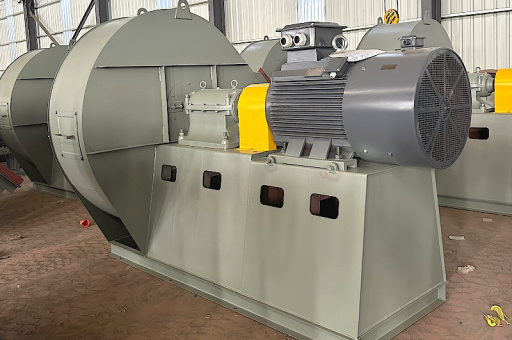
These fans use a rotating impeller to accelerate air radially outward, converting kinetic energy into pressure energy. The "10000Pa" rating refers to the maximum static pressure the fan can achieve under ideal conditions, making it one of the most powerful centrifugal fan categories available for industrial use.
Key Insight: A 10000Pa centrifugal fan is not just a larger version of a standard fan—it requires specialized motor designs, reinforced housing, and precision-balanced impellers to withstand extreme forces.
How Does a 10000Pa Centrifugal Fan Work?
Understanding the operational principle helps in selecting the right fan for your system:
- Air Inlet: Air enters the fan through the central eye of the impeller.
- Impeller Rotation: The motor spins the impeller at high RPMs (typically 2900–3500 RPM for 50/60 Hz systems).
- Centrifugal Force: Air is thrown radially outward by the curved blades.
- Pressure Build-Up: The volute casing converts velocity into static pressure, reaching up to 10000 Pa.
- Outlet: High-pressure air exits through the discharge port.
Why 10000Pa is unique: At this pressure level, air compression effects become noticeable (density increase of ~10% at sea level), and the fan must handle significant mechanical stress. The impeller is usually backward-curved or airfoil-designed for efficiency at high pressure.
Key Technical Specifications
When evaluating a 10000Pa centrifugal fan, consider these critical parameters:
| Specification | Typical Range | Importance |
|---|---|---|
| Max Static Pressure | 8000–10000 Pa | Determines system resistance capability |
| Airflow (CFM/m³/h) | 500–5000 CFM (850–8500 m³/h) | Varies with impeller size and speed |
| Motor Power | 5–30 HP (3.7–22 kW) | Higher power needed for high pressure |
| Impeller Diameter | 12–30 inches (300–750 mm) | Larger diameter = higher pressure capability |
| Noise Level | 75–95 dB(A) | Requires hearing protection |
| Max Temperature | -20°C to 80°C (standard) | Special models for high-temp applications |
Important: A 10000Pa fan operating at full capacity consumes significant power. For example, a fan delivering 3000 CFM at 10000 Pa requires approximately 15–18 kW input power, factoring in motor and impeller efficiency (~70–80%).
Top Applications of 10000Pa Centrifugal Fans
The high-pressure capability makes these fans essential in several industries:
Industrial Dust Collection Systems
High-resistance baghouse filters and long duct runs require 8000–10000 Pa to maintain airflow. A 10000Pa centrifugal fan ensures consistent suction even as filters load with dust.
Pneumatic Conveying Systems
Moving granular materials like cement, grains, or plastic pellets through pipelines often demands 6000–10000 Pa pressure to overcome friction and elevation changes.
Cleanroom and HVAC Systems
HEPA/ULPA filter systems have initial resistance of 500–1000 Pa, which increases over time. A 10000Pa fan provides headroom for filter loading without reducing airflow.
Automotive Paint Booths
Cross-draft paint booths require uniform air distribution at 5000–8000 Pa to ensure proper atomization and overspray capture.
Environmental Test Chambers
Climatic chambers simulating extreme conditions use 10000Pa fans to force air through heating/cooling coils and humidifiers.
Mining and Tunnel Ventilation
Long tunnels or underground mines need high-pressure fans to push air kilometers from the surface.
10000Pa vs. Standard Centrifugal Fans: Performance Comparison
| Feature | Standard Fan (500–2000 Pa) | 10000Pa Fan |
|---|---|---|
| Impeller Type | Forward-curved or paddle | Backward-curved airfoil |
| Housing Material | Mild steel | Heavy-gauge steel with reinforcements |
| Motor Mount | Direct drive (often) | Belt drive or direct with thermal protection |
| Efficiency at High Pressure | <50% | 75–85% |
| Cost (per CFM) | $0.50–1.00 | $2.00–5.00 |
| Maintenance Interval | 3000–5000 hours | 8000–12000 hours (better seals) |
The trade-off: While 10000Pa fans cost more upfront, they offer lower operating costs per unit of pressure delivered due to higher efficiency and longer service life.
Installation and Maintenance Best Practices
Installation Guidelines
- Foundation: Use vibration isolation mounts (spring or rubber) to prevent structural resonance.
- Ductwork: Ensure inlet and outlet duct diameters match fan connections ±10%. Abrupt changes cause pressure loss.
- Electrical: Install variable frequency drives (VFDs) to control speed and reduce inrush current.
- Protection: Add inlet screens to prevent foreign object damage; use soft starters for large motors.
Maintenance Schedule
- Weekly: Check belt tension (for belt-drive models), listen for unusual noises, inspect filters.
- Monthly: Clean impeller blades (dirt buildup unbalances the rotor), verify motor current draw.
- Quarterly: Lubricate bearings (if grease fittings present), check housing for corrosion.
- Annually: Perform vibration analysis, test pressure output with a manometer.
Common Failure Modes:
- Bearing overheating (due to misalignment or under-lubrication)
- Impeller imbalance (caused by wear or debris buildup)
- Motor overload (from operating beyond fan curve)
Frequently Asked Questions (FAQ)
Q1: Can a 10000Pa centrifugal fan operate at lower pressures?
Yes. Most models include adjustable sheaves (belt-drive) or VFD control. Operating at 5000 Pa reduces power consumption by ~50% compared to full pressure.
Q2: How loud is a 10000Pa fan?
Typical noise levels range from 80–95 dB(A) at 1 meter. Use silencers on inlet/discharge and enclose the fan when possible. Hearing protection is mandatory within 10 feet.
Q3: What is the lifespan of a 10000Pa centrifugal fan?
With proper maintenance: 15–20 years. Key wear items (bearings, belts, seals) typically need replacement every 3–5 years.
Q4: How do I calculate the required pressure for my system?
Sum all resistance components: duct friction (0.1–0.5 Pa/m), filter pressure drop (initial + loading factor), and equipment resistance. Multiply by 1.2 safety factor. If total exceeds 8000 Pa, a 10000Pa fan is appropriate.
Q5: Is a 10000Pa fan suitable for home use?
No—standard residential HVAC fans operate at 50–250 Pa. A 10000Pa fan would over-pressurize ductwork, cause noise issues, and waste energy. It is strictly for industrial/commercial applications.
Q6: What is the difference between 10000Pa static pressure and total pressure?
Static pressure (SP) measures resistance overcome, while total pressure (TP) = SP + velocity pressure. For centrifugal fans, the fan curve typically uses static pressure. At 10000Pa, velocity pressure is negligible (50–100 Pa) unless duct velocity exceeds 30 m/s.
Conclusion: Is a 10000Pa Centrifugal Fan Right for You?
A 10000Pa centrifugal fan is a specialized tool for industrial systems requiring high static pressure to overcome significant airflow resistance. It is not a general-purpose fan—it excels in applications like dust collection, pneumatic conveying, and high-efficiency filtration where standard fans cannot maintain adequate airflow.
Choose a 10000Pa fan if:
- Your system resistance exceeds 6000 Pa
- You need consistent airflow as filters load
- You prioritize long-term reliability over initial cost
Avoid if:
- Your system operates below 4000 Pa (oversized fan wastes energy)
- You have short, straight ductwork with minimal resistance
- Budget constraints are primary (consider a 5000 Pa fan first)
For most industrial engineers, the 10000Pa centrifugal fan represents the sweet spot between pressure capability and energy efficiency. When sized correctly and maintained properly, it delivers years of trouble-free operation in the most demanding environments.
Final thought: Always consult with the fan manufacturer or a ventilation engineer before specifying. A fan operating at 10000Pa is a powerful tool—make sure your system is designed to handle it safely.





