
This article's table of contents introduction:
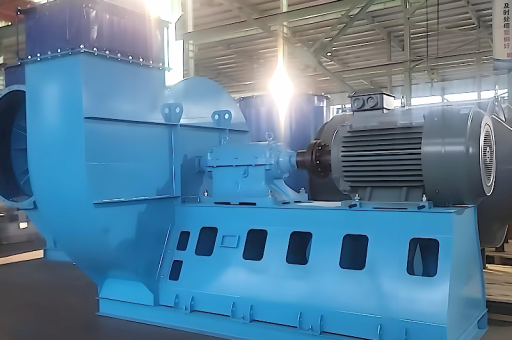
- What is it?
- Key Design Features & Construction
- Applications in Mining
- Advantages & Disadvantages
- How it Works in a Mine System
- Key Specifications to Look For
Here is a detailed breakdown of what a Single Inlet Mine Ventilating Centrifugal Flue Gas Fan is, its applications, design, and key characteristics.
This type of fan is a highly specialized piece of industrial equipment. The name itself combines three critical descriptors:
- Single Inlet: Air enters the fan from only one side of the impeller.
- Mine Ventilating: It's designed for the harsh, demanding environment of underground mining.
- Centrifugal Flue Gas: It moves high-temperature, dusty, and potentially corrosive gases (like those from diesel engines or blasting) through ductwork, acting like a flue.
What is it?
In simple terms, it's a powerful, robust centrifugal fan designed to exhaust contaminated, hot, and dusty air from an underground mine through a single intake point. It's the "lung" of the mine, but specifically for the dirtiest, most difficult airflow paths, often in return air shafts or auxiliary ventilation systems dealing with exhaust from diesel equipment.
Key Design Features & Construction
What makes this fan different from a standard ventilation fan?
- Single Inlet (vs. Double Inlet):
- Single Inlet: All the air enters from one side of the impeller wheel. This is common for smaller to medium-sized fans and allows for a more compact, in-line duct connection. It's easier to install in a mine drift.
- Double Inlet: Air enters from both sides, typically for very large, high-volume main shaft fans. A single inlet is preferred for its simpler mounting and direct duct connection for branch lines.
- Centrifugal Design (vs. Axial):
- Centrifugal: Air is thrown outward by the spinning impeller, creating high static pressure. This is crucial for overcoming the high resistance of long, narrow, and dirty ductwork and dust collectors.
- Axial (Propeller-style): High volume, low pressure. Not suitable for pushing air through long, dirty ductwork with filters.
- Mining-Specific Construction:
- Heavy-Duty Materials: Typically made from thick steel plate to withstand the abrasive effects of rock dust, drilling particles, and blasting debris.
- Abrasion-Resistant Liners: The fan housing and impeller are often lined with replaceable wear plates (e.g., AR-400 steel or ceramic tiles) in the areas of highest particle impact (the "cutwater" and the impeller blades).
- Robust Bearings: Oversized, heavy-duty anti-friction bearings (often pillow block) with housings that are sealed against dust and can be greased externally. They are usually mounted outside the fan housing for safety and accessibility.
- Explosion-Proof (Critical): The motor, bearings, and electrical components must be EExd (Explosion-proof) rated to prevent sparks in potentially flammable atmospheres (methane gas, coal dust).
- Corrosion Resistance: For handling flue gas (from diesel engines), the internal surfaces may be painted with high-temperature resistant epoxy or manufactured from stainless steel for specific applications.
- "Flue Gas" Capability:
- High Temperature Rating: Designed to handle continuous gas temperatures from 80°C to 150°C (and higher for short periods). Standard fans cannot handle this.
- Shaft Seals: Special air-purged or mechanical seals prevent hot, dusty gases from leaking out of the shaft penetration and damaging bearings.
Applications in Mining
- Diesel Exhaust Ventilation: Removing exhaust fumes (NOx, CO, particulate matter) from diesel-powered loaders, trucks, and drills in development headings and production areas.
- Return Air Shaft Fans: As a secondary or booster fan in the return air circuit, handling the most contaminated air from the entire mine section.
- Dust Collection Systems: Pulling dusty air from crushers, transfer points, and drill rigs through baghouses or wet scrubbers before exhausting clean air.
- Explosive Fume Clearing: Rapidly evacuating blasting fumes (containing CO, NO2) after a blast, requiring high-temperature and spark-resistant design.
Advantages & Disadvantages
Advantages
- High Static Pressure: Excellent for long, complex duct runs and systems with dust collection.
- Abrasion & Corrosion Resistant: Built to last in the worst conditions.
- Reliable: Rugged construction minimizes downtime.
- Explosion-Proof: Safe in gassy mines.
- Variable Speed Capable: Can be controlled via VFD (Variable Frequency Drive) to adjust airflow to changing mine needs.
Disadvantages
- Higher Cost: More expensive to purchase and install than a simple axial fan.
- Larger & Heavier: Requires more space and structural support.
- More Complex Maintenance: Bearings, seals, and wear liners need specialized attention.
- Less Efficient at High Volume: For purely high-volume, low-resistance applications, an axial fan is more efficient.
How it Works in a Mine System
- Intake: A duct system (ducting, curtain, or rigid tube) connects the contaminated area (e.g., a dead-end heading with a diesel loader) to the fan's single inlet.
- Impeller: The high-speed impeller creates a vacuum, pulling the hot, dusty gas into the fan.
- Ejection: The gases are accelerated by the centrifugal force and ejected out of the exhaust outlet, typically into the main return air drift, a baghouse, or directly to the surface.
- Dust Control: Often, the fan is placed after a dust collector (like a baghouse or wet scrubber) to ensure only relatively clean air passes through the fan. In some cases, it's placed before the collector (exhauster fan) and must be heavily abrasion-resistant.
Key Specifications to Look For
- Volume: (CFM or m³/s) - How much air it moves.
- Static Pressure: (in. w.g. or Pa) - How much resistance it can overcome.
- Gas Temperature: Maximum continuous and peak.
- Impeller Material: (e.g., Hardox 400, stainless steel 316)
- Motor Power: (kW or HP) and Explosion rating (e.g., I., IIC, T3).
- Wear Protection: (e.g., "Ceramic lined impeller and housing")
In summary, the Single Inlet Mine Ventilating Centrifugal Flue Gas Fan is a specialized, heavy-duty workhorse designed for the most demanding ventilation task in underground mining: moving hot, dirty, and hazardous gases against high resistance. If you have a specific model, make, or application scenario, I can provide more targeted information.





