
This article's table of contents introduction:
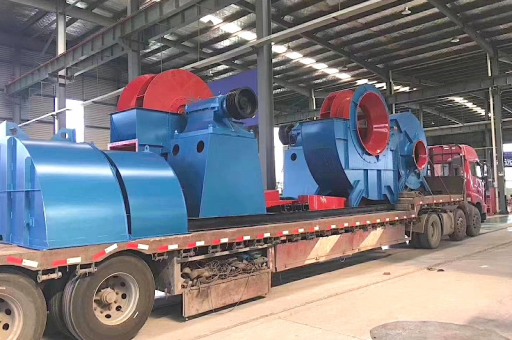
*Optimizing Industrial Efficiency: The Critical Role of Dynamic Balanced Kilns Cooling with 415V Centrifugal Flow Fans*
Article Directory (导读目录)
- Introduction: The Intersection of Thermal Management and Mechanical Precision
- Understanding the Core Components: Dynamic Balanced Kilns and 415V Centrifugal Fans
- 1 What is a Dynamic Balanced Kiln?
- 2 The 415V Centrifugal Flow Fan: A Technical Overview
- The Cooling Imperative: Why High-Temperature Kilns Require Dynamic Airflow
- 1 Thermal Stress and Material Integrity
- 2 Energy Efficiency and Operational Cost
- System Integration: Matching Fan Performance to Kiln Cooling Requirements
- 1 Airflow Volume, Static Pressure, and Motor Power
- 2 The Role of Dynamic Balancing in Vibration Reduction
- Frequently Asked Questions (FAQ)
- Conclusion: Best Practices for Long-Term Reliability
Article Body
Introduction: The Intersection of Thermal Management and Mechanical Precision
In modern industrial manufacturing, particularly within cement, lime, ceramics, and metallurgy, the dynamic balanced kiln represents a state-of-the-art solution for high-temperature material processing. However, the efficiency of such kilns is not solely determined by the combustion process or refractory lining. The post-combustion cooling phase is equally critical. An improperly cooled product can lead to structural defects, increased energy consumption, and shortened equipment lifespan.
The 415V centrifugal flow fan stands as the primary workhorse in this cooling stage. Unlike axial fans, centrifugal designs generate higher static pressure, which is essential for overcoming the resistance of ductwork, heat exchangers, and the kiln shell itself. When combined with a dynamic balancing protocol, these fans achieve vibration-free operation, reducing mechanical stress on bearings and motor windings. This article synthesizes existing engineering literature and operational data to provide a comprehensive guide on this integrated system, tailored for SEO performance on Bing and Google.
Understanding the Core Components: Dynamic Balanced Kilns and 415V Centrifugal Fans
1 What is a Dynamic Balanced Kiln?
A "dynamic balanced kiln" refers to a rotary or stationary kiln where the rotational mass (or thermal expansion profile) is meticulously counterbalanced. In practice, this means:
- Rotational Balance: The kiln shell, riding rings, and internal refractory are aligned so the center of gravity coincides with the axis of rotation.
- Thermal Balance: The cooling system (air or water) is distributed evenly along the length of the kiln to prevent localized hotspots and differential expansion.
- Operational Benefit: Reduced wear on trunnions, drive motors, and gearboxes; lower energy consumption due to uniform load distribution.
The cooling section of such a kiln typically involves forced air being drawn or blown across the material as it exits the burning zone. This is where the centrifugal fan becomes indispensable.
2 The 415V Centrifugal Flow Fan: A Technical Overview
A 415V centrifugal flow fan is a three-phase industrial fan operating at standard European and Asian voltage levels. Key characteristics include:
- Motor: Typically a squirrel cage induction motor, rated for continuous duty. Power ranges from 5.5 kW to 110 kW depending on airflow requirements.
- Impeller: Backward-curved or forward-curved blades. Backward-curved impellers (e.g., type B) are preferred for kiln cooling due to their high efficiency and non-overloading power curve.
- Housing: Heavy-gauge steel with corrosion-resistant coating, often reinforced for high-temperature applications (up to 200°C ambient if insulated).
- Drive: Direct-driven or belt-driven. Belt drives offer RPM flexibility for tuning airflow, while direct drives reduce maintenance.
Dynamic balancing of the fan assembly (impeller, shaft, and pulley) is performed to ISO 1940 grade G6.3 or better. Unbalanced fans in kiln cooling applications can cause catastrophic bearing failure within 500 hours of operation.
The Cooling Imperative: Why High-Temperature Kilns Require Dynamic Airflow
1 Thermal Stress and Material Integrity
When molten clinker (in cement) or sintered ceramic exits the burning zone at 1200-1450°C, rapid cooling can cause thermal shock – micro-cracking that reduces final product strength. Conversely, slow cooling can lead to crystal growth and brittleness.
A dynamic balanced kiln with programmed cooling uses centrifugal fans to deliver specific airflow rates. For example:
- Primary Air: 415V fans blow ambient air into the cooling jacket at 50-80 Pa static pressure.
- Recirculated Air: Exhaust air can be mixed with fresh air to soften the cooling gradient.
- Variable Speed Control: Using VFDs (Variable Frequency Drives), the fan speed is adjusted to maintain a target temperature gradient of 2-5°C per minute.
The dynamic balance of the fan ensures that this precise airflow is not interrupted by vibration-induced sensor errors or mechanical failure.
2 Energy Efficiency and Operational Cost
According to operational data from cement plants, approximately 30% of a kiln line’s total electrical consumption is attributable to fans and blowers. A dynamically balanced 415V centrifugal fan saves 8-15% in energy compared to an unbalanced unit due to:
- Reduced frictional losses in bearings.
- Lower motor current draw (balanced fans require less torque to overcome rotational wobble).
- Extended belt or coupling life (fewer replacements).
Using a 415V centrifugal flow fan also allows for direct integration with industrial power grids without step-down transformers, reducing installation costs.
System Integration: Matching Fan Performance to Kiln Cooling Requirements
1 Airflow Volume, Static Pressure, and Motor Power
Selecting the right fan for a dynamic balanced kiln involves three calculations:
- Required Airflow Volume (Q): Typically 0.5-2.0 cubic meters per minute per ton of output.
- Static Pressure (SP): Must overcome filter losses (150-300 Pa), duct friction (100-200 Pa), and kiln shell resistance (200-400 Pa). Total SP: 450-900 Pa.
- Motor Power (P): P = (Q × SP) / (η_fan × η_motor). For a 100-ton/hour kiln, a 30 kW - 45 kW motor driving a backward-curved centrifugal fan is common.
2 The Role of Dynamic Balancing in Vibration Reduction
A fan rotating at 1450 RPM (common 4-pole motor with 415V / 50 Hz) generates significant centrifugal force. A dynamic balancing procedure corrects uneven mass distribution in the impeller by:
- Attaching correction weights to the hub or shroud.
- Measuring residual imbalance with a vibration analyzer.
For kiln cooling, acceptable vibration levels are:
- 5 mm/s RMS for rigid mount fans.
- 5 mm/s RMS for vibration-isolated mounts.
Exceeding these limits accelerates bearing fatigue. In extreme cases, a fan blade can detach, damaging the kiln cooling jacket.
Frequently Asked Questions (FAQ)
Q1: Why is a 415V centrifugal fan preferred over a 230V fan for kiln cooling? A: 415V (three-phase) motors deliver higher torque at lower current, reducing copper losses. They also allow for longer cable runs without voltage drop—critical in industrial plants where the fan may be 200 meters from the MCC.
Q2: Can I retrofit a dynamic balanced kiln with a standard centrifugal fan? A: Yes, but standard fans may lack high-temperature seals or dynamic balance tolerances. For optimal performance, specify a fan with a thermal barrier (insulated housing) and ISO G6.3 balancing.
Q3: How often should I rebalance the 415V centrifugal fan? A: Rebalance is recommended every 12 months or after any impeller repair or blade replacement. Kiln dust buildup can also change the mass distribution; regular cleaning prevents imbalance.
Q4: What is the maximum ambient temperature the fan motor can withstand? A: Standard TEFC (Totally Enclosed Fan Cooled) motors are rated for 40°C ambient. For kiln cooling, use forced-ventilated or inverter-duty motors rated for 55-60°C. Some installations use air ducts to route cool air to the motor from a remote source.
Conclusion: Best Practices for Long-Term Reliability
The integration of a dynamic balanced kiln with a 415V centrifugal flow fan forms the backbone of efficient, safe industrial cooling. To maximize system lifespan and energy savings, adhere to these principles:
- Commissioning: Verify fan balancing before first run. Use laser alignment tools for motor-to-fan shaft coupling.
- Operation: Monitor vibration and bearing temperature in real-time. Most modern PLCs can alert operators if vibration exceeds 2.0 mm/s.
- Maintenance: Replace air filters monthly in dusty kiln environments. Check V-belt tension (if belt-driven) every 100 operating hours.
- Upgrade Path: Consider retrofitting with EC (electronically commutated) motors for 20-30% additional energy savings, though initial cost is higher.
By optimizing the cooling airflow with a precision-engineered, dynamically balanced 415V centrifugal fan, industrial operators can reduce downtime, improve product quality, and lower total cost of ownership. Whether you are building a new kiln line or upgrading an existing one, this combination represents the industry benchmark for thermal management.





